
 EN
EN
Large machine shops operating at high production volumes demand cutting tools that combine durability, versatility, and consistent performance. octagonal milling inserts have become a preferred choice in these environments because their eight cutting edges offer a significant cost-per-edge advantage over conventional insert geometries. Understanding how these shops integrate octagonal milling inserts into face milling workflows reveals why this insert design is so well suited to demanding industrial applications.
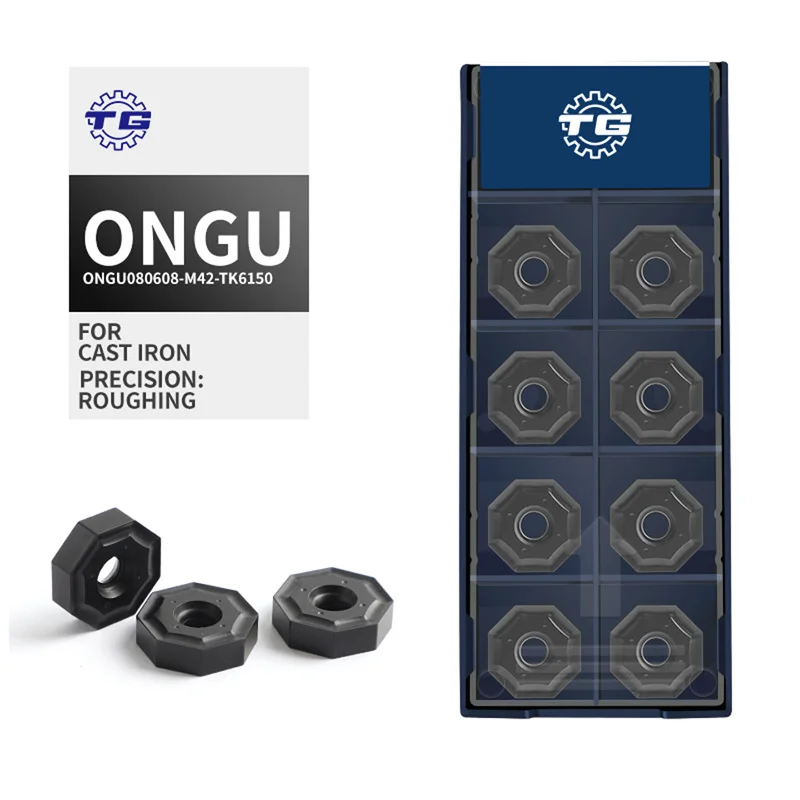
The decision to standardize on octagonal milling inserts is never arbitrary. Shop managers and process engineers evaluate insert geometry, substrate material, coating type, and cutter body compatibility before committing to a tooling strategy. When octagonal milling inserts are matched correctly to a machine's spindle power, feed rate capability, and the workpiece material being cut, the results include improved tool life, reduced cycle times, and a lower total cost of ownership. This article explains the step-by-step approach that large machine shops use to apply octagonal milling inserts for face milling operations.
Selecting the Right Octagonal Milling Inserts for the Application
Matching Insert Grade and Geometry to Material
Before octagonal milling inserts are ever mounted on a cutter body, experienced process engineers study the workpiece material. Cast iron components, for example, require octagonal milling inserts with CVD coatings that resist the abrasive wear characteristic of that material. Steel components may call for a different substrate hardness and edge preparation. Large shops maintain a documented matrix that maps specific grades of octagonal milling inserts to material families, cutting speeds, and depth-of-cut ranges. This disciplined selection process prevents premature insert failure and ensures that octagonal milling inserts deliver predictable performance across large batch runs.
Evaluating Cutter Body Compatibility
Octagonal milling inserts must seat precisely within their cutter body pockets to generate the correct lead angle and axial rake for face milling. Large machine shops typically qualify cutter bodies by verifying pocket tolerances and seating torque specifications before loading octagonal milling inserts into production. A mismatched pocket can cause octagonal milling inserts to shift under cutting forces, leading to chipping, poor surface finish, and potential damage to the spindle. Shops that run octagonal milling inserts at scale invest in dedicated gauging tools to inspect pocket wear periodically and replace cutter bodies before dimensional drift compromises insert performance.
Integrating Octagonal Milling Inserts into the Face Milling Process
Programming Feeds, Speeds, and Depth of Cut
Once the correct octagonal milling inserts are selected and seated, the CNC programmer establishes the cutting parameters. Large shops use manufacturer-recommended starting data for octagonal milling inserts as a baseline, then apply in-process monitoring to fine-tune the parameters for their specific machine-tool combination. Spindle speed, feed per tooth, and radial engagement all affect how octagonal milling inserts perform during face milling. Because octagonal milling inserts have a larger inscribed circle than triangular or square inserts of the same nominal size, they can often handle higher feed rates while maintaining stable cutting forces. Experienced programmers exploit this characteristic to shorten cycle times without sacrificing surface finish.
Managing Insert Rotation and Edge Utilization
One of the most operationally significant advantages of octagonal milling inserts is the ability to index to a fresh cutting edge eight times before discarding the insert. Large machine shops build formal insert rotation schedules into their tool management systems to track exactly which edge of each pair of octagonal milling inserts is currently in use. Operators follow a standardized indexing procedure, repositioning octagonal milling inserts at a defined wear threshold rather than running edges until catastrophic failure. This proactive approach keeps octagonal milling inserts functioning at optimal sharpness, reduces the risk of unexpected tool breakage, and makes insert consumption predictable for purchasing and inventory planning.
Quality Control and Process Optimization for Octagonal Milling Inserts
Monitoring Surface Finish and Dimensional Accuracy
Quality control teams in large machine shops perform in-process inspections to verify that octagonal milling inserts are producing the specified surface finish and flatness on face-milled surfaces. If a set of octagonal milling inserts begins producing roughness values outside the tolerance band, operators investigate whether the cause is an over-worn edge, incorrect cutting parameters, or inadequate coolant delivery. Coolant strategy is particularly important when running octagonal milling inserts on cast iron, where through-spindle coolant or air blast must be selected based on the chip evacuation needs of the specific cutter geometry.
Continuous Improvement Through Tool Life Data
Large shops that are serious about process optimization collect tool life data for every set of octagonal milling inserts used in face milling. Maintenance and engineering teams analyze this data to identify patterns, such as which machine tools consistently produce shorter tool life for octagonal milling inserts, which shifts see higher insert consumption, and whether specific batches of workpiece material accelerate wear. By treating octagonal milling inserts as a measurable process variable, shops can calculate the true cost per part attributable to octagonal milling inserts and make data-driven decisions about cutting parameters, coolant systems, and insert grades. This continuous improvement cycle is what separates world-class shops from those that simply react to tool failures as they occur.
FAQ
What makes octagonal milling inserts more cost-effective than square inserts?
Octagonal milling inserts provide eight usable cutting edges per insert, compared to four or eight on square inserts depending on geometry. This doubles the number of indexes available, which directly reduces the cost per cutting edge. For large machine shops running high volumes, the cumulative savings from using octagonal milling inserts across multiple machines can be substantial over the course of a production year.
Can octagonal milling inserts be used on all types of CNC machining centers?
Octagonal milling inserts are compatible with most horizontal and vertical CNC machining centers, provided the spindle delivers sufficient torque and the cutter body is designed for that insert geometry. High-power spindles are better suited to leveraging the full depth-of-cut capability of octagonal milling inserts. Shops should always consult cutter body specifications and insert manufacturer data before mounting octagonal milling inserts on a new machine platform.
How do large shops handle coolant selection when using octagonal milling inserts on cast iron?
When applying octagonal milling inserts to cast iron, shops commonly choose between dry cutting with air blast and wet cutting with flood coolant, depending on the insert coating and machine capability. CVD-coated octagonal milling inserts are often run dry or with minimal air blast because thermal shock from interrupted coolant application can cause microcracking. Process engineers test both strategies and measure their effect on octagonal milling inserts tool life and part surface quality before standardizing the coolant approach for production runs.