
 EN
EN
When manufacturers push cutting speeds and feed rates to their operational limits, the thermal environment inside the cutting zone becomes one of the most destructive forces that milling inserts must withstand. High-temperature oxidation resistance is not a minor technical footnote — it is a foundational property that determines how long milling inserts last, how consistently they perform, and how reliably they protect dimensional accuracy in finished parts. Understanding exactly what this advantage means helps engineers and procurement teams make smarter tooling decisions every time.
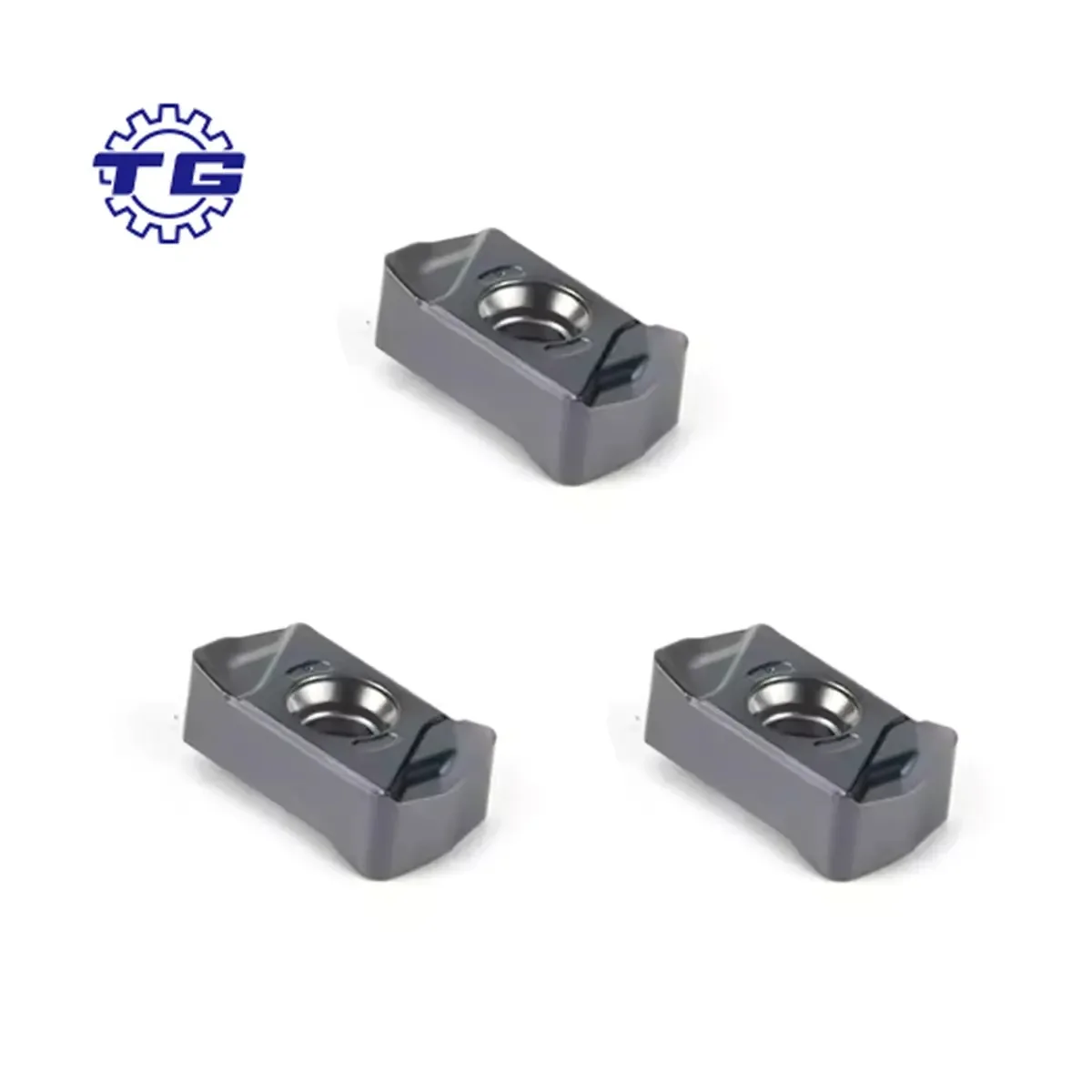
Carbide milling inserts designed with advanced PVD and CVD coating technology address the oxidation challenge at a material science level. These milling inserts form a protective barrier between the cutting edge and the oxygen-rich, heat-saturated atmosphere generated during aggressive metal removal. The result is a dramatic reduction in edge degradation, crater wear, and thermal micro-cracking — three failure modes that silently destroy productivity in high-volume machining environments. This article explores exactly why high-temperature oxidation resistance gives these milling inserts a measurable advantage across multiple cutting scenarios.
The Thermal Threat Facing Milling Inserts in Service
How Oxidation Damages the Cutting Edge
During high-speed milling operations, temperatures at the cutting edge of milling inserts routinely exceed 700°C and can spike well above 1000°C in difficult-to-cut materials such as stainless steel, hardened alloys, and titanium-based workpieces. At these temperatures, unprotected carbide substrates begin reacting with atmospheric oxygen, forming brittle oxide phases that erode the cutting edge geometry progressively. Milling inserts that lack effective oxidation resistance suffer rapid flank wear, loss of edge sharpness, and eventual chipping that forces early tool changes and interrupts production continuity.
The oxidation mechanism is particularly damaging to milling inserts because milling is an interrupted cutting process. Each tooth engagement creates a thermal shock cycle — rapid heating on entry and rapid cooling on exit. This cyclical thermal stress, combined with oxidation, accelerates micro-crack propagation along the cutting edge. Milling inserts with high-temperature oxidation resistance break this cycle by preventing the chemical reaction that weakens the surface layer, keeping the substrate intact even under repeated thermal shock.
Why Stainless Steel Amplifies the Oxidation Risk
Stainless steel presents a uniquely aggressive environment for milling inserts because of its work-hardening behavior and poor thermal conductivity. Heat generated during cutting cannot dissipate quickly into the workpiece, so it concentrates at the cutting edge of the milling inserts instead. This localized heat buildup creates ideal conditions for accelerated oxidation, especially when coolant application is inconsistent or absent. Milling inserts engineered with oxidation-resistant coatings maintain their hardness and edge integrity in these conditions, while uncoated or poorly coated milling inserts begin to fail within a fraction of their expected tool life.
Coating Technology That Delivers Oxidation Resistance
PVD and CVD Coatings on Modern Milling Inserts
The most significant technical development enabling high-temperature oxidation resistance in modern milling inserts is the application of PVD and CVD coatings. PVD coatings such as TiAlN and AlTiN form a stable aluminum oxide layer on the surface of milling inserts when exposed to high temperatures. This thermally induced oxide layer acts as a self-regenerating thermal barrier, actively protecting the carbide substrate from further oxygen penetration. CVD coatings, which are applied at higher deposition temperatures, create thicker, multi-layer structures on milling inserts that provide exceptional crater wear resistance and thermal diffusion barriers.
The combined use of PVD and CVD technologies in a single insert design gives these milling inserts a layered defense against thermal degradation. The outer PVD layer handles the dynamic thermal shock of interrupted cutting, while the CVD inner layers manage heat diffusion away from the cutting edge. Together, these coatings allow milling inserts to sustain cutting performance at temperatures that would instantly compromise uncoated tooling. For operations involving stainless steel or high-alloy materials, this coating synergy is not optional — it is essential for maintaining process stability.
How Coating Integrity Extends the Tool Life of Milling Inserts
Oxidation resistance directly extends the effective tool life of milling inserts by preventing the surface degradation that triggers premature wear. When the coating on milling inserts remains intact under thermal load, the cutting edge retains its geometry longer, which means fewer tool changes per production run and more consistent part quality throughout a batch. Industrial users report that well-coated milling inserts operating in stainless steel applications can achieve significantly longer tool life compared to standard-grade milling inserts, reducing per-part tooling costs and improving overall equipment effectiveness.
Operational Advantages of Oxidation-Resistant Milling Inserts
Process Stability and Dimensional Consistency
One of the most practical advantages that high-temperature oxidation resistance gives milling inserts is the ability to maintain tight tolerances across long production runs. When milling inserts degrade through oxidation, the cutting edge profile changes unpredictably, causing dimensional drift in machined parts. Oxidation-resistant milling inserts hold their geometry reliably, which means machine operators spend less time on in-process measurement, offset adjustments, and scrap analysis. This stability is especially valuable in automated CNC environments where milling inserts must perform consistently without manual intervention between tool changes.
Reduced Coolant Dependency in Demanding Applications
Because oxidation-resistant milling inserts manage thermal loads through coating chemistry rather than relying solely on external coolant, they open the door to dry or near-dry machining strategies. Milling inserts with high-temperature oxidation resistance can sustain performance in semi-dry conditions where coolant delivery is limited or where coolant interaction with certain workpiece materials is undesirable. This flexibility gives manufacturers more process design options and reduces the operational cost associated with coolant filtration, disposal, and maintenance. Milling inserts capable of dry operation also reduce thermal shock from coolant contact, which further protects the coating integrity and extends insert life.
FAQ
What makes carbide milling inserts more oxidation resistant than other tool materials?
Carbide milling inserts combine a tough tungsten carbide substrate with advanced PVD or CVD coatings that form stable oxide layers at high temperatures. This combination gives carbide milling inserts a level of thermal stability and chemical resistance that high-speed steel or uncoated tooling cannot match. The coating chemistry actively resists oxygen penetration, preserving the substrate hardness that milling inserts need to cut effectively under thermal stress.
How do I know when the oxidation-resistant coating on milling inserts has failed?
The most visible sign that the coating on milling inserts has reached the end of its effective life is a change in surface color at the cutting edge, often appearing as darkened or discolored zones. Accelerated flank wear, increased cutting forces, and deteriorating surface finish on the workpiece are practical signals that milling inserts have lost their oxidation protection. At this point, indexing or replacing the milling inserts is necessary to restore process quality and avoid workpiece damage.
Can oxidation-resistant milling inserts be used across multiple material types?
Yes, oxidation-resistant milling inserts are designed for versatility. While they deliver the most pronounced advantages in difficult-to-cut materials like stainless steel and high-alloy workpieces, these milling inserts also perform well in general-purpose steel milling, cast iron, and hardened material applications. The oxidation-resistant coating provides a thermal performance margin that benefits milling inserts across a wide range of cutting conditions, making them a practical choice for shops that process multiple material types on shared tooling setups.