Contact me immediately if you encounter problems!

All Categories

drill inserts

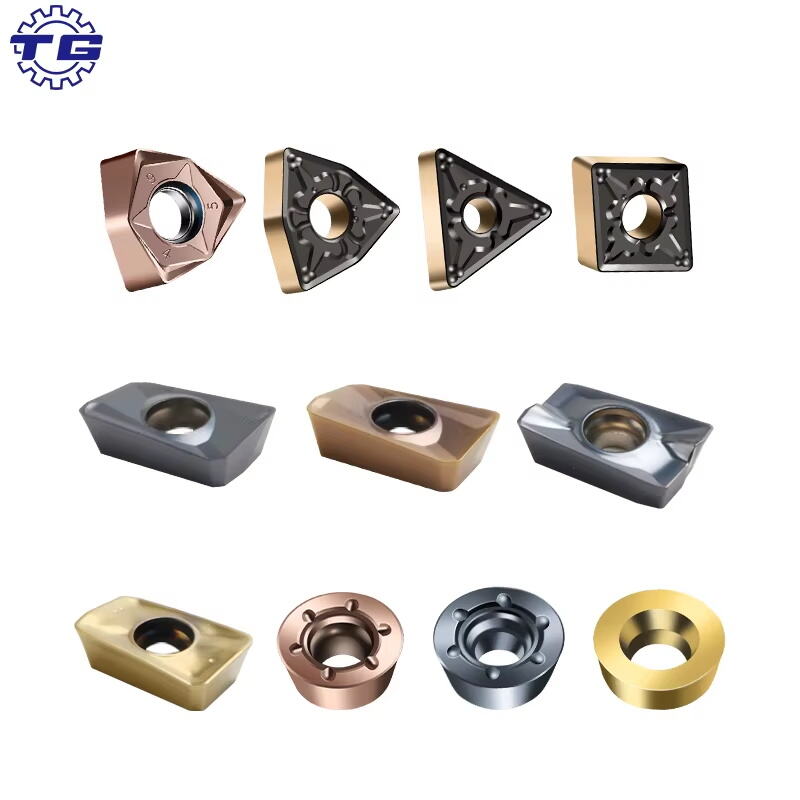
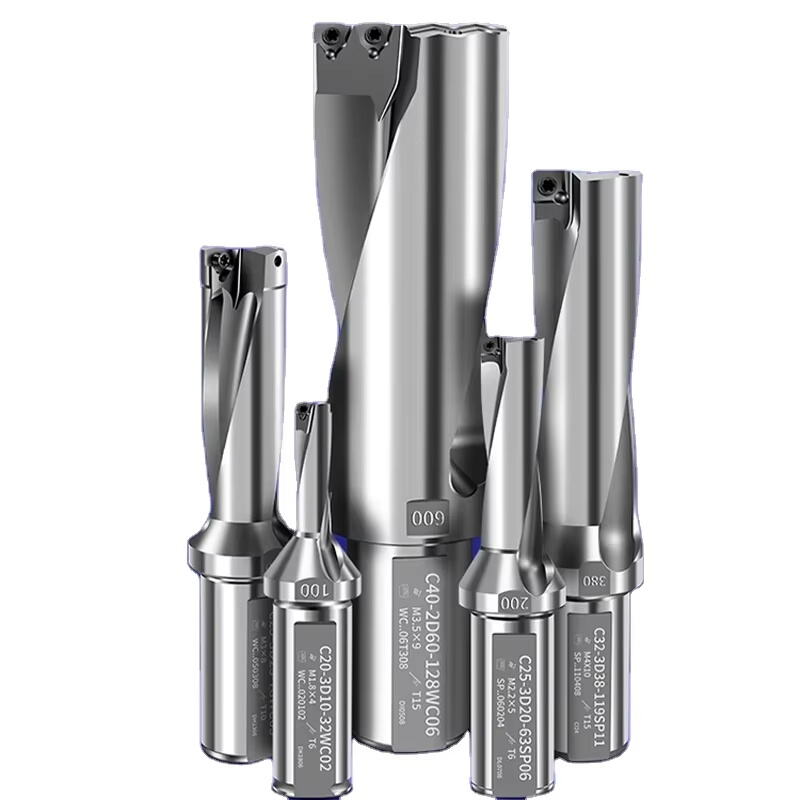
Drill inserts represent a critical advancement in modern machining technology, serving as replaceable cutting components that transform standard drilling operations into precision manufacturing processes. These specialized inserts are engineered to fit securely into drill bodies, providing the actual cutting edges that remove material during drilling operations. The primary function of drill inserts revolves around creating accurate holes in various materials including metals, composites, and other industrial substrates while maintaining dimensional precision and surface finish quality. Unlike traditional solid drills, drill inserts offer a modular approach where only the cutting edge requires replacement when worn, rather than discarding the entire tool assembly. The technological features embedded within drill inserts include advanced carbide grades, sophisticated coating systems, and precisely engineered geometries that optimize chip evacuation and cutting performance. Modern drill inserts incorporate multiple cutting edges, allowing operators to index the insert to a fresh edge when one becomes worn, thereby maximizing tool life and reducing operational costs. The geometric design includes carefully calculated rake angles, clearance angles, and chip breaker configurations that work synergistically to reduce cutting forces and improve hole quality. Applications for drill inserts span numerous industries including aerospace manufacturing, automotive production, oil and gas equipment fabrication, mold and die making, and general engineering workshops. These inserts excel in operations requiring consistent hole quality across production runs, particularly in CNC machining centers where repeatability and tool life directly impact profitability. The versatility of drill inserts extends to various drilling operations such as center drilling, spot drilling, deep hole drilling, and general-purpose drilling across diameter ranges from small precision holes to large diameter applications. The modular nature of drill inserts allows manufacturers to maintain smaller tool inventories since one drill body can accommodate multiple insert types for different materials and applications, streamlining tool management and reducing capital investment in tooling systems.

New Product Releases

Choosing drill inserts for your manufacturing operations delivers substantial economic benefits that directly impact your bottom line through reduced tooling costs and increased productivity. The replaceable nature of these cutting tools means you only purchase new inserts rather than complete drill assemblies, cutting your tooling expenses by sixty to seventy percent compared to solid drill replacements. This cost efficiency becomes particularly significant in high-volume production environments where tool wear occurs rapidly and frequent replacements are necessary. The ability to index drill inserts to fresh cutting edges extends tool life considerably, with most inserts offering multiple usable edges that multiply your investment value. Production efficiency receives a major boost because changing inserts takes mere seconds compared to the time-consuming process of removing and replacing entire drill assemblies, minimizing machine downtime and maximizing productive cutting time. Your operators will appreciate the simplified tool changing process that requires no special skills or extensive training, allowing even less experienced personnel to maintain optimal cutting performance throughout production runs. The consistent performance of drill inserts translates directly to predictable hole quality with tight tolerances that reduce scrap rates and rework requirements, protecting your profit margins and customer satisfaction levels. These inserts accommodate a wide range of cutting parameters, giving your production team flexibility to optimize speeds and feeds for different materials without investing in specialized tooling for each application. The superior chip evacuation designed into modern drill inserts prevents chip packing and reduces cutting temperatures, extending both insert life and protecting your workpiece from heat-related damage or dimensional changes. Quality improvements manifest through better surface finishes and more accurate hole positioning, eliminating secondary operations that consume additional time and resources. Your inventory management becomes simpler and more cost-effective because standardized insert seats allow one drill body to accept various insert grades and geometries, reducing the number of complete tool assemblies you must stock. The advanced coating technologies applied to drill inserts provide enhanced wear resistance and reduced friction, allowing higher cutting speeds that increase production throughput without sacrificing hole quality or tool life. Environmental considerations favor drill inserts as well, since the reduced material waste from replacing only cutting edges rather than complete tools aligns with sustainable manufacturing practices and corporate environmental responsibility goals. The predictable tool life characteristics enable accurate production planning and cost estimation, helping your operations team schedule tool changes during natural production breaks rather than experiencing unexpected failures that disrupt workflow and delivery schedules.

Latest News

What is high speed steel and how does it work?

30

Dec

What is high speed steel and how does it work?

High speed steel represents one of the most significant innovations in metallurgy and machining technology. This specialized alloy has revolutionized manufacturing processes across countless industries, enabling precision cutting operations at speeds...
View More
How do different drill bit materials affect performance?

30

Dec

How do different drill bit materials affect performance?

Understanding the relationship between drill bit materials and their performance characteristics is crucial for professionals working in manufacturing, construction, and metalworking industries. The material composition of a drill bit directly influe...
View More
How to Choose the Right Milling Cutter for Your Project?

10

Feb

How to Choose the Right Milling Cutter for Your Project?

Selecting the appropriate milling cutter for your machining project is a critical decision that directly impacts production efficiency, surface finish quality, and overall manufacturing costs. Whether you're working with aluminum, steel, or exotic al...
View More
What are the differences between high-speed steel and carbide tools?

31

Mar

What are the differences between high-speed steel and carbide tools?

Manufacturing professionals constantly face critical decisions about cutting tool selection, with material choice being perhaps the most fundamental consideration. The choice between high-speed steel and carbide tools directly impacts machining perfo...
View More

Get a Free Quote

Our representative will contact you soon.
Email
Mobile
Name
Company Name
Message
0/1000

drill inserts

Advanced Carbide Substrate Technology Maximizes Durability and Performance

Advanced Carbide Substrate Technology Maximizes Durability and Performance

The foundation of exceptional drill insert performance lies in the sophisticated carbide substrate technology that forms the core material of these cutting tools, delivering unmatched durability and cutting performance across diverse manufacturing applications. Modern drill inserts utilize ultrafine grain carbide substrates manufactured through advanced powder metallurgy processes that achieve grain sizes measured in sub-micron dimensions, creating an extremely dense and uniform material structure. This microscopic grain refinement produces carbide substrates with superior hardness characteristics that resist wear mechanisms including abrasion, adhesion, and diffusion that typically degrade cutting edges during machining operations. The exceptional hardness translates directly to extended tool life, allowing your production operations to complete more parts per insert and reducing the frequency of tool changes that interrupt productive machine time. Beyond hardness, these advanced carbide substrates exhibit remarkable toughness that prevents chipping and fracture even under interrupted cutting conditions or when encountering hard spots and inclusions within workpiece materials. The balance between hardness and toughness represents a critical engineering achievement, as these properties typically oppose each other in material science, yet modern carbide formulations optimize both characteristics simultaneously. Specialized carbide grades are developed for specific application categories, with tougher grades formulated for difficult materials like stainless steels and heat-resistant alloys, while harder grades target high-speed machining of cast irons and non-ferrous materials. This grade variety ensures you can select drill inserts perfectly matched to your specific machining challenges, optimizing performance rather than compromising with general-purpose solutions. The thermal stability of advanced carbide substrates maintains cutting edge integrity even at the elevated temperatures generated during high-speed drilling operations, preventing the softening and plastic deformation that would otherwise accelerate tool wear. Manufacturing precision in substrate production ensures consistent performance from insert to insert, eliminating the performance variations that complicate production planning and quality control in your operations. The investment in advanced carbide substrate technology pays dividends through predictable tool life, consistent hole quality, and the ability to push cutting parameters to achieve maximum productivity without risking premature tool failure or workpiece damage that creates costly scrap.
Multi-Layer Coating Systems Enhance Wear Resistance and Reduce Friction

Multi-Layer Coating Systems Enhance Wear Resistance and Reduce Friction

The transformative impact of multi-layer coating systems on drill insert performance cannot be overstated, as these microscopically thin surface treatments fundamentally alter the interaction between cutting tool and workpiece material to deliver superior results. These sophisticated coatings are applied through physical vapor deposition or chemical vapor deposition processes that build up multiple distinct layers, each engineered to provide specific performance characteristics that work synergistically to enhance overall cutting performance. The typical coating architecture begins with bonding layers that ensure strong adhesion between the carbide substrate and subsequent coating layers, preventing delamination that would cause rapid coating failure and accelerated wear. Intermediate layers often incorporate aluminum oxide for its exceptional heat resistance and chemical stability, creating a thermal barrier that protects the underlying carbide from the extreme temperatures generated at the cutting edge during drilling operations. Outer layers frequently feature titanium-based compounds selected for their low friction coefficients and excellent wear resistance, reducing cutting forces and the power consumption required to drive your drilling operations. The reduced friction translates to lower cutting temperatures, creating a beneficial cycle where decreased heat generation further extends tool life and improves workpiece surface finish by minimizing thermal damage and material displacement. Advanced coating formulations incorporate multiple elements in complex compounds or nanolayer architectures where individual layers measure only a few nanometers thick, creating interfaces that inhibit crack propagation and enhance overall coating durability. The color variations in different coating systems provide convenient visual identification, allowing your operators to quickly select the appropriate insert grade for specific materials and applications without consulting detailed documentation. Coating performance extends beyond simple wear resistance to include anti-adhesion properties that prevent built-up edge formation, a common problem when machining sticky materials like aluminum alloys or low-carbon steels that tend to weld onto cutting edges. This anti-adhesion characteristic maintains sharp, consistent cutting geometry throughout the tool life, ensuring hole quality remains stable from the first hole to the final hole before insert replacement. The chemical inertness of modern coating systems provides protection against chemical wear mechanisms that occur when machining reactive materials at high temperatures, situations where uncoated tools would experience rapid diffusion wear. Your productivity gains become measurable as coated drill inserts enable higher cutting speeds while simultaneously extending tool life, allowing you to drill more holes per shift without increasing tool costs or compromising quality standards that satisfy your customers and maintain your competitive position.
Precision-Engineered Geometry Optimizes Chip Evacuation and Cutting Action

Precision-Engineered Geometry Optimizes Chip Evacuation and Cutting Action

The geometric design of drill inserts represents a sophisticated engineering achievement that orchestrates multiple cutting parameters simultaneously to optimize material removal, chip formation, and hole quality across diverse applications. Every dimensional aspect of insert geometry is carefully calculated through advanced computer modeling and validated through extensive cutting trials to ensure optimal performance under real-world manufacturing conditions. The cutting edge geometry begins with precisely controlled edge preparations that may include honing, chamfering, or specialized edge treatments that strengthen the cutting edge against microchipping while maintaining sharpness for efficient material removal. These edge preparations are measured in microns and vary according to the intended application, with tougher edge preparations for interrupted cuts or difficult materials, and sharper edges for finishing operations requiring superior surface quality. The rake angle machined into the insert face controls how aggressively the cutting edge engages workpiece material, with positive rake angles reducing cutting forces and power requirements, particularly beneficial when machining softer materials or operating on machines with limited power availability. Chip breaker features molded or ground into the insert surface control chip formation and evacuation, breaking long stringy chips into manageable segments that evacuate efficiently through the flutes without packing or causing recutting that accelerates wear and degrades hole quality. The strategic positioning and geometry of these chip breakers is optimized for specific material types and cutting parameters, ensuring effective chip control across your production applications whether drilling mild steel, stainless steel, cast iron, or non-ferrous materials. Relief angles ground behind the cutting edges prevent rubbing between the insert and newly machined hole surfaces, reducing friction and heat generation while improving surface finish and dimensional accuracy of produced holes. The point angle and web thickness of drill inserts influence centering accuracy and the axial forces generated during drilling, with design variations optimized for different applications from precise hole location in thin sheet materials to aggressive material removal in deep hole drilling operations. Coolant delivery features integrated into insert geometry ensure cutting fluid reaches the cutting zone effectively, providing cooling and lubrication that extends tool life while flushing chips away from the cutting area to prevent recutting and surface damage. The indexability of modern drill inserts with multiple cutting edges represents a geometric design challenge successfully addressed through precise angular positioning and consistent edge-to-edge manufacturing quality that ensures each indexed position performs identically. Your machining results improve measurably with optimized insert geometry through straighter holes with better positional accuracy, superior surface finishes that may eliminate secondary operations, and consistent dimensional control that reduces inspection requirements and scrap rates throughout production runs.
drill inserts-0
drill inserts-1

Get a Free Quote

Our representative will contact you soon.
Email
Mobile
Name
Company Name
Message
0/1000