Contact me immediately if you encounter problems!

All Categories

insert turning tools

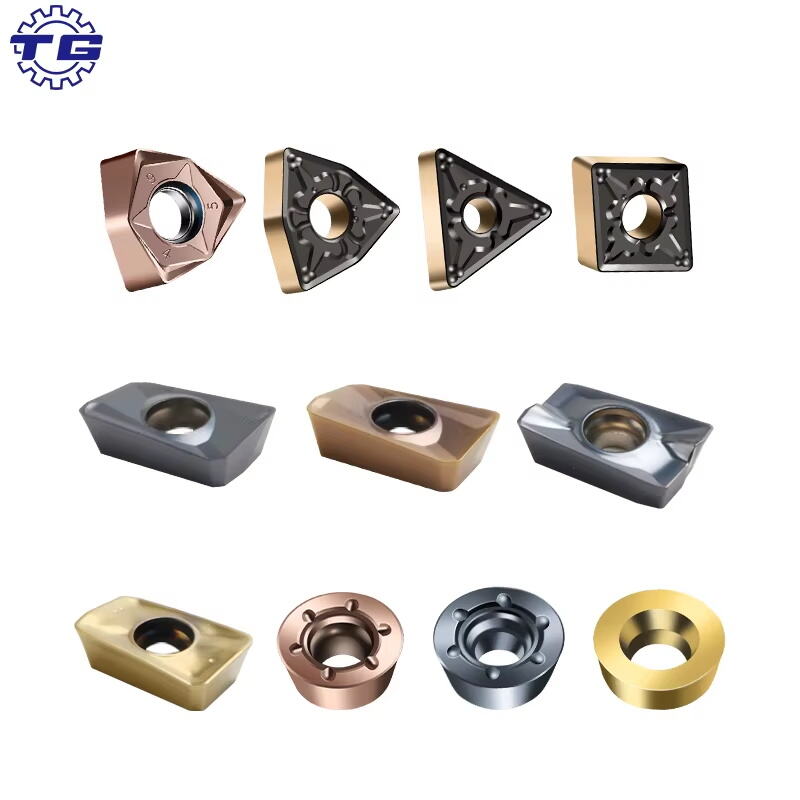
Insert turning tools represent a revolutionary advancement in modern metalworking and machining operations, offering manufacturers and machinists an efficient solution for precision turning applications. These specialized cutting tools feature replaceable carbide inserts that mount securely onto tool holders, eliminating the need for resharpening and providing consistent cutting performance throughout their lifecycle. The fundamental design of insert turning tools consists of a durable tool holder body and indexable inserts that can be quickly changed when worn, significantly reducing downtime and maintaining productivity levels. Insert turning tools excel in removing material from rotating workpieces, creating cylindrical shapes, facing operations, grooving, threading, and contour turning across various materials including steel, stainless steel, aluminum, cast iron, and exotic alloys. The technological foundation of these tools incorporates advanced carbide grades, precise geometries, and specialized coatings that enhance wear resistance, heat dissipation, and cutting efficiency. Modern insert turning tools utilize sophisticated clamping mechanisms that ensure insert stability during high-speed operations while allowing rapid indexing or replacement without requiring special tools or extensive setup time. Applications span across automotive manufacturing, aerospace component production, general machining shops, oil and gas equipment fabrication, medical device manufacturing, and heavy equipment production facilities. The versatility of insert turning tools makes them indispensable for both roughing operations that remove large amounts of material quickly and finishing operations that achieve tight tolerances and superior surface finishes. These tools accommodate various insert shapes including triangular, square, diamond, and round configurations, each optimized for specific cutting conditions and workpiece geometries. The standardization of insert dimensions and mounting systems across manufacturers ensures compatibility and reduces inventory complexity for machine shops. Insert turning tools deliver exceptional performance in both conventional lathe operations and CNC turning centers, adapting seamlessly to manual machining environments and fully automated production lines where consistency and reliability prove essential for maintaining quality standards and meeting production targets.

New Product Recommendations

The primary advantage of insert turning tools lies in their remarkable cost-effectiveness compared to traditional solid cutting tools that require complete replacement when worn. When an insert reaches the end of its cutting life, operators simply index it to a fresh cutting edge or replace only the small insert rather than discarding an entire expensive tool body. This approach dramatically reduces tooling costs over time, particularly in high-volume production environments where cutting edges wear quickly. The speed and simplicity of insert changes translate directly into increased machine uptime and productivity, as operators can swap inserts in seconds without removing the tool holder from the machine or performing complex setup procedures. This quick-change capability becomes especially valuable in manufacturing facilities operating multiple shifts where minimizing non-cutting time directly impacts profitability and throughput. Insert turning tools provide exceptional consistency in part dimensions and surface finish because fresh cutting edges maintain identical geometry and cutting characteristics, eliminating variations that occur when resharpening traditional tools. The wide selection of insert grades, geometries, and coatings available allows machinists to optimize cutting parameters for specific materials and applications, achieving faster cutting speeds, improved tool life, and better surface finishes than possible with general-purpose tools. Modern insert turning tools incorporate chip-breaking features molded directly into the insert geometry, effectively controlling chip formation and evacuation to prevent chip entanglement, reduce heat buildup, and protect both the workpiece and machine components from damage. The robust construction of insert turning tools enables them to withstand interrupted cuts, hard materials, and demanding cutting conditions that would quickly destroy conventional tools, making them ideal for challenging applications in difficult-to-machine materials. Maintenance requirements for insert turning tools remain minimal since the tool holder body typically lasts for years with proper care, and operators never face the time and expense associated with tool resharpening services or maintaining grinding equipment. The predictability of insert performance allows production planners to accurately estimate tool life and schedule insert changes during planned maintenance windows rather than dealing with unexpected tool failures that disrupt production schedules. Insert turning tools contribute to improved workplace safety by reducing the need for manual tool grinding operations that generate dust and sparks while requiring operators to work with potentially dangerous grinding wheels. Environmental benefits emerge from reduced material waste since only small inserts require disposal rather than entire tool assemblies, and many facilities implement recycling programs that recover valuable carbide material from spent inserts. The standardization of insert turning tools simplifies training for new machinists who can quickly learn insert selection, installation, and indexing procedures without mastering the complex skills required for traditional tool grinding and setup operations.

Practical Tips

How do different drill bit materials affect performance?

30

Dec

How do different drill bit materials affect performance?

Understanding the relationship between drill bit materials and their performance characteristics is crucial for professionals working in manufacturing, construction, and metalworking industries. The material composition of a drill bit directly influe...
View More
What are the main uses of tungsten carbide?

28

Feb

What are the main uses of tungsten carbide?

Tungsten carbide represents one of the most versatile and durable materials in modern industrial applications, combining exceptional hardness with remarkable wear resistance. This compound material, formed by combining tungsten and carbon atoms in eq...
View More
What are the differences between high-speed steel and carbide tools?

31

Mar

What are the differences between high-speed steel and carbide tools?

Manufacturing professionals constantly face critical decisions about cutting tool selection, with material choice being perhaps the most fundamental consideration. The choice between high-speed steel and carbide tools directly impacts machining perfo...
View More
What Safety Measures Are Essential in Holemaking Operations?

31

Mar

What Safety Measures Are Essential in Holemaking Operations?

Holemaking operations represent one of the most fundamental yet potentially hazardous processes in manufacturing environments. These operations involve creating precise holes in various materials using drilling, reaming, boring, and related machining...
View More

Get a Free Quote

Our representative will contact you soon.
Email
Mobile
Name
Company Name
Message
0/1000

insert turning tools

Superior Productivity Through Rapid Insert Indexing and Replacement

Superior Productivity Through Rapid Insert Indexing and Replacement

Insert turning tools revolutionize manufacturing efficiency by enabling operators to maintain continuous production with minimal interruption for tool maintenance. The innovative design allows machinists to index a worn cutting edge to a fresh position or completely replace an insert in less than thirty seconds, compared to the extended downtime required for removing, resharpening, and resetting traditional cutting tools. This rapid exchange capability proves particularly valuable in high-mix production environments where frequent tool changes accommodate different materials, cutting conditions, or part geometries throughout a production shift. The secure clamping mechanisms employed in modern insert turning tools ensure that newly installed or indexed inserts immediately achieve proper positioning and stability without requiring dial indicator verification or test cuts to confirm accuracy. Manufacturing facilities operating continuous production schedules benefit enormously from the predictable tool life characteristics of insert turning tools, enabling supervisors to schedule insert changes during planned breaks or shift changes rather than experiencing unexpected production stoppages due to tool failure. The elimination of tool resharpening from the production workflow removes a significant bottleneck that traditionally consumed valuable floor space, required specialized equipment and skills, and introduced variability in tool performance as resharpened geometries deviated from original specifications. Insert turning tools support lean manufacturing initiatives by reducing work-in-process inventory since parts move smoothly through machining operations without queuing while waiting for tools to be resharpened and returned to service. The consistent performance of fresh insert cutting edges ensures that the first part machined after an insert change meets the same quality standards as the last part before the change, eliminating the adjustment period often necessary when installing resharpened tools. Operators appreciate the straightforward nature of insert turning tools since they can focus on optimizing cutting parameters and monitoring part quality rather than struggling with tool grinding techniques or dealing with unpredictable tool behavior. The economic impact of reduced downtime extends beyond direct labor savings to include improved equipment utilization rates, increased capacity to accept additional orders without capital investment in new machines, and enhanced ability to meet tight delivery schedules that strengthen customer relationships. Insert turning tools enable lights-out manufacturing operations where machines run unattended during nights and weekends because the extended tool life and reliability of carbide inserts minimize the risk of mid-cycle tool failures that could damage workpieces, fixtures, or machine components.
Exceptional Versatility Across Materials and Machining Applications

Exceptional Versatility Across Materials and Machining Applications

Insert turning tools deliver outstanding adaptability to handle the diverse range of materials and cutting challenges encountered in modern manufacturing operations. The extensive variety of insert grades available addresses everything from soft aluminum alloys requiring sharp cutting edges and high rake angles to hardened steels demanding tough substrates and wear-resistant coatings that withstand extreme cutting temperatures and abrasive wear. Manufacturers offer specialized insert geometries optimized for specific operations including roughing with aggressive chip breakers that handle high material removal rates, finishing with precision edges that generate superior surface texture, and general-purpose designs that balance versatility with performance across multiple applications. The ability to quickly change between insert types transforms a single tool holder into a multi-functional asset capable of performing diverse operations without requiring complete tool changes or extensive machine setup modifications. Insert turning tools accommodate interrupted cutting conditions common when machining castings, forgings, or welded assemblies that contain hard spots, scale, or irregular surfaces that would rapidly destroy conventional cutting tools through impact damage or thermal shock. The modular nature of insert turning tools allows machine shops to maintain a relatively compact insert inventory that supports a wide range of jobs rather than stocking numerous complete tool assemblies for each specific application, significantly reducing capital tied up in tooling inventory. Advanced coating technologies including titanium nitride, titanium carbonitride, and aluminum oxide layers enhance insert performance by reducing friction, preventing built-up edge formation, and extending tool life when machining sticky materials like stainless steel or titanium alloys that present significant machining challenges. Insert turning tools excel in both external turning operations that shape outside diameters and internal boring applications that machine holes and internal features, providing complete machining solutions for complex parts that require multiple operations. The precise manufacturing tolerances maintained during insert production ensure consistent dimensions and cutting edge quality, enabling machinists to achieve repeatable results even when using inserts from different production lots or suppliers. Threading inserts designed for insert turning tools create accurate thread forms for both external and internal threads, eliminating the need for specialized threading equipment and expanding the capabilities of standard turning centers. Grooving and parting inserts integrate seamlessly with insert turning tools to perform cut-off operations and create precise grooves for O-ring seals, retaining rings, or dimensional features without requiring dedicated grooving tools or additional machine setups. The heat resistance of carbide inserts permits aggressive cutting parameters that substantially reduce cycle times compared to high-speed steel tools, directly improving productivity and reducing per-part manufacturing costs in competitive markets where efficiency determines profitability.
Enhanced Tool Life and Predictable Performance for Quality Assurance

Enhanced Tool Life and Predictable Performance for Quality Assurance

Insert turning tools provide manufacturers with reliable, consistent cutting performance that supports stringent quality control requirements and reduces process variability in precision machining operations. The carbide materials used in modern inserts exhibit exceptional hardness and wear resistance that maintains sharp cutting edges far longer than traditional tool materials, enabling extended production runs between tool changes that improve process stability and reduce the frequency of dimensional adjustments. Specialized coatings applied to insert turning tools through physical vapor deposition or chemical vapor deposition processes create protective barriers that further extend tool life by reducing crater wear on rake faces and flank wear on clearance surfaces that gradually degrade cutting edge geometry and part quality. The predictable wear patterns exhibited by quality inserts allow experienced machinists to establish reliable tool change intervals based on actual production data rather than making premature changes that waste remaining tool life or risking excessive wear that compromises part dimensions and surface finish. Statistical process control initiatives benefit significantly from the consistency of insert turning tools since reduced tool-related variability makes it easier to identify other process factors affecting part quality such as machine condition, workpiece material variations, or coolant degradation. The geometric accuracy molded into inserts during manufacturing ensures that each cutting edge within a single insert and across multiple inserts maintains identical dimensions and angles, producing parts with consistent characteristics regardless of which cutting edge or insert is currently in use. Insert turning tools support aggressive quality improvement programs by eliminating tool geometry variability as a contributing factor to dimensional drift or surface finish degradation, allowing quality teams to focus improvement efforts on other process elements. The ability to machine multiple parts on a single cutting edge without dimensional changes reduces the frequency of in-process inspections required to verify that parts remain within tolerance, freeing quality personnel for other value-added activities while maintaining confidence in product conformance. Manufacturers serving industries with critical quality requirements such as aerospace, medical devices, or automotive safety components rely on insert turning tools to deliver the process capability and repeatability necessary to meet demanding specifications and pass rigorous customer audits. The documentation and traceability available with modern insert turning tools including grade specifications, coating types, and production lot numbers support quality management systems and provide evidence of process control for regulated industries. Tool life monitoring systems integrated with CNC turning centers track insert usage and automatically prompt operators to perform tool changes at optimal intervals, preventing unexpected tool failures that could generate scrap parts or require expensive sorting and inspection of suspect production. Insert turning tools contribute to continuous improvement initiatives by providing a stable baseline that allows engineers to evaluate the impact of process changes such as modified cutting parameters, different coolant formulations, or alternative workpiece materials without confounding variables introduced by inconsistent tool performance.
insert turning tools-0
insert turning tools-1

Get a Free Quote

Our representative will contact you soon.
Email
Mobile
Name
Company Name
Message
0/1000