Contact me immediately if you encounter problems!

All Categories

aluminum turning inserts

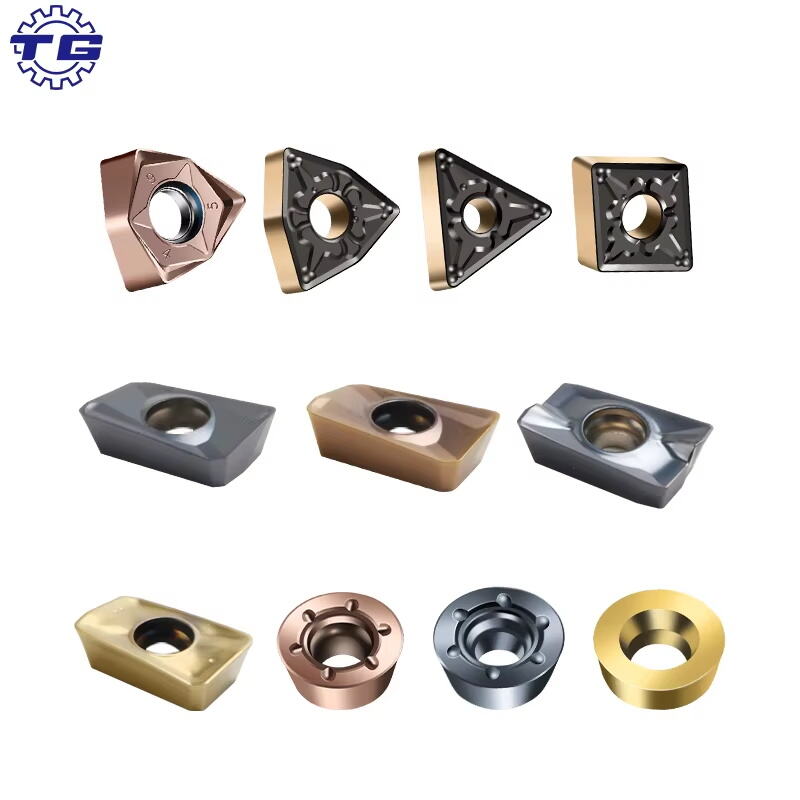
Aluminum turning inserts represent specialized cutting tools engineered specifically for machining aluminum and aluminum alloy workpieces on lathes and turning centers. These precision-manufactured inserts feature geometries, coatings, and substrate materials optimized to handle the unique characteristics of aluminum materials. The main function of aluminum turning inserts is to remove material efficiently from rotating aluminum workpieces while producing superior surface finishes and maintaining tight dimensional tolerances. Unlike general-purpose cutting tools, aluminum turning inserts incorporate sharp cutting edges with highly polished rake faces that prevent the soft aluminum material from adhering to the tool surface, a common problem known as built-up edge. The technological features of these inserts include positive rake angles ranging from 10 to 20 degrees, which reduce cutting forces and minimize workpiece deformation. Many aluminum turning inserts utilize uncoated carbide substrates or specialized coatings like diamond or diamond-like carbon that provide the necessary hardness while maintaining the sharp edge definition required for aluminum machining. The chip breaker geometries on aluminum turning inserts are specifically designed to handle the long, stringy chips that aluminum produces, breaking them into manageable segments for easy evacuation. These inserts typically feature larger clearance angles compared to steel-cutting inserts, preventing rubbing and reducing heat generation during the cutting process. Applications for aluminum turning inserts span numerous industries including aerospace, automotive, electronics, medical devices, and general manufacturing where aluminum components are prevalent. These tools excel in operations such as external turning, facing, profiling, and grooving of aluminum parts ranging from small precision components to large structural elements. The inserts accommodate various aluminum grades including pure aluminum, heat-treatable alloys, casting alloys, and high-silicon aluminum materials used in automotive engine blocks and transmission housings.

New Products

Using aluminum turning inserts delivers substantial practical benefits that directly impact your production efficiency and bottom line. First and foremost, these specialized inserts dramatically increase your cutting speeds compared to general-purpose tools. You can operate at speeds exceeding 1000 surface feet per minute, which means you complete jobs faster and produce more parts per shift. This speed advantage translates into reduced cycle times and increased machine utilization rates across your workshop. The precision geometry of aluminum turning inserts ensures exceptional surface finishes straight from the cutting operation, often eliminating or reducing secondary finishing processes. This saves you time and labor costs while delivering parts that meet stringent quality requirements. Your operators will appreciate how these inserts generate less heat during cutting operations, which protects workpiece integrity and dimensional accuracy. Lower cutting temperatures mean less thermal expansion and distortion, resulting in parts that hold tighter tolerances without requiring additional cooling strategies. The sharp cutting edges and optimized rake angles reduce cutting forces significantly, which protects your machine tools from excessive wear and extends spindle bearing life. This reduction in mechanical stress also allows you to machine thin-walled aluminum components without deflection or chatter, expanding your capability to handle delicate parts. Tool life improvements represent another major advantage, as aluminum turning inserts maintain their cutting performance through numerous parts before requiring replacement. The specialized coatings and substrates resist aluminum adhesion and abrasive wear, keeping edges sharp longer than conventional tooling. This extended tool life reduces your per-part tooling costs and minimizes machine downtime for tool changes. The efficient chip breaking characteristics prevent long, tangled chips from interfering with your machining operations, reducing the risk of chip-related surface damage and eliminating time spent clearing chip nests. Your maintenance staff will spend less time dealing with chip management issues. Aluminum turning inserts also provide consistency across production runs, delivering repeatable results part after part. This reliability reduces scrap rates and rework expenses while building confidence in your manufacturing processes. The economic benefits extend beyond direct cost savings to include improved delivery performance, enhanced customer satisfaction, and competitive advantages in bidding situations where aluminum machining capabilities matter.

Tips And Tricks

How to extend the lifespan of high-speed steel cutting tools?

20

Jan

How to extend the lifespan of high-speed steel cutting tools?

Modern manufacturing industries demand exceptional accuracy and efficiency in their machining operations, making steel precision cutting tools an indispensable component of successful production processes. These specialized instruments represent the ...
View More
How CNC Tools Improve Accuracy in Precision Manufacturing

28

Feb

How CNC Tools Improve Accuracy in Precision Manufacturing

Precision manufacturing has revolutionized modern industry by delivering components with unprecedented accuracy and consistency. At the heart of this technological advancement lies the sophisticated world of CNC tools, which have transformed how manu...
View More
Why Are Carbide End Mills Better for Metal Cutting?

31

Mar

Why Are Carbide End Mills Better for Metal Cutting?

When it comes to precision metal cutting operations, the choice of cutting tool directly impacts productivity, surface finish quality, and overall manufacturing costs. Carbide end mills have emerged as the preferred solution for demanding metal cutti...
View More
Why Advanced Holemaking Methods Improve Product Quality

31

Mar

Why Advanced Holemaking Methods Improve Product Quality

Manufacturing precision directly correlates with product quality, and nowhere is this relationship more evident than in holemaking operations. Advanced holemaking methods represent a significant evolution from traditional drilling techniques, offerin...
View More

Get a Free Quote

Our representative will contact you soon.
Email
Mobile
Name
Company Name
Message
0/1000

aluminum turning inserts

Superior Cutting Edge Technology for Flawless Aluminum Machining

Superior Cutting Edge Technology for Flawless Aluminum Machining

The cutting edge technology incorporated into aluminum turning inserts represents a breakthrough in precision manufacturing capabilities that sets these tools apart from conventional options. At the heart of this technology lies an ultra-sharp cutting edge produced through advanced grinding processes that achieve edge preparations measured in micrometers. This razor-sharp edge is absolutely critical when working with aluminum because the material's softness and tendency to smear require a tool that cleanly shears rather than deforms the workpiece material. The edge geometry features precisely controlled honing that balances sharpness with sufficient strength to resist chipping during interrupted cuts or when encountering harder second-phase particles in aluminum alloys. Engineers design the rake face with mirror-polished surfaces that minimize friction between the chip and tool, preventing aluminum from welding onto the insert surface. This polished rake face works in conjunction with generous positive rake angles that slice through aluminum with minimal resistance, reducing the power required for cutting and decreasing heat generation. The relief angles are substantially larger than those found on inserts designed for ferrous materials, providing clearance that prevents the trailing edge from rubbing against the freshly machined surface. This design consideration is crucial because aluminum's thermal expansion characteristics make rubbing particularly problematic, leading to poor surface finish and dimensional inaccuracies. Advanced aluminum turning inserts incorporate specialized chip breaker patterns that address aluminum's notorious chip formation behavior. Unlike steel chips that break naturally, aluminum produces continuous, stringy chips that can wrap around the tool, workpiece, or machine components. The chip breakers feature carefully calculated step heights, widths, and angles that impose controlled deformation on the emerging chip, causing it to curl tightly and fracture into short segments. This chip control technology protects surface finish quality, improves operator safety, and maintains uninterrupted production flow. The substrate materials selected for aluminum turning inserts utilize fine-grained carbide compositions that support extremely sharp edges while providing the toughness needed for production environments. Some premium inserts employ polycrystalline diamond or chemical vapor deposited diamond coatings that offer unmatched wear resistance and thermal conductivity.
Unmatched Productivity Through Optimized Cutting Parameters

Unmatched Productivity Through Optimized Cutting Parameters

Aluminum turning inserts unlock productivity levels that fundamentally transform your manufacturing economics through their ability to operate at cutting parameters far exceeding what conventional tooling can withstand. The productivity advantage begins with cutting speeds that reach into ranges previously considered impossible for turning operations. Where traditional tools might limit you to speeds of 300 to 500 surface feet per minute, aluminum turning inserts comfortably operate at 800 to 1500 surface feet per minute depending on the specific alloy and application requirements. This dramatic speed increase directly translates into proportional reductions in machining time, allowing you to produce two to three times more parts in the same shift. The economic impact extends beyond simple throughput improvements because faster cycling also means better utilization of your capital equipment investments. Every lathe and turning center in your facility generates more revenue per hour when equipped with aluminum turning inserts, improving your return on assets and competitive positioning. The feed rate capabilities of these specialized inserts complement their speed advantages, enabling aggressive material removal rates that further compress cycle times. You can employ feeds ranging from moderate finishing passes at 0.005 inches per revolution up to heavy roughing cuts at 0.030 inches per revolution or more, depending on part geometry and rigidity. This flexibility allows you to optimize each operation for maximum efficiency rather than accepting compromise parameters that general-purpose tools impose. The combination of high speeds and feeds delivers metal removal rates that can exceed several cubic inches per minute, making even complex aluminum components economically viable in high-volume production scenarios. Productivity gains from aluminum turning inserts also manifest in reduced setup and changeover times because the inserts' consistency and reliability minimize the need for test cuts and adjustments. Your operators can confidently establish cutting parameters based on proven data rather than cautiously approaching each job with conservative settings. The extended tool life characteristics mean fewer interruptions for insert indexing or replacement, keeping your machines in the cut rather than waiting for tool changes. This continuous production capability is particularly valuable in lights-out manufacturing operations where unattended running time directly determines profitability. The superior surface finishes achieved by aluminum turning inserts often eliminate downstream operations such as grinding or polishing, removing entire process steps from your production flow.
Exceptional Versatility Across Aluminum Alloy Families

Exceptional Versatility Across Aluminum Alloy Families

The versatility of modern aluminum turning inserts represents a significant strategic advantage for manufacturers who work with diverse aluminum materials and applications. These inserts demonstrate remarkable adaptability across the complete spectrum of aluminum alloys, from pure aluminum grades through complex heat-treatable compositions to challenging high-silicon casting alloys. This broad capability means you can standardize on a smaller range of insert geometries while maintaining optimal performance across your entire product mix, simplifying inventory management and reducing the complexity of tool selection decisions. When machining pure aluminum or low-alloy compositions in the 1xxx series, aluminum turning inserts deliver the mirror-like surface finishes that these soft, ductile materials demand while preventing built-up edge formation that plagues conventional tooling. For the 2xxx series aerospace alloys containing copper, these inserts maintain sharp cutting edges that cleanly machine the harder precipitates while managing the stringy chip formation characteristics these materials exhibit. The 6xxx series extrusions used extensively in architectural and automotive applications machine beautifully with aluminum turning inserts, which handle both the relatively soft solution heat-treated condition and the harder aged conditions with equal proficiency. High-strength 7xxx series alloys present unique challenges due to their hardness and abrasive nature, but specialized aluminum turning inserts with enhanced wear resistance coatings excel in these demanding applications. Perhaps most impressively, aluminum turning inserts effectively machine the hypereutectic aluminum-silicon alloys used in automotive engine blocks and other casting applications despite the presence of extremely hard silicon particles that rapidly wear conventional tools. The geometric flexibility of aluminum turning inserts extends to the variety of turning operations they support, from heavy roughing cuts that remove large volumes of material quickly to precision finishing passes that produce surface finishes measured in single-digit microinches. The same insert grade can often handle facing operations, external diameter turning, profiling of complex contours, and even light grooving applications, reducing the number of different tools required for complete part production. This operational versatility streamlines your tool management systems and reduces machine downtime associated with tool changes. Aluminum turning inserts adapt equally well to different machine tool platforms, performing excellently on manual lathes, CNC turning centers, and multi-axis mill-turn machines. They accommodate various coolant strategies including flood cooling, through-spindle coolant, and minimum quantity lubrication systems, providing flexibility to match your facility's infrastructure and environmental preferences.

aluminum turning inserts-0
aluminum turning inserts-1

Get a Free Quote

Our representative will contact you soon.
Email
Mobile
Name
Company Name
Message
0/1000