Contact me immediately if you encounter problems!

All Categories

aluminium turning inserts

Aluminium turning inserts represent specialized cutting tools designed specifically for machining aluminium and its alloys with exceptional precision and efficiency. These inserts are engineered as replaceable cutting edges that mount onto turning tool holders, providing manufacturers with a cost-effective solution for producing high-quality aluminium components. The primary function of aluminium turning inserts is to remove material from rotating aluminium workpieces, creating precise dimensions, smooth surface finishes, and complex geometrical shapes required in modern manufacturing processes. These cutting tools feature advanced geometries and coatings that address the unique challenges associated with aluminium machining, including material adhesion, built-up edge formation, and thermal management. The technological features of aluminium turning inserts include ultra-sharp cutting edges with highly polished rake faces that minimize friction and prevent aluminium from welding to the tool surface. Many inserts incorporate specially designed chip breakers that control chip formation and evacuation, preventing long, stringy chips that can interfere with machining operations. The substrate materials typically consist of fine-grained carbide or polycrystalline diamond, selected for their hardness, wear resistance, and ability to maintain sharp cutting edges throughout extended production runs. Advanced surface treatments and coatings further enhance performance by reducing friction and preventing material buildup. Applications for aluminium turning inserts span numerous industries, including aerospace, automotive, electronics, medical devices, and general manufacturing. In aerospace applications, these inserts machine critical aluminium components such as structural parts, engine housings, and landing gear components where tight tolerances and superior surface quality are mandatory. Automotive manufacturers rely on aluminium turning inserts for producing engine blocks, transmission cases, wheel components, and suspension parts. The electronics industry uses these tools for creating heat sinks, enclosures, and precision mounting brackets. Medical device manufacturers depend on aluminium turning inserts for producing surgical instruments, diagnostic equipment housings, and prosthetic components that require biocompatible aluminium alloys machined to exacting specifications.


Popular Products

Aluminium turning inserts deliver remarkable productivity improvements that directly impact your manufacturing bottom line. These specialized tools enable significantly higher cutting speeds compared to general-purpose inserts, often allowing you to double or triple your machining rates without sacrificing quality. The increased speed translates to shorter cycle times, meaning you can produce more parts per shift and fulfill orders faster. The extended tool life of aluminium turning inserts reduces the frequency of tool changes, minimizing machine downtime and keeping your production lines running smoothly. You will notice fewer interruptions during production runs, which means your operators spend more time making parts and less time changing tools. This consistency improves scheduling reliability and helps you meet tight delivery deadlines. The superior surface finish quality achieved with aluminium turning inserts often eliminates or reduces secondary finishing operations. Parts come off the machine with smooth, professional surfaces that meet specifications immediately, saving you additional processing time and labor costs. This single-pass capability streamlines your workflow and reduces handling between operations. Cost savings become evident through multiple channels when you implement aluminium turning inserts. The replaceable insert design means you only replace the cutting edge rather than the entire tool body, reducing your tooling expenses substantially. The carbide substrate can be recycled, supporting your sustainability initiatives while recovering material value. Improved chip control prevents production problems that waste time and materials. The specialized chip breakers on aluminium turning inserts create manageable chips that evacuate cleanly from the cutting zone, preventing chip wrapping around the workpiece or tool that can damage parts and halt production. Clean chip evacuation also improves operator safety by reducing sharp, tangled chip hazards in the work area. The versatility of aluminium turning inserts allows you to machine various aluminium alloys with a single tool type, simplifying your inventory management. You can process everything from soft pure aluminium to harder aerospace alloys without switching to completely different tooling systems. This flexibility reduces the number of tool types you need to stock and simplifies tool selection for your programmers and operators. Precision and repeatability improve because aluminium turning inserts maintain consistent cutting geometry throughout their service life. The predictable wear patterns allow you to establish reliable tool change intervals based on part counts rather than guesswork, improving quality control and reducing scrap from worn tools. Your parts will show consistent dimensions and surface characteristics from the first piece to the last in each production batch.

Practical Tips

What is high speed steel and how does it work?

30

Dec

What is high speed steel and how does it work?

High speed steel represents one of the most significant innovations in metallurgy and machining technology. This specialized alloy has revolutionized manufacturing processes across countless industries, enabling precision cutting operations at speeds...
View More
How to Choose the Right Milling Cutter for Your Project?

10

Feb

How to Choose the Right Milling Cutter for Your Project?

Selecting the appropriate milling cutter for your machining project is a critical decision that directly impacts production efficiency, surface finish quality, and overall manufacturing costs. Whether you're working with aluminum, steel, or exotic al...
View More
When should you use carbide vs HSS end mill cutters?

10

Feb

When should you use carbide vs HSS end mill cutters?

Selecting the right cutting tool for machining operations is crucial for achieving optimal performance, surface finish, and tool longevity. The choice between carbide and high-speed steel (HSS) end mill cutters significantly impacts manufacturing eff...
View More
What are the main uses of tungsten carbide?

28

Feb

What are the main uses of tungsten carbide?

Tungsten carbide represents one of the most versatile and durable materials in modern industrial applications, combining exceptional hardness with remarkable wear resistance. This compound material, formed by combining tungsten and carbon atoms in eq...
View More

Get a Free Quote

Our representative will contact you soon.
Email
Mobile
Name
Company Name
Message
0/1000

aluminium turning inserts

Advanced Cutting Edge Geometry for Superior Aluminium Machining Performance

Advanced Cutting Edge Geometry for Superior Aluminium Machining Performance

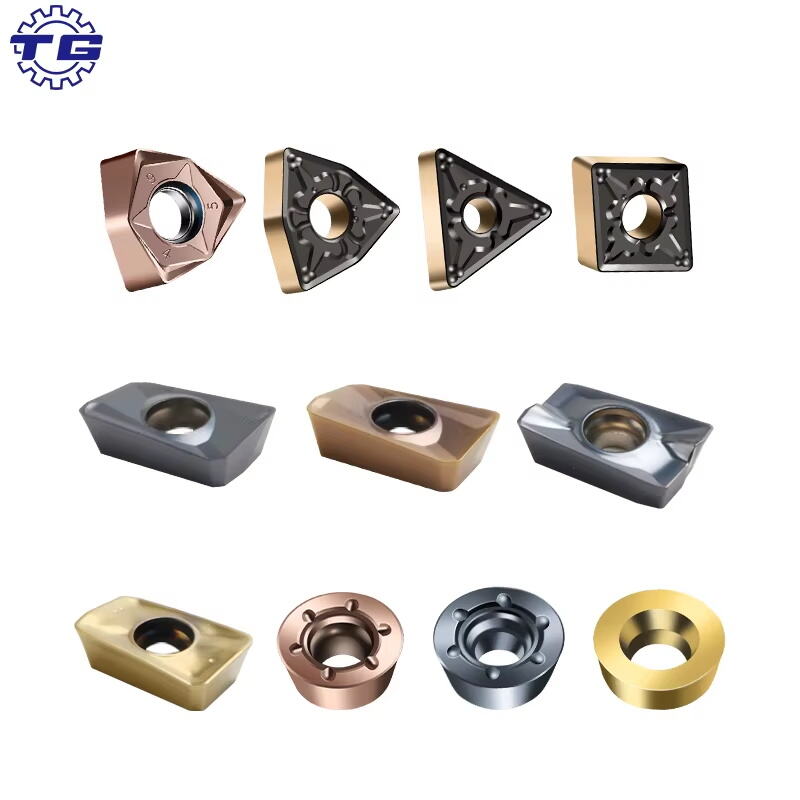
The cutting edge geometry of aluminium turning inserts incorporates sophisticated engineering principles that specifically address the unique material properties of aluminium and its alloys. These inserts feature extremely sharp cutting edges, typically with edge radii measured in micrometers, which slice through aluminium rather than deforming it during the cutting process. This sharpness is critical because aluminium has a relatively low melting point and high thermal expansion coefficient, making it prone to smearing and built-up edge formation when machined with dull or inappropriate tools. The rake face of aluminium turning inserts receives special attention during manufacturing, often featuring mirror-polished surfaces that reduce friction between the chip and the tool. This polished surface minimizes the contact area where aluminium might adhere, preventing the formation of built-up edge that deteriorates surface finish and dimensional accuracy. The positive rake angles common in aluminium turning inserts further reduce cutting forces, generating less heat and producing cleaner cuts with reduced power consumption. The relief angles are precisely ground to prevent rubbing against the freshly machined surface while maintaining adequate support for the cutting edge. Engineers design these angles to balance edge strength with cutting efficiency, ensuring the insert can withstand interrupted cuts and varying depths of cut without chipping or breaking. The chip breaker geometry deserves particular emphasis as it solves one of the most challenging aspects of aluminium machining. Aluminium produces long, continuous chips that can tangle around the workpiece, tool, or chuck, creating safety hazards and potentially damaging the part surface. The carefully contoured chip breaker grooves on aluminium turning inserts curl and break these chips into manageable segments that evacuate freely from the cutting zone. Different chip breaker designs suit various cutting conditions, with light-duty breakers for finishing operations producing tight chip curls and heavy-duty breakers for roughing operations creating more robust chip control. This geometric sophistication extends to the insert shape itself, with manufacturers offering multiple configurations including triangular, square, diamond, and round inserts to suit different turning operations and machine tool capabilities. Each shape provides specific advantages in terms of edge count, strength, and accessibility in confined machining areas, giving you flexibility to optimize tooling for your particular applications.
Premium Substrate Materials and Coatings Engineered for Aluminium Applications

Premium Substrate Materials and Coatings Engineered for Aluminium Applications

The substrate materials used in aluminium turning inserts represent the foundation of their exceptional performance characteristics. Manufacturers select carbide grades with specific properties optimized for non-ferrous materials, typically featuring finer grain structures than carbides designed for steel machining. These fine-grained carbides provide the combination of hardness and toughness necessary to maintain ultra-sharp cutting edges while resisting the abrasive wear that occurs even when machining relatively soft aluminium alloys, particularly those containing silicon or other hard particles. The carbide composition includes carefully balanced ratios of tungsten carbide and cobalt binder, with the cobalt percentage adjusted to provide adequate toughness without sacrificing hardness. Some premium aluminium turning inserts utilize polycrystalline diamond tips that offer even longer tool life and superior surface finishes, particularly valuable in high-volume production environments or when machining abrasive aluminium-silicon alloys commonly used in automotive applications. The diamond material provides extreme hardness and exceptionally low friction coefficients, allowing sustained high-speed machining with minimal wear. While more expensive initially, polycrystalline diamond inserts often prove economical over extended production runs due to their remarkable longevity. Surface coatings and treatments applied to aluminium turning inserts serve multiple critical functions. Many inserts feature specialized PVD coatings that reduce the chemical affinity between aluminium and the tool surface, preventing adhesion that leads to built-up edge. These coatings may include titanium-based compounds or other materials selected specifically for their non-stick properties with aluminium. The coating thickness and smoothness are carefully controlled to maintain the sharpness of the cutting edge while providing protective benefits. Some manufacturers apply surface treatments that modify the carbide surface chemistry without adding significant thickness, creating a boundary layer that repels aluminium while preserving edge sharpness. The thermal properties of the substrate material also play important roles in aluminium machining. The carbide must conduct heat away from the cutting edge efficiently to prevent thermal softening of the aluminium, which contributes to poor surface finish and dimensional inaccuracy. Simultaneously, the insert must resist thermal shock from the intermittent heating and cooling that occurs during interrupted cutting operations. The material engineering involved in creating these substrates involves sophisticated metallurgy and quality control processes that ensure consistency from batch to batch, giving you reliable, predictable tool performance that supports efficient production planning and quality assurance programs.
Economic and Operational Benefits That Transform Manufacturing Efficiency

Economic and Operational Benefits That Transform Manufacturing Efficiency

The economic advantages of aluminium turning inserts extend far beyond the initial purchase price, creating value throughout your entire manufacturing operation. The indexable design allows you to use multiple cutting edges on a single insert before replacement becomes necessary, typically providing four to eight usable edges depending on the insert geometry. This multi-edge capability means your per-edge cost is a fraction of the insert price, making these tools remarkably economical despite their specialized nature. When an edge wears or becomes damaged, you simply loosen the clamping screw, rotate the insert to a fresh edge, and resume machining within minutes. This quick-change capability eliminates the downtime associated with removing and replacing entire tool assemblies, keeping your machines productive and your operators engaged in value-adding activities rather than tool changes. The consistent geometry of fresh cutting edges ensures that part dimensions and surface characteristics remain uniform throughout production runs, reducing the statistical variation in your manufactured components and improving process capability indices. The operational benefits manifest in multiple aspects of your production workflow. Setup times decrease because aluminium turning inserts mount in standardized tool holders that remain in the machine turret or tool post. Your operators and setup personnel become familiar with the clamping mechanisms and insert orientation, reducing the learning curve and minimizing setup errors. The repeatability of insert positioning in the holder ensures that offsets and tool compensation values remain stable from one setup to the next, simplifying programming and reducing the trial-and-error often associated with new tool installations. Inventory management becomes more efficient because you stock inserts rather than complete tool assemblies, reducing the physical space required for tool storage and the capital tied up in tooling inventory. A relatively modest inventory of aluminium turning inserts in various geometries and grades can support diverse production requirements, giving you flexibility to respond to changing customer demands without maintaining extensive tool stocks. The environmental and safety benefits also deserve consideration. The clean chip formation promoted by aluminium turning inserts creates a safer work environment by reducing the tangled chip masses that present cut hazards to operators. The chips produced are easier to collect and recycle, supporting your environmental initiatives and potentially generating revenue from scrap aluminium recovery. The reduced cutting forces enabled by sharp, properly designed inserts decrease energy consumption per part, lowering your operational costs and reducing your carbon footprint. The predictable performance of quality aluminium turning inserts supports lean manufacturing principles by eliminating variation and waste from your processes, allowing you to implement reliable production schedules and maintain consistent quality standards that enhance customer satisfaction and support long-term business relationships.
aluminium turning inserts-0
aluminium turning inserts-1

Get a Free Quote

Our representative will contact you soon.
Email
Mobile
Name
Company Name
Message
0/1000