Contact me immediately if you encounter problems!

All Categories

hard turning inserts

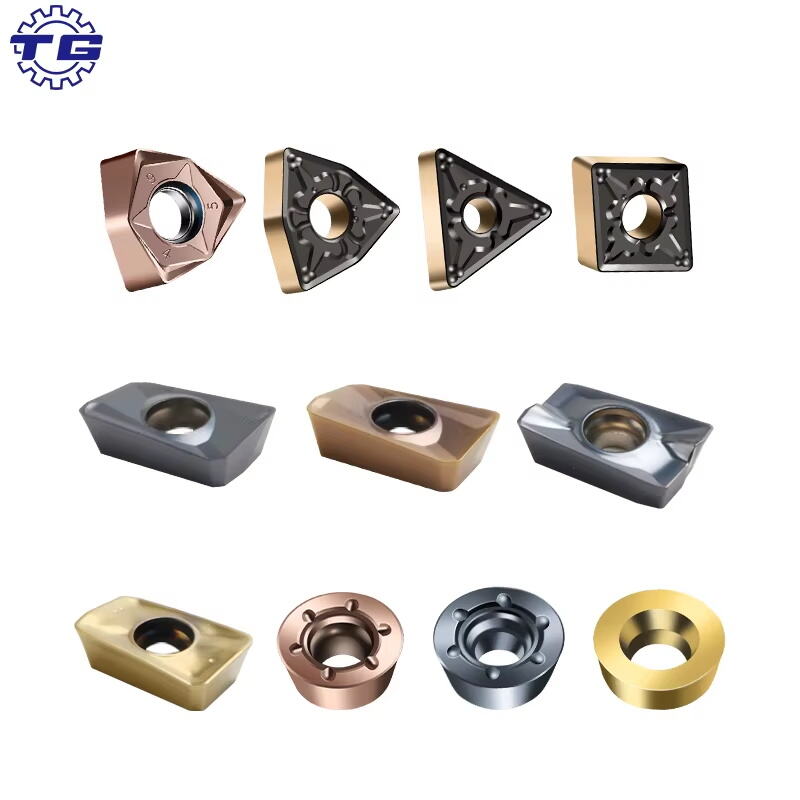
Hard turning inserts represent a revolutionary advancement in precision machining technology, designed specifically to handle hardened steel materials with exceptional accuracy and efficiency. These cutting tools are engineered from premium materials such as cubic boron nitride (CBN) and polycrystalline cubic boron nitride (PCBN), enabling them to machine materials with hardness levels ranging from 45 to 70 HRC. The primary function of hard turning inserts involves the precise removal of material from hardened workpieces, effectively replacing traditional grinding operations in many manufacturing scenarios. These specialized inserts excel at producing superior surface finishes while maintaining tight dimensional tolerances, making them indispensable for industries requiring high-precision components. The technological features incorporated into hard turning inserts include advanced geometries that optimize chip formation and evacuation, specialized coatings that enhance wear resistance, and innovative substrate compositions that withstand extreme cutting temperatures. Modern hard turning inserts feature carefully engineered edge preparations that minimize built-up edge formation and reduce cutting forces during operation. Their applications span across diverse manufacturing sectors, including automotive component production where they machine hardened bearing races, gear components, and crankshafts. Aerospace manufacturers utilize hard turning inserts for processing landing gear components and turbine parts that demand exceptional surface integrity. The tool and die industry benefits significantly from these inserts when finishing molds, dies, and other hardened tooling components. Additionally, medical device manufacturers employ hard turning inserts for creating implants and surgical instruments that require biocompatible surface finishes. The versatility of hard turning inserts extends to general engineering applications where hardened components need finishing without the time-consuming setup procedures associated with grinding operations. These inserts have transformed manufacturing workflows by enabling dry or near-dry machining processes, reducing environmental impact while improving shop floor efficiency and operator safety through elimination of grinding coolant requirements.

New Product Releases

Hard turning inserts deliver remarkable cost savings by eliminating multiple processing steps traditionally required in manufacturing operations. Companies using these inserts can remove grinding operations from their production workflow, which significantly reduces equipment investment costs and floor space requirements. The single-setup capability means operators can complete both rough and finish turning operations without transferring workpieces to different machines, saving valuable production time and reducing handling errors. This streamlined approach cuts labor costs substantially since fewer machine setups translate to reduced operator involvement and faster throughput. Energy consumption decreases noticeably because hard turning requires less power compared to grinding machines, contributing to lower operational expenses and supporting sustainability initiatives. The elimination of grinding coolants produces immediate financial benefits through reduced fluid purchasing, disposal costs, and environmental compliance expenses. Production flexibility improves dramatically as manufacturers can quickly switch between different workpiece configurations without lengthy machine changeovers or wheel dressing procedures. Hard turning inserts maintain consistent performance over extended periods, providing predictable tool life that simplifies production planning and inventory management. The superior surface finishes achieved often eliminate subsequent polishing operations, further compressing production timelines and reducing per-part manufacturing costs. Quality improvements represent another significant advantage, as hard turning inserts produce components with enhanced dimensional accuracy and surface integrity compared to many traditional methods. The process generates compressive residual stresses in finished surfaces, improving component fatigue life and performance characteristics in demanding applications. Manufacturers experience fewer rejected parts because the precision inherent in hard turning operations reduces dimensional variations and surface defects. Setup simplicity means even moderately skilled operators can achieve excellent results after basic training, addressing workforce challenges many companies face today. The dry machining capability creates a cleaner, safer working environment by eliminating coolant mist and reducing slip hazards on shop floors. Chip management becomes more straightforward since dry chips are easier to collect, recycle, and dispose of compared to coolant-saturated swarf from grinding operations. Production scheduling gains flexibility because hard turning operations integrate seamlessly into existing turning centers, maximizing equipment utilization rates. The technology supports just-in-time manufacturing philosophies by enabling rapid response to customer demands without maintaining large inventories of pre-ground components. Overall equipment effectiveness increases as machine downtime decreases, maintenance requirements simplify, and production output per shift rises substantially compared to conventional grinding approaches.

Practical Tips

How do different drill bit materials affect performance?

30

Dec

How do different drill bit materials affect performance?

Understanding the relationship between drill bit materials and their performance characteristics is crucial for professionals working in manufacturing, construction, and metalworking industries. The material composition of a drill bit directly influe...
View More
How to Choose the Right Milling Cutter for Your Project?

10

Feb

How to Choose the Right Milling Cutter for Your Project?

Selecting the appropriate milling cutter for your machining project is a critical decision that directly impacts production efficiency, surface finish quality, and overall manufacturing costs. Whether you're working with aluminum, steel, or exotic al...
View More
Why Endmills Are Crucial in CNC Milling Operations

28

Feb

Why Endmills Are Crucial in CNC Milling Operations

CNC milling operations form the backbone of modern manufacturing, transforming raw materials into precision components that power industries worldwide. At the heart of these sophisticated machining processes lie endmills, cutting tools that define th...
View More
When should you use high speed steel cutting tools?

31

Mar

When should you use high speed steel cutting tools?

High speed steel cutting tools have revolutionized modern machining operations since their introduction in the early 1900s. These specialized alloys offer exceptional hardness, wear resistance, and heat tolerance that make them indispensable in vario...
View More

Get a Free Quote

Our representative will contact you soon.
Email
Mobile
Name
Company Name
Message
0/1000

hard turning inserts

Superior Material Removal Efficiency and Production Speed

Superior Material Removal Efficiency and Production Speed

Hard turning inserts revolutionize manufacturing productivity by delivering exceptional material removal rates that significantly outpace traditional grinding operations. These cutting tools remove hardened material at speeds reaching 200 meters per minute in optimal conditions, compared to grinding wheel surface speeds that rarely exceed comparable efficiency levels. This velocity advantage translates directly into reduced cycle times, allowing manufacturers to produce more components per shift while maintaining consistent quality standards. The efficiency gains become particularly evident when machining complex geometries or interrupted cuts, where hard turning inserts maintain stable cutting action without the chatter or vibration issues that plague grinding wheels. Production managers appreciate how these inserts enable continuous machining operations without frequent interruptions for wheel dressing or conditioning, keeping spindles running productively rather than idling during maintenance activities. The rapid stock removal capability means operators can transform rough forgings or heat-treated blanks into finished precision components in single operations, collapsing multi-stage production sequences into streamlined single-setup processes. Manufacturing flexibility expands considerably since programmers can create complex tool paths that machine multiple features sequentially without operator intervention, supporting lights-out manufacturing initiatives. Hard turning inserts accommodate varying depths of cut and feed rates within the same operation, allowing optimization for different workpiece sections to balance productivity with surface finish requirements. The technology proves especially valuable for low to medium production volumes where grinding wheel setup costs and lead times become prohibitive, enabling economical production of specialized components. Quality consistency improves because hard turning inserts cut with defined geometries that remain stable throughout their service life, unlike grinding wheels that continuously change profile as they wear. This consistency ensures that the first component and the last component in a production run meet identical specifications without process adjustments. Operators spend less time monitoring and adjusting processes, freeing them for value-added activities like quality verification or production planning. The speed advantages extend beyond simple cutting time to include tool change efficiency, as insert indexing or replacement takes mere seconds compared to grinding wheel changes that can consume significant production time. Integration with modern CNC turning centers means hard turning inserts benefit from advanced machine tool technologies like rigid construction, precise thermal management, and powerful spindle designs that maximize their performance potential while maintaining excellent surface finishes.
Exceptional Surface Quality and Component Performance Enhancement

Exceptional Surface Quality and Component Performance Enhancement

Hard turning inserts produce surface finishes that rival or exceed grinding quality while simultaneously improving the mechanical properties of machined components. The cutting action generates surfaces with arithmetic average roughness values routinely achieving 0.4 micrometers or better, meeting stringent requirements for bearing surfaces, sealing faces, and other critical functional areas. Beyond simple smoothness measurements, hard turning inserts create surface topographies with beneficial characteristics including controlled lay patterns that optimize lubrication retention and wear resistance in service. The process induces compressive residual stresses in component surfaces, dramatically improving fatigue resistance compared to grinding operations that often introduce detrimental tensile stresses through thermal damage. Engineers value this stress profile enhancement because it extends component service life without additional processing steps or material costs, directly improving product reliability and customer satisfaction. Surface integrity examination reveals minimal subsurface damage or microstructural alterations when using properly applied hard turning inserts, preserving the metallurgical properties developed during heat treatment processes. This preservation proves critical for components operating under high stress conditions where surface defects or microcracking can initiate catastrophic failures. The controlled cutting action avoids the thermal abuse associated with grinding, preventing issues like rehardening, tempering, or phase transformations that compromise component performance. Manufacturing quality control becomes more predictable as the deterministic nature of hard turning produces repeatable results across production batches, reducing statistical variation in surface finish measurements. Inspection frequencies can often decrease because the stable process generates fewer outliers or non-conforming parts compared to grinding operations subject to wheel condition variations. The surface finish quality extends to complex geometries including tapers, radii, and contoured profiles where grinding wheel access and dressing become problematic. Hard turning inserts navigate these features while maintaining consistent finish quality, eliminating hand finishing operations that introduce human variability and consume excessive labor time. Designers gain freedom to specify tighter tolerances and better surface finishes knowing that manufacturing processes can reliably achieve these requirements without extraordinary efforts or costs. Component functionality improves in applications where surface finish directly impacts performance, such as hydraulic components where seal life depends on surface smoothness, or rolling element bearings where surface quality affects vibration and noise characteristics. The ability to achieve multiple surface finish specifications within a single setup enables efficient production of components with varying functional requirements on different features, optimizing each surface for its specific purpose without complex fixturing or multiple operations.
Environmental Sustainability and Workplace Safety Benefits

Environmental Sustainability and Workplace Safety Benefits

Hard turning inserts advance manufacturing sustainability goals by enabling dry machining processes that eliminate or drastically reduce cutting fluid consumption and associated environmental impacts. Traditional grinding operations require continuous coolant flow to manage heat generation and flush away abrasive particles, consuming hundreds of gallons of fluid annually per machine while creating disposal challenges and environmental liabilities. The cutting efficiency of hard turning inserts generates manageable heat levels that allow dry machining or minimal quantity lubrication approaches, transforming shop floor environmental profiles. This fluid elimination removes recurring costs for coolant purchasing, mixing, monitoring, and disposal while addressing increasingly stringent environmental regulations governing industrial fluid management. Workplace air quality improves dramatically as coolant mist elimination reduces operator exposure to potentially harmful aerosols and biological contaminants that proliferate in coolant systems. Respiratory health concerns diminish while slip and fall hazards decrease as floors remain dry and free from coolant residues that create dangerous working conditions. Operators appreciate the cleaner working environment free from the constant coolant spray and mist that characterizes grinding areas, improving job satisfaction and potentially reducing turnover in manufacturing facilities facing workforce recruitment challenges. Chip handling simplifies considerably since dry chips flow freely from cutting zones and can be collected efficiently using vacuum systems or simple conveyors without the complications of coolant-saturated swarf. Recycling programs become more economical as clean metal chips command higher scrap values compared to contaminated grinding swarf requiring additional processing before recycling facilities accept them. Energy consumption profiles improve because hard turning operations require only the machine tool spindle and feed drive power, eliminating the substantial electrical loads associated with coolant pumps, chillers, and filtration systems that run continuously in grinding operations. This energy reduction contributes to corporate sustainability metrics while reducing utility costs and supporting carbon footprint reduction initiatives. Maintenance requirements decrease as coolant system components including pumps, filters, tanks, and piping are eliminated from equipment specifications, reducing spare parts inventories and maintenance labor allocation. Machine reliability improves because coolant-related failures including pump breakdowns, filter clogging, and biological contamination issues disappear from maintenance schedules. Facility infrastructure simplifies as coolant distribution systems, central filtration equipment, and waste handling systems become unnecessary, reducing building complexity and associated maintenance burdens. The elimination of coolant disposal creates significant environmental benefits by preventing potential soil and groundwater contamination from improper handling while reducing the transportation and processing impacts associated with waste fluid management. Regulatory compliance becomes less complex as facilities eliminate reporting requirements and potential liabilities associated with coolant storage, handling, and disposal documentation.

hard turning inserts-0
hard turning inserts-1

Get a Free Quote

Our representative will contact you soon.
Email
Mobile
Name
Company Name
Message
0/1000