
 EN
A twist drill is engineered to deliver exceptional performance in precision machining environments where surface finish quality and dimensional accuracy are non-negotiable. Modern industrial applications demand tools that consistently produce clean, dimensionally stable holes without vibration, chatter, or tool deflection. The twist drill has evolved as a fundamental cutting tool that combines advanced geometry, material science, and manufacturing precision to meet these exacting standards. Understanding how a quality twist drill achieves superior surface finish and maintains tight dimensional tolerances is essential for manufacturers seeking to reduce secondary finishing operations, minimize scrap rates, and improve overall production efficiency.
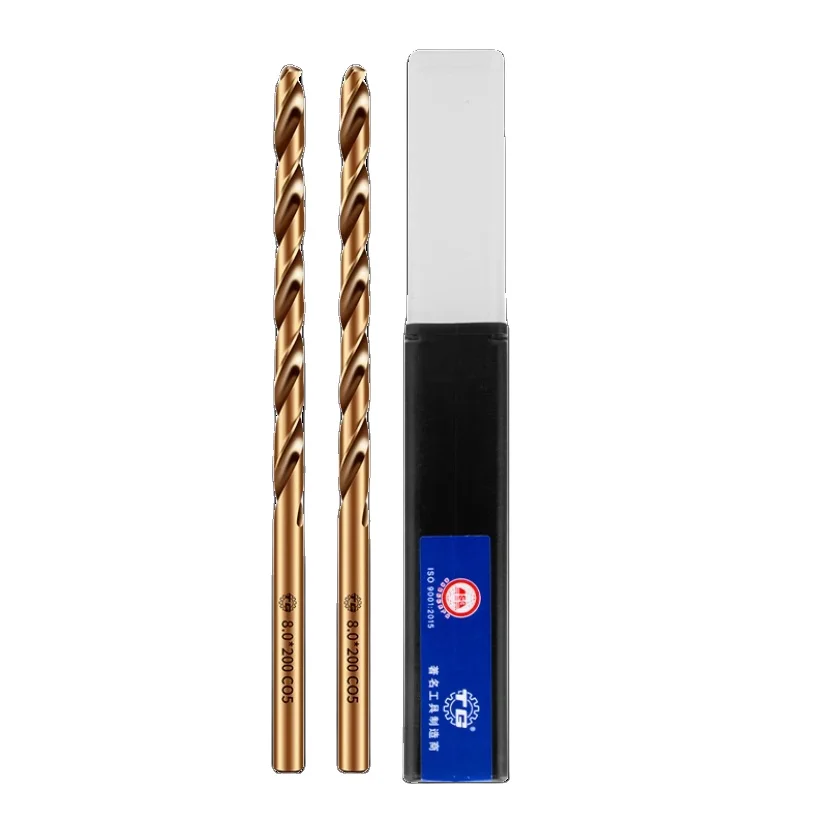
The competitive advantage of investing in a premium twist drill lies in its ability to produce consistently superior results across diverse materials, from stainless steel to mold steel. When manufacturers select a twist drill designed with advanced cutting edges, optimized flute geometry, and precision manufacturing tolerances, they gain measurable benefits that extend far beyond initial cost considerations. This article explores the specific surface finish and dimensional accuracy advantages that distinguish high-performance twist drill solutions from conventional alternatives, and examines how these advantages translate into tangible operational improvements for precision machining operations.
Superior Surface Finish Through Advanced Cutting Geometry
Precision Edge Design in Twist Drill Manufacturing
The surface finish quality produced by a twist drill depends fundamentally on the precision of its cutting edges and the optimization of its flute geometry. A high-quality twist drill incorporates precisely ground cutting lips that maintain consistent angle and sharpness across the entire drill diameter. When a twist drill is manufactured with computer-controlled grinding processes, the cutting edges achieve micro-level precision that produces smooth, controlled chip evacuation without tearing or gouging the workpiece surface. This refined cutting action directly translates to superior Ra surface finish values, often achieving 0.8 to 1.6 microns in favorable conditions, compared to 2.0 to 3.2 microns from conventional twist drill alternatives.
Flute Geometry and Chip Control
The flute geometry of a twist drill significantly influences how efficiently chips are evacuated from the hole and how cleanly the cutting edges engage the workpiece. An optimized twist drill features carefully designed flute angles that promote rapid, unobstructed chip movement without pressure buildup that can cause tool chatter. When chips move freely through the flute of a twist drill, the cutting edges remain in contact with the workpiece under controlled conditions, producing consistent micro-chipping rather than intermittent engagement that creates surface irregularities. Advanced twist drill designs often incorporate variable flute widths and optimized helix angles that adapt to material properties, ensuring the twist drill maintains uniform cutting pressure and produces superior surface finish across both soft and hard materials.
Dimensional Accuracy and Tolerance Control
Precision Shaft and Runout Tolerances
Dimensional accuracy is fundamentally dependent on the mechanical precision of the twist drill itself, particularly the concentricity of the flutes relative to the shank and the runout tolerance during rotation. A precision-manufactured twist drill maintains runout within 0.01 to 0.02 millimeters, ensuring that as the twist drill rotates, every point on the cutting edges traces an identical circular path. This exceptional concentricity means that when a twist drill enters the workpiece, it cuts at a uniform depth and produces hole diameters that remain consistently within specification limits. Inferior twist drill alternatives may exhibit runout of 0.05 millimeters or greater, causing oversize holes, elliptical profiles, or significant variation in hole diameter along the drilled depth.
Material Composition and Heat-Resistant Properties
The material composition of a twist drill directly affects its dimensional stability under the thermal stress generated during cutting. Premium twist drill options, such as those incorporating cobalt content or HSS-M35 alloy composition, maintain their hardness and dimensional integrity at elevated cutting temperatures. When drilling stainless steel or mold steel materials that generate significant heat friction, a standard twist drill may experience thermal expansion and micro-deformation that degrades dimensional accuracy over time. A quality twist drill with cobalt enhancement or advanced steel formulation resists this thermal drift, maintaining the designed hole diameter and wall surface characteristics throughout extended machining cycles. This consistency eliminates the need for progressive drilling passes or sizing operations, reducing cycle time and improving dimensional repeatability.
Operational Benefits and Practical Application Value
Reduced Secondary Operations and Cost Efficiency
The superior surface finish and dimensional accuracy provided by a high-performance twist drill directly reduces the need for secondary finishing operations such as reaming, honing, or deburring. When a twist drill consistently produces holes with Ra values below 1.6 microns and tight dimensional tolerances, components often proceed directly to the next assembly stage without intermediate processing. This elimination of secondary steps translates to reduced labor costs, faster cycle times, and lower tooling expenses across production batches. Manufacturers using premium twist drill solutions typically experience 15 to 25 percent reductions in per-unit machining cost when calculating the total cost of ownership across multiple production runs.
Material Compatibility and Extended Tool Life
A correctly selected twist drill for specific materials like stainless steel or hardened mold steel ensures extended tool life and consistent performance across larger drilling volumes. The twist drill engineered for stainless steel applications incorporates geometry and heat-treatment specifications that prevent galling, edge buildup, and premature wear that would otherwise compromise surface finish quality. When a twist drill maintains its original cutting-edge geometry across multiple holes, hole-to-hole consistency remains high, ensuring dimensional accuracy does not degrade over tool life. This extended performance window means manufacturers can drill significantly more holes per twist drill before sharpening or replacement becomes necessary, directly improving production throughput.
FAQ
How does the helix angle of a twist drill influence surface finish quality?
The helix angle of a twist drill determines how aggressively the tool engages the material and how efficiently chips are evacuated. A twist drill with a helix angle optimized for the specific workpiece material produces smooth, controlled chip formation that minimizes surface tearing and chatter marks. Standard twist drill helix angles range from 25 to 35 degrees for general machining, while specialized twist drill designs feature variable helix angles that adapt to material hardness and cutting conditions, consistently producing superior surface finish across diverse applications.
What tolerance range should be expected from a precision twist drill?
A quality twist drill typically maintains hole diameter tolerances within ±0.05 to ±0.10 millimeters for diameters up to 13 millimeters, depending on material and drilling depth. Premium twist drill solutions designed for precision applications often achieve tighter tolerances within ±0.02 to ±0.05 millimeters, particularly when coupled with proper spindle runout control and appropriate cutting speeds. The dimensional accuracy of a twist drill is directly related to its manufacturing precision, material composition, and the stability of the machine tool in which the twist drill is installed.
Why is cobalt content important in a twist drill for stainless steel?
Cobalt content in a twist drill enhances hardness retention at elevated temperatures, which is critical when drilling stainless steel because this material generates substantial friction heat during cutting. A twist drill with 5% cobalt addition maintains its cutting-edge integrity under the thermal stress that standard HSS twist drill alternatives cannot withstand, resulting in consistent surface finish and dimensional accuracy over extended drilling cycles. The cobalt-enhanced twist drill also resists edge buildup and galling, common problems when machining stainless steel that would otherwise degrade hole quality and surface finish.