
 EN
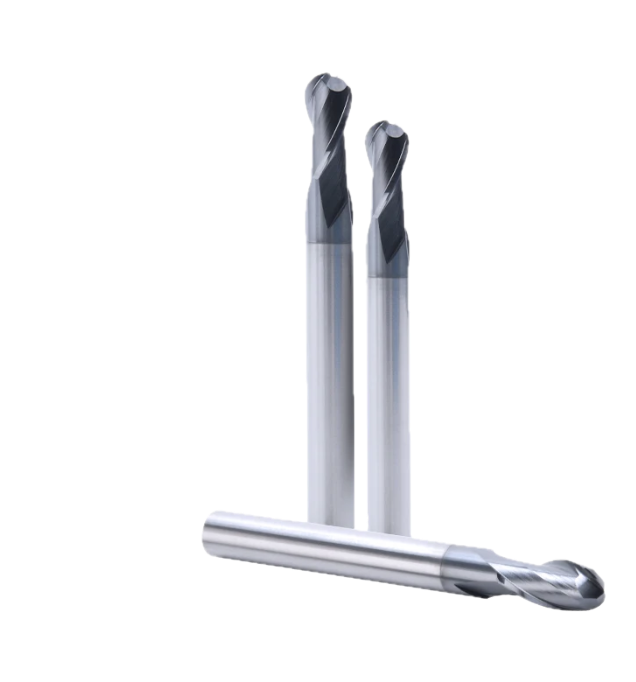
Machine vibration remains one of the most significant challenges in precision CNC machining, directly impacting surface finish quality, tool life, and dimensional accuracy. A carbide end mill addresses this critical problem through inherent material properties and advanced geometric design that fundamentally reduce unwanted vibrations during cutting operations. Understanding how carbide end mill rigidity works helps manufacturers optimize their machining processes and achieve superior results on demanding applications.
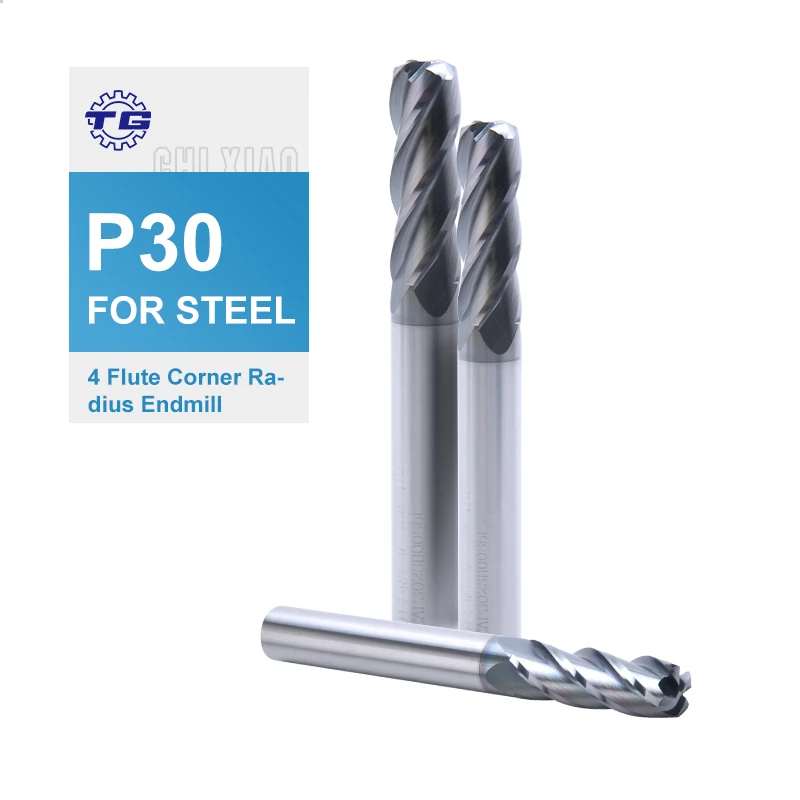
The rigidity advantages of a carbide end mill extend beyond simple material strength. The combination of carbide's elastic modulus, thermal stability, and precise manufacturing tolerances creates a tool that maintains geometric consistency under extreme cutting forces. This stability translates into measurable improvements in machining performance, reducing chatter, improving surface finishes, and extending tool life compared to traditional steel cutting tools.
Material Composition and Stiffness Benefits
Superior Elastic Modulus of Carbide
Carbide exhibits an elastic modulus approximately three times higher than high-speed steel, meaning it resists deformation under cutting forces with exceptional efficiency. When a carbide end mill encounters variable cutting loads, this material property prevents the tool from deflecting unpredictably. The reduced deflection directly translates to consistent cutting geometry, which is fundamental to controlling vibration amplitude and frequency during machining operations.
This superior stiffness means a carbide end mill maintains its cutting edge position with minimal deviation, even when spindle speeds fluctuate or cutting forces spike. The tool stays true to the programmed path, preventing the tool-spindle-workpiece system from entering resonance conditions that would otherwise generate destructive vibrations.
Density and Mass Characteristics
Carbide's high density provides mass benefits that stabilize tool performance during dynamic cutting cycles. A carbide end mill of identical geometry to a steel tool weighs significantly more, improving inertial damping characteristics. This increased mass resists sudden acceleration changes, particularly during rapid feed entries and exit moves where vibration traditionally escalates in conventional tooling.
The higher density of a carbide end mill also enables manufacturers to use smaller diameter tools with equivalent or superior rigidity compared to larger steel tools. This geometric advantage allows access to tight internal features while maintaining the stiffness necessary to suppress vibration in challenging cutting zones.
Geometric Design Factors in Vibration Control
Flute Geometry and Cutting Edge Precision
A carbide end mill benefits from manufacturing precision that consistently produces cutting edges with minimal variation across multiple flutes. This uniformity ensures that all cutting edges engage the workpiece simultaneously and symmetrically, preventing the unbalanced cutting forces that initiate vibration patterns. When edge engagement is uneven, the tool experiences eccentric loading that amplifies runout and generates chatter regardless of material rigidity.
Modern carbide end mill designs incorporate optimized helix angles and rake angles that distribute cutting forces evenly through the tool structure. These geometric refinements reduce stress concentration points and smooth the force progression through the flutes, creating more predictable vibration response characteristics.
Shank and Holder Interface Stability
The precision between a carbide end mill shank and its holder represents a critical interface for vibration control. Carbide tools maintain extremely tight dimensional tolerances throughout manufacturing, ensuring consistent grip conditions in modern CNC holders. This precise fit eliminates micromotion at the interface, which would otherwise act as a vibration source and amplification mechanism.
When a carbide end mill sits securely in a precision holder with minimal radial runout, the entire tool-spindle assembly behaves as a unified rigid structure. This integration is essential for vibration suppression because any relative motion between tool and holder introduces phase shifts in force transmission that typically worsen chatter conditions.
Cutting Performance and Vibration Reduction Outcomes
Surface Finish Improvements Through Stability
The rigidity advantages of a carbide end mill directly produce superior surface finishes on precision parts. When tool deflection is minimized, the cutting edge maintains consistent engagement depth, creating uniform chip thickness and removing material with predictable forces. This stability prevents the repetitive tool marks and surface irregularities that vibration generates on conventional tooling.
Manufacturers report that switching to carbide end mill tooling frequently eliminates the need for secondary finishing operations on tight-tolerance features. The inherent rigidity translates tool stability into measurable dimensional consistency and aesthetically superior surface profiles, reducing downstream processing costs and improving production efficiency.
Extended Tool Life Through Reduced Fatigue
Vibration causes cyclic stress reversals that accelerate tool wear and crack initiation in cutting edges. A carbide end mill maintains lower vibration amplitude throughout its service life, dramatically reducing the mechanical fatigue loads experienced by the tool material. This extended durability results in significantly longer tool life compared to steel alternatives, often providing 5 to 15 times greater cutting distances before replacement becomes necessary.
The vibration-suppressing characteristics of a carbide end mill also reduce thermal cycling stress on cutting edges during interrupted cuts. Workpieces with voids, fins, or complex geometries create periodic loading changes that cause thermal shock in conventional tools. The superior rigidity and thermal conductivity of carbide mitigate these effects, protecting tool geometry and extending productive tool life in demanding applications.
Additionally, a carbide end mill tolerates higher cutting speeds without amplifying vibration, enabling aggressive machining strategies that reduce cycle time while maintaining tool reliability. This performance envelope expands manufacturing flexibility and allows engineers to optimize cutting parameters for both productivity and precision simultaneously.
FAQ
How does carbide material rigidity specifically reduce chatter vibration?
A carbide end mill reduces chatter through its three-times-higher elastic modulus compared to steel, which minimizes tool deflection under cutting forces. When the tool resists bending, the cutting edge maintains consistent depth of cut, preventing the self-exciting vibration cycle that creates chatter. The superior stiffness also increases the natural frequency of the tool-spindle system, moving the resonance point away from typical operating speeds and further suppressing vibration initiation.
Can a carbide end mill eliminate vibration completely in unstable setups?
While a carbide end mill provides exceptional rigidity advantages, it cannot eliminate vibration caused by foundational setup problems such as worn spindle bearings, loose workpiece clamping, or inadequate machine tool stiffness. The carbide end mill excels at controlling vibration within the cutting interface itself, but systemic machine conditions remain the primary influence on overall chatter behavior. Combining a high-rigidity carbide end mill with proper machine maintenance, solid workholding, and optimized cutting parameters yields the best vibration control results.
What cutting speeds maximize the vibration-suppression benefits of a carbide end mill?
A carbide end mill demonstrates optimal vibration control across its recommended speed range, typically 100 to 1500 surface feet per minute depending on material and geometry. Faster cutting speeds generally produce smaller chip sizes that generate lower force magnitude and more consistent force distribution, amplifying the vibration-suppressing advantages of the tool's rigidity. The carbide end mill thermal stability also permits sustained high-speed operation without edge degradation, allowing manufacturers to maintain peak rigidity performance throughout extended production runs.