Contact me immediately if you encounter problems!

All Categories

inserts for hard turning

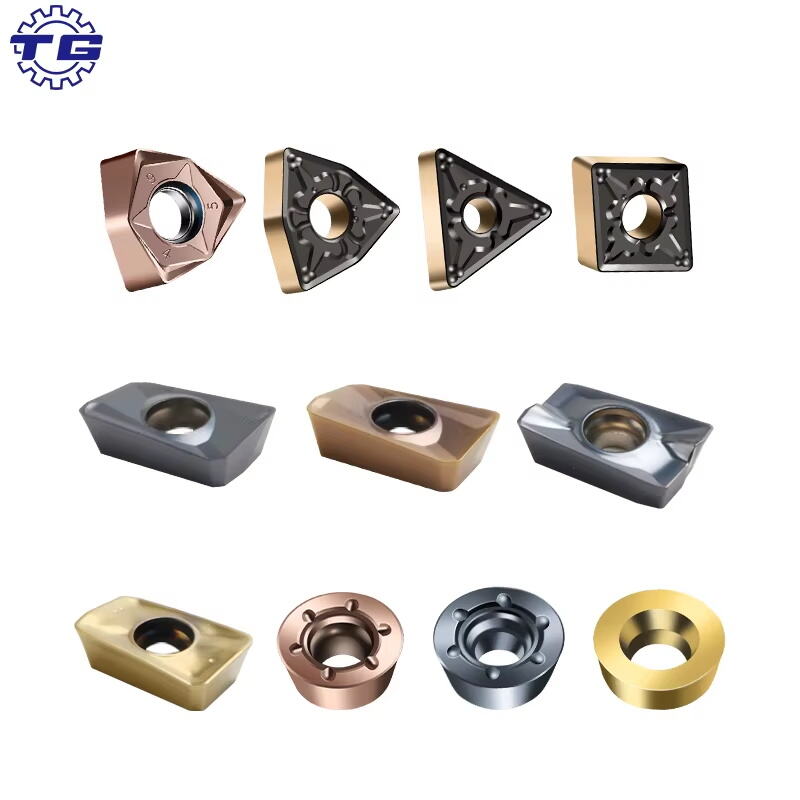
Inserts for hard turning represent a revolutionary advancement in precision machining technology, specifically engineered to handle materials with hardness levels exceeding 45 HRC. These specialized cutting tools have transformed manufacturing processes by enabling direct machining of hardened steel, cast iron, and other tough materials that traditionally required grinding operations. The main function of inserts for hard turning is to deliver exceptional surface finishes while maintaining dimensional accuracy on extremely hard workpieces, eliminating the need for secondary finishing operations in many applications. Technologically, these inserts feature advanced substrate materials, typically cubic boron nitride or specially formulated ceramic compounds, which possess the necessary hardness and wear resistance to withstand the extreme cutting forces and temperatures generated during hard turning operations. The geometric design of inserts for hard turning incorporates precise edge preparations, optimized rake angles, and specialized chip breaker geometries that facilitate smooth chip evacuation while minimizing cutting forces. Modern inserts for hard turning also integrate sophisticated coating technologies, including multi-layer ceramic and diamond-like carbon films, which further enhance tool life and performance. Applications for inserts for hard turning span across diverse industries, including automotive manufacturing for processing bearing races and gear components, aerospace for machining landing gear parts, die and mold production for finishing hardened tool steels, and general precision engineering where tight tolerances are paramount. The versatility of inserts for hard turning allows manufacturers to process components ranging from small precision parts to large industrial rolls, making them indispensable in contemporary metalworking operations. These cutting tools have effectively bridged the gap between rough machining and grinding, offering a cost-effective alternative that reduces cycle times while maintaining superior quality standards that meet the most demanding specifications in modern manufacturing environments.


Popular Products

The advantages of inserts for hard turning deliver tangible benefits that directly impact your bottom line and production efficiency. First and foremost, these cutting tools dramatically reduce your overall manufacturing costs by eliminating expensive grinding operations from your production workflow. You can achieve surface finishes comparable to grinding while using your existing turning centers, which means no additional investment in specialized grinding equipment or the floor space required to house it. The time savings are equally impressive, as inserts for hard turning can complete operations in a fraction of the time needed for traditional grinding processes, often reducing cycle times by fifty percent or more. Your production flexibility increases substantially because inserts for hard turning allow you to perform complete machining operations in a single setup, reducing handling time and eliminating the positioning errors that occur when transferring parts between machines. The environmental benefits should not be overlooked either, as hard turning generates dry chips that are easy to recycle, unlike grinding operations that require coolant systems, create disposal challenges, and involve ongoing fluid maintenance costs. Your operators will appreciate the improved working conditions, as hard turning eliminates the mess and health concerns associated with grinding fluids. The precision capabilities of inserts for hard turning enable you to achieve tolerances within micrometers while maintaining excellent surface integrity, which translates to higher quality finished products and fewer rejections. These inserts also provide predictable tool life, allowing you to plan tool changes during scheduled maintenance windows rather than dealing with unexpected failures that disrupt production schedules. The versatility of inserts for hard turning means you can handle a wide variety of materials and geometries without constantly switching between different machining methods. Your inventory management becomes simpler because fewer tool types are needed to accomplish diverse machining tasks. The consistent performance of inserts for hard turning reduces variability in your manufacturing process, leading to more predictable outcomes and easier quality control. Your skilled workforce can be utilized more efficiently, as hard turning operations are generally easier to program and monitor compared to complex grinding setups. The reduced setup complexity also means shorter learning curves for new operators, helping you maintain productivity even when training new staff members or adapting to workforce changes.

Practical Tips

Which drill bit type works best for concrete projects?

30

Dec

Which drill bit type works best for concrete projects?

Selecting the right drill bit for concrete projects can make the difference between a successful installation and a frustrating experience filled with broken tools and damaged materials. Concrete drilling requires specialized equipment designed to ha...
View More
Why Do Milling Cutters Break and How to Prevent It?

10

Feb

Why Do Milling Cutters Break and How to Prevent It?

Manufacturing precision relies heavily on the performance and reliability of cutting tools, with the milling cutter serving as one of the most critical components in modern machining operations. Despite their robust design and engineering excellence,...
View More
Why Advanced Holemaking Methods Improve Product Quality

31

Mar

Why Advanced Holemaking Methods Improve Product Quality

Manufacturing precision directly correlates with product quality, and nowhere is this relationship more evident than in holemaking operations. Advanced holemaking methods represent a significant evolution from traditional drilling techniques, offerin...
View More
What Safety Measures Are Essential in Holemaking Operations?

31

Mar

What Safety Measures Are Essential in Holemaking Operations?

Holemaking operations represent one of the most fundamental yet potentially hazardous processes in manufacturing environments. These operations involve creating precise holes in various materials using drilling, reaming, boring, and related machining...
View More

Get a Free Quote

Our representative will contact you soon.
Email
Mobile
Name
Company Name
Message
0/1000

inserts for hard turning

Superior Material Technology and Extended Tool Life

Superior Material Technology and Extended Tool Life

The foundation of exceptional performance in inserts for hard turning lies in their advanced material composition and engineering. These cutting tools utilize cubic boron nitride, the second hardest material known to science, or high-performance ceramics that have been specifically formulated to withstand the extreme conditions encountered when machining hardened materials. The substrate material in inserts for hard turning undergoes rigorous quality control during manufacturing, ensuring consistent grain structure and uniform properties throughout each insert. This material consistency translates directly to predictable performance in your machining operations, allowing you to establish reliable process parameters that deliver repeatable results shift after shift. The exceptional hardness of these materials enables inserts for hard turning to maintain their cutting edge geometry even when processing materials that would quickly destroy conventional carbide tools. What makes this particularly valuable for your operations is the extended tool life you will experience, often achieving hundreds of parts between tool changes depending on your specific application parameters. The thermal stability of inserts for hard turning is another critical factor, as these materials retain their hardness and strength even at the elevated temperatures generated at the cutting edge during hard turning operations. This thermal resistance prevents the edge deformation and rapid wear that plague lesser cutting tools when attempting to machine hardened materials. Modern inserts for hard turning also incorporate sophisticated coating technologies that add another layer of protection and performance enhancement. These coatings, often applied through advanced physical vapor deposition or chemical vapor deposition processes, create a barrier that reduces friction, minimizes adhesion of workpiece material to the cutting edge, and provides additional wear resistance. The combination of superior substrate materials and advanced coatings in inserts for hard turning creates a synergistic effect that extends tool life far beyond what either technology could achieve independently. This extended tool life translates to reduced tool consumption, fewer machine interruptions for tool changes, and lower per-part tooling costs. Your production efficiency improves because operators spend less time changing tools and more time producing parts, while your tooling budget stretches further because each insert for hard turning delivers substantially more cutting performance than conventional alternatives.
Precision Geometry and Exceptional Surface Quality

Precision Geometry and Exceptional Surface Quality

The geometric design of inserts for hard turning represents decades of research and development focused on optimizing cutting performance for hardened materials. Every aspect of the insert geometry, from the cutting edge angle to the chip breaker configuration, has been carefully engineered to address the unique challenges presented by hard turning applications. The cutting edge preparation on inserts for hard turning is particularly critical, as it must be strong enough to resist chipping under interrupted cuts while remaining sharp enough to generate excellent surface finishes. Manufacturers of premium inserts for hard turning employ advanced grinding and honing techniques to create edge preparations measured in micrometers, achieving the optimal balance between edge strength and sharpness. This precision edge geometry enables you to achieve surface finishes that rival or exceed grinding operations, often reaching roughness values below 0.4 micrometers Ra without secondary finishing. The rake angle optimization in inserts for hard turning facilitates efficient chip formation while minimizing cutting forces, which is essential when machining hard materials that generate substantial resistance. Properly designed rake angles also help direct heat away from the cutting edge and into the chip, protecting the insert from thermal damage and extending tool life. The clearance angles on inserts for hard turning are precisely calculated to prevent rubbing while maintaining adequate edge support, ensuring clean cutting action without vibration or chatter. Chip control is another area where the geometric design of inserts for hard turning demonstrates its sophistication, incorporating specialized chip breaker features that fracture chips into manageable segments. Effective chip control is crucial in hard turning because the brittle chips generated can be sharp and hazardous if not properly managed, and they can also interfere with the cutting process if allowed to accumulate in the cutting zone. The nose radius selection on inserts for hard turning provides another dimension of performance optimization, with larger radii delivering better surface finish and edge strength while smaller radii enable tighter corner radii on workpieces. Your ability to select the appropriate nose radius for your specific application allows you to optimize the balance between surface quality, tool strength, and geometric capability. The overall geometry of inserts for hard turning also considers thermal management, incorporating features that promote heat dissipation and prevent thermal cracking. This comprehensive approach to geometric design ensures that inserts for hard turning deliver consistent, reliable performance across a wide range of applications and operating conditions.
Versatile Applications and Process Integration Benefits

Versatile Applications and Process Integration Benefits

The versatility of inserts for hard turning extends across an impressive range of applications, making them valuable assets in virtually any precision manufacturing environment. These cutting tools excel in automotive component production, where they machine hardened bearing surfaces, gear teeth after heat treatment, and camshaft profiles with exceptional accuracy and consistency. The ability of inserts for hard turning to process these components directly after heat treatment eliminates costly and time-consuming grinding operations while maintaining the surface integrity required for optimal component performance and longevity. In aerospace manufacturing, inserts for hard turning handle demanding applications such as landing gear components, turbine engine parts, and structural elements fabricated from high-strength alloys and hardened steels. The precision and reliability of inserts for hard turning are essential in these critical applications where component failure is not an option and quality standards are uncompromising. Die and mold manufacturers have embraced inserts for hard turning for finishing operations on hardened tool steels, achieving mirror-like surface finishes on complex geometries that would be extremely difficult and expensive to grind. The process integration benefits of inserts for hard turning become particularly evident when you consider the complete manufacturing workflow. By consolidating multiple operations into a single setup, you eliminate the accumulation of positioning errors that occur when transferring parts between machines, resulting in improved geometric accuracy and concentricity. Your production scheduling becomes more straightforward because you are not coordinating workpiece movement between turning and grinding departments, reducing work-in-process inventory and shortening lead times. The flexibility of inserts for hard turning also allows you to respond quickly to design changes or custom orders without reconfiguring multiple machines or processes. This agility is increasingly valuable in modern manufacturing environments where product variety is high and production volumes may be modest. The integration of inserts for hard turning into your existing turning centers leverages your current equipment investment, extracting additional capability without major capital expenditure. Your machine utilization improves because equipment that previously handled only soft machining can now process hardened materials, effectively expanding your production capacity without purchasing additional machines. The quality consistency achieved with inserts for hard turning strengthens your competitive position by reducing scrap rates and enhancing customer satisfaction through reliable delivery of precision components. The knowledge that inserts for hard turning provide a proven, reliable solution for challenging hard material applications gives you confidence when quoting new projects or entering new markets. Your engineering team gains additional design freedom knowing that hardened features can be machined economically, potentially enabling product improvements that enhance performance or reduce weight. The cumulative effect of these versatile applications and process integration benefits positions inserts for hard turning as strategic tools that enhance your manufacturing capabilities, improve operational efficiency, and strengthen your competitive position in demanding markets where precision and quality are paramount success factors.
inserts for hard turning-0
inserts for hard turning-1

Get a Free Quote

Our representative will contact you soon.
Email
Mobile
Name
Company Name
Message
0/1000