Contact me immediately if you encounter problems!

All Categories

turning inserts for stainless steel

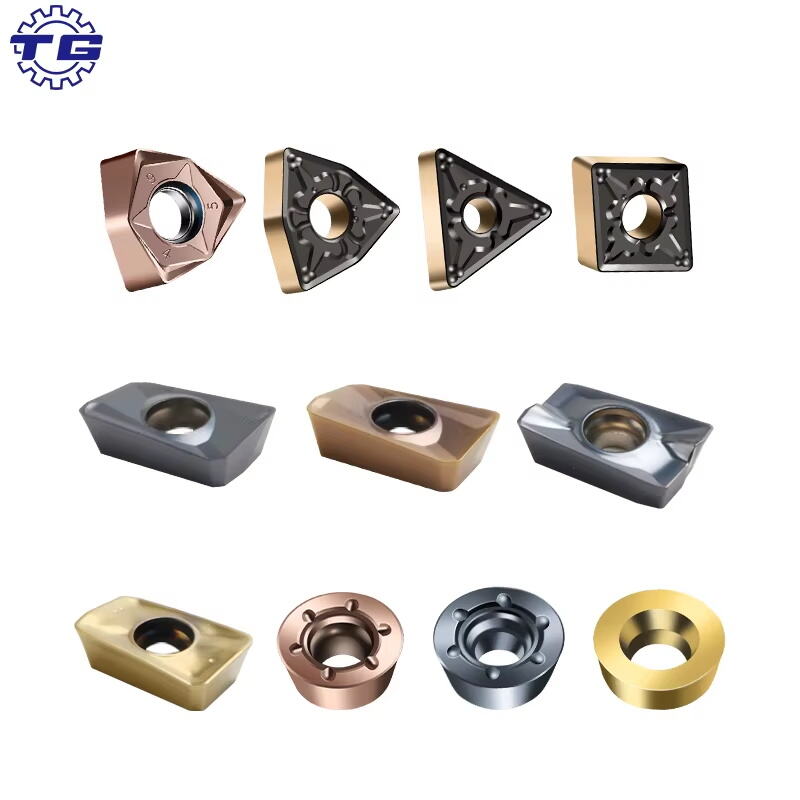
Turning inserts for stainless steel represent specialized cutting tools engineered to address the unique challenges presented when machining stainless steel materials. These precision-manufactured inserts serve as replaceable cutting edges that mount onto turning tool holders, enabling efficient material removal during lathe operations. The primary functions of turning inserts for stainless steel include achieving smooth surface finishes, maintaining dimensional accuracy, and ensuring consistent performance throughout extended production runs. These cutting tools are specifically designed to handle the work-hardening characteristics, high ductility, and thermal properties that make stainless steel notoriously difficult to machine. The technological features incorporated into turning inserts for stainless steel include advanced substrate materials such as coated carbides, cermets, and polycrystalline cubic boron nitride that provide exceptional wear resistance. The geometry of these inserts features carefully engineered chip breakers, rake angles, and edge preparations that facilitate efficient chip formation and evacuation while minimizing built-up edge formation. Modern turning inserts for stainless steel utilize multi-layer coating technologies including titanium aluminum nitride, aluminum oxide, and diamond-like carbon coatings that reduce friction, prevent adhesion, and extend tool life significantly. Applications for these specialized inserts span numerous industries including aerospace component manufacturing, medical device production, food processing equipment fabrication, chemical processing plant construction, and automotive exhaust system production. In manufacturing environments, turning inserts for stainless steel enable machinists to perform external turning, facing, profiling, and grooving operations on various stainless steel grades including austenitic, ferritic, martensitic, and duplex alloys. The versatility of these inserts allows manufacturers to process workpieces ranging from small precision components to large industrial parts while maintaining tight tolerances and superior surface quality throughout the machining process.


Popular Products

Turning inserts for stainless steel deliver substantial cost savings by offering multiple cutting edges on a single insert, which means operators can index to a fresh edge rather than replacing the entire tool assembly. This indexable design reduces tooling expenses dramatically while minimizing machine downtime associated with tool changes. The specialized geometry found in turning inserts for stainless steel promotes superior chip control, breaking chips into manageable segments that evacuate cleanly from the cutting zone rather than forming long, stringy chips that can tangle around the workpiece or damage the finished surface. Manufacturers benefit from enhanced productivity because these inserts maintain consistent cutting performance across extended periods, allowing for longer unattended machining cycles and reducing the frequency of quality inspections. The heat resistance properties of turning inserts for stainless steel enable operators to utilize higher cutting speeds and feed rates compared to conventional tooling, which translates directly into reduced cycle times and increased throughput without sacrificing part quality. Users experience improved surface finish quality on machined components because the sharp cutting edges and optimized geometries minimize work hardening and prevent the tearing or smearing that commonly occurs when machining stainless steel with inappropriate tooling. The predictable wear patterns exhibited by turning inserts for stainless steel allow production planners to schedule tool changes proactively, eliminating unexpected tool failures that can result in scrapped parts or damaged workpieces. These inserts provide remarkable versatility across different stainless steel grades and machining conditions, reducing the inventory of specialized tools that shops must maintain while simplifying tool selection for operators. The standardized mounting systems used with turning inserts for stainless steel facilitate quick tool changes that skilled machinists can complete in seconds, maximizing productive spindle time and minimizing non-cutting activities. Shops gain flexibility in their production planning because the same tool holder can accommodate different insert grades and geometries, allowing rapid adaptation to varying materials, cutting conditions, or part requirements without significant equipment investment. Environmental benefits emerge from using turning inserts for stainless steel because the reduced cutting forces and improved efficiency lower energy consumption during machining operations while the indexable design minimizes waste compared to solid tools that require complete replacement. The consistent performance characteristics of quality turning inserts for stainless steel enable manufacturers to establish reliable machining parameters that operators can replicate confidently, reducing variability in production and improving overall process capability metrics that are critical for maintaining customer satisfaction and meeting stringent quality standards.

Practical Tips

How does high speed steel differ from carbon steel?

30

Dec

How does high speed steel differ from carbon steel?

Manufacturing and machining industries rely heavily on selecting the right steel type for specific applications, with high speed steel and carbon steel representing two of the most significant categories in industrial tooling. Understanding the funda...
View More
Which drill bit type works best for concrete projects?

30

Dec

Which drill bit type works best for concrete projects?

Selecting the right drill bit for concrete projects can make the difference between a successful installation and a frustrating experience filled with broken tools and damaged materials. Concrete drilling requires specialized equipment designed to ha...
View More
How to extend the lifespan of high-speed steel cutting tools?

20

Jan

How to extend the lifespan of high-speed steel cutting tools?

Modern manufacturing industries demand exceptional accuracy and efficiency in their machining operations, making steel precision cutting tools an indispensable component of successful production processes. These specialized instruments represent the ...
View More
What Types of Milling Cutter Tools Are Best for Different Materials?

28

Feb

What Types of Milling Cutter Tools Are Best for Different Materials?

Modern manufacturing relies heavily on precision machining to create complex components across various industries. The selection of appropriate milling cutter tools forms the cornerstone of successful CNC operations, directly impacting surface finish...
View More

Get a Free Quote

Our representative will contact you soon.
Email
Mobile
Name
Company Name
Message
0/1000

turning inserts for stainless steel

Advanced Coating Technology for Extended Tool Life

Advanced Coating Technology for Extended Tool Life

The coating systems applied to turning inserts for stainless steel represent a critical technological advancement that dramatically impacts performance and economics in manufacturing operations. Modern turning inserts for stainless steel feature sophisticated multi-layer coatings deposited through physical vapor deposition or chemical vapor deposition processes, creating protective barriers that measure only a few microns thick yet provide exceptional defense against the extreme conditions encountered during stainless steel machining. These coatings typically consist of titanium aluminum nitride as a primary layer, which offers outstanding oxidation resistance at the elevated temperatures generated when cutting stainless steel, preventing thermal degradation of the carbide substrate underneath. Additional layers may include aluminum oxide for chemical stability and wear resistance, plus a top layer of titanium nitride or diamond-like carbon to reduce friction and prevent stainless steel from adhering to the cutting edge. The combination of these coating layers in turning inserts for stainless steel creates a synergistic effect where each layer contributes specific properties that address different failure mechanisms. The heat barrier effect provided by these coatings allows the substrate material to maintain its hardness and strength even as cutting edge temperatures exceed 800 degrees Celsius during aggressive machining operations. Manufacturers selecting turning inserts for stainless steel with advanced coating technology experience tool life improvements ranging from 200 to 500 percent compared to uncoated inserts, which translates into substantial reductions in tooling costs per part produced. The anti-adhesion properties of modern coatings prevent the built-up edge formation that plagued earlier generations of cutting tools when machining stainless steel, eliminating a primary cause of poor surface finish and dimensional inaccuracy. Production managers appreciate that longer tool life means fewer tool changes during shifts, reducing labor costs associated with tool management while increasing machine utilization rates. The coating technology in turning inserts for stainless steel also enables dry or minimum quantity lubrication machining strategies that eliminate or drastically reduce coolant usage, addressing environmental concerns while simplifying chip disposal and reducing ongoing operational costs associated with coolant purchase, maintenance, and disposal.
Precision Chip Control Geometry for Optimal Performance

Precision Chip Control Geometry for Optimal Performance

The chip control geometry engineered into turning inserts for stainless steel addresses one of the most challenging aspects of machining these materials by transforming the continuous, ductile chips naturally produced during cutting into short, manageable segments. Stainless steel exhibits high ductility and work-hardening tendencies that typically result in long, stringy chips that pose safety hazards to operators, tangle around rotating workpieces, interfere with cutting fluid delivery, and can scratch finished surfaces. The chip breaker designs incorporated into turning inserts for stainless steel feature precisely calculated land widths, groove depths, and obstruction angles that force chips to curl tightly and fracture at predetermined intervals. These geometries have been developed through extensive research combining finite element analysis, high-speed photography of chip formation, and practical testing across various cutting parameters and stainless steel grades. Different chip breaker patterns are available in turning inserts for stainless steel to accommodate varying cutting depths, feed rates, and material conditions, allowing manufacturers to select the optimal geometry for their specific application requirements. The positive rake angles commonly employed in turning inserts for stainless steel reduce cutting forces by creating a sharper cutting action, which is particularly beneficial when machining work-hardening materials because it minimizes the depth of the plastically deformed layer beneath the cut surface. Edge preparation techniques including honing, chamfering, or specialized micro-geometry treatments strengthen the cutting edge of turning inserts for stainless steel, preventing premature edge chipping while maintaining the sharp cutting action necessary for clean material separation. Operators working with properly designed turning inserts for stainless steel report dramatic improvements in chip evacuation, allowing cutting fluids to reach the cutting zone more effectively for improved cooling and lubrication. The controlled chip formation enabled by optimized geometry in turning inserts for stainless steel permits higher productivity by allowing machinists to confidently increase feed rates without concerns about chip management problems that would otherwise halt production. Quality control personnel value the consistent surface finishes achievable with well-designed turning inserts for stainless steel because the controlled chip flow eliminates surface damage from chip interference, reducing rework and scrap rates while improving customer satisfaction with finished components.
Material-Specific Substrate Formulations for Superior Cutting Performance

Material-Specific Substrate Formulations for Superior Cutting Performance

The substrate materials used in manufacturing turning inserts for stainless steel are specially formulated carbide grades that balance the seemingly contradictory requirements of hardness for wear resistance and toughness for resistance to edge fracture and chipping. Standard carbide grades designed for general-purpose machining often fail prematurely when applied to stainless steel due to the unique combination of abrasiveness, work hardening, and high cutting temperatures characteristic of these materials. Turning inserts for stainless steel typically employ fine or ultra-fine grain carbide substrates where tungsten carbide particles measure between 0.5 and 1.0 microns in diameter, creating a dense, uniform structure that provides both the edge strength necessary to resist microchipping and the wear resistance required for extended tool life. The binder phase in these specialized substrates uses carefully controlled cobalt content, typically ranging from 6 to 12 percent by weight, optimized to provide the appropriate balance between hardness and toughness for the thermal and mechanical loads encountered during stainless steel machining. Some premium turning inserts for stainless steel incorporate gradient sintering technology where the composition varies from the surface to the core, creating a wear-resistant surface layer supported by a tougher interior that absorbs shock loads and prevents catastrophic fracture. Manufacturers of turning inserts for stainless steel continuously refine substrate formulations by adding small quantities of alloying elements such as tantalum, niobium, or chromium carbides that enhance specific properties like high-temperature hardness or corrosion resistance to the chemically aggressive environment created during cutting. The thermal conductivity of substrate materials in turning inserts for stainless steel influences cutting temperatures significantly, with higher thermal conductivity grades helping to dissipate heat away from the cutting edge, reducing thermal wear and preventing thermal cracking. Material scientists developing turning inserts for stainless steel utilize advanced sintering techniques including hot isostatic pressing and sinter-HIP processes that eliminate internal porosity and create substrates with exceptional uniformity and mechanical properties. Production engineers benefit from the predictable performance that material-specific substrates provide in turning inserts for stainless steel, allowing the establishment of optimized cutting parameters that maximize productivity while ensuring reliable tool life. The investment in advanced substrate technology for turning inserts for stainless steel pays dividends through reduced cost per part, improved process reliability, and enhanced capability to meet demanding specifications for surface finish and dimensional accuracy that customers increasingly require in competitive global markets.
turning inserts for stainless steel-0
turning inserts for stainless steel-1

Get a Free Quote

Our representative will contact you soon.
Email
Mobile
Name
Company Name
Message
0/1000