Contact me immediately if you encounter problems!

All Categories

carbide insert turning tools

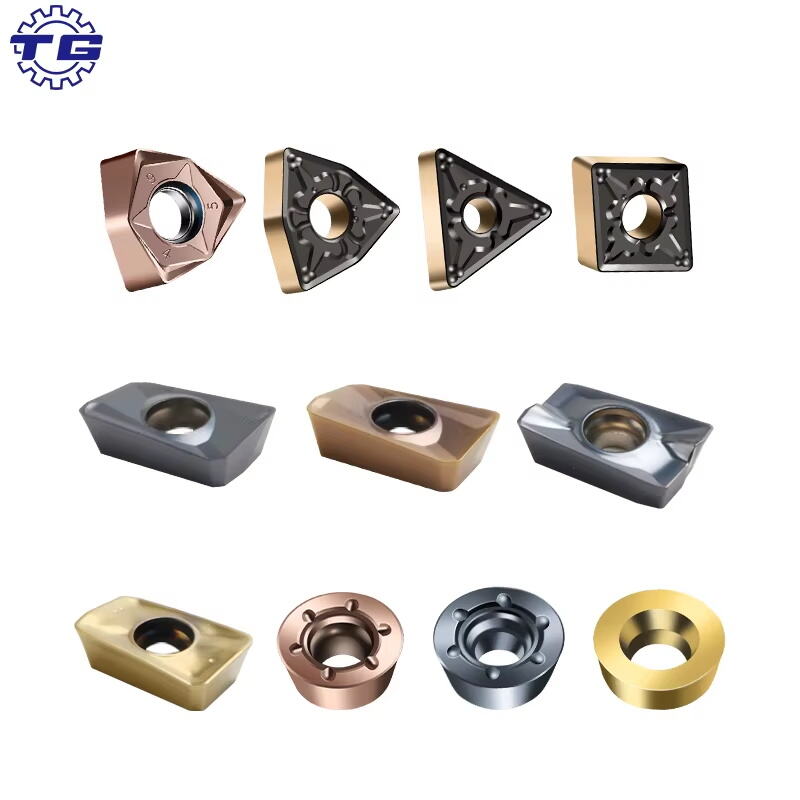
Carbide insert turning tools represent a revolutionary advancement in modern machining operations, offering manufacturers and metalworkers exceptional performance in cutting, shaping, and finishing various materials. These precision-engineered tools feature replaceable carbide inserts that mount securely onto tool holders, providing a cost-effective and efficient solution for turning operations. The main function of carbide insert turning tools involves removing material from rotating workpieces to create cylindrical shapes, tapers, faces, grooves, and threads with remarkable accuracy. The technological foundation of these tools rests on tungsten carbide material composition, which combines tungsten and carbon particles through a sintering process to create an extremely hard and wear-resistant cutting edge. This composition allows the inserts to withstand high temperatures generated during machining while maintaining dimensional stability and edge sharpness. Modern carbide insert turning tools incorporate advanced geometries, including chip breakers, rake angles, and clearance angles specifically designed to optimize chip formation and evacuation. The indexable nature of these inserts means that when one cutting edge becomes worn, operators can quickly rotate or flip the insert to expose a fresh edge, eliminating the need for time-consuming tool resharpening. Applications for carbide insert turning tools span across numerous industries, including automotive manufacturing, aerospace component production, oil and gas equipment fabrication, medical device manufacturing, and general engineering workshops. These tools excel at machining ferrous materials like steel and cast iron, as well as non-ferrous metals such as aluminum, brass, and copper alloys. The versatility of carbide insert turning tools extends to various turning operations, including rough turning for rapid material removal, finish turning for achieving precise dimensions and surface quality, facing operations for creating flat surfaces perpendicular to the rotation axis, and grooving for producing recesses and undercuts. The standardization of insert shapes and sizes across the industry ensures compatibility between different manufacturers' tool holders and inserts, providing users with flexibility in sourcing and inventory management.


Popular Products

Carbide insert turning tools deliver substantial benefits that directly impact your bottom line and operational efficiency. First and foremost, these tools dramatically reduce your overall tooling costs compared to traditional solid cutting tools. When a cutting edge wears out, you simply index the insert to a fresh edge or replace only the small insert rather than discarding an entire expensive tool body. This modular approach means you get multiple cutting edges from each insert, typically four to eight depending on the insert shape, multiplying your investment value. The time savings achieved with carbide insert turning tools translate into increased productivity for your shop. Changing an insert takes mere seconds using a simple wrench or lever mechanism, whereas resharpening traditional tools requires removing them from the machine, transporting them to a grinding station, and carefully restoring the cutting geometry. This quick-change capability minimizes machine downtime and keeps your production flowing smoothly. The superior hardness and heat resistance of carbide material allows you to run your machines at higher cutting speeds and feed rates than would be possible with high-speed steel tools. Faster machining directly means more parts produced per shift, improving your throughput without requiring additional equipment investment. The consistency and predictability of carbide insert turning tools enhance your quality control efforts. Each new cutting edge delivers the same geometry and performance characteristics, producing uniform results across multiple workpieces and reducing dimensional variation. This reliability helps you meet tight tolerances and maintain customer satisfaction. The extended tool life of carbide inserts reduces the frequency of tool changes, further boosting productivity while decreasing the labor involved in tool management. Modern coatings applied to carbide inserts, such as titanium nitride, titanium carbonitride, and aluminum oxide, further extend tool life by reducing friction and preventing chemical interaction between the workpiece and cutting edge. The versatility of carbide insert turning tools simplifies inventory management since a single tool holder can accommodate different insert grades and geometries for various materials and applications. You can quickly adapt to different jobs by switching inserts rather than maintaining separate specialized tools. The excellent surface finishes achievable with carbide insert turning tools often eliminate or reduce secondary finishing operations, streamlining your manufacturing process. Environmental benefits also factor into the advantages, as the replaceable insert system generates less waste compared to discarding entire worn tools. The improved chip control provided by modern insert geometries reduces the formation of problematic long, stringy chips that can tangle around the workpiece or tool, creating safety hazards and interrupting production.

Practical Tips

How does high speed steel differ from carbon steel?

30

Dec

How does high speed steel differ from carbon steel?

Manufacturing and machining industries rely heavily on selecting the right steel type for specific applications, with high speed steel and carbon steel representing two of the most significant categories in industrial tooling. Understanding the funda...
View More
When should you use carbide vs HSS end mill cutters?

10

Feb

When should you use carbide vs HSS end mill cutters?

Selecting the right cutting tool for machining operations is crucial for achieving optimal performance, surface finish, and tool longevity. The choice between carbide and high-speed steel (HSS) end mill cutters significantly impacts manufacturing eff...
View More
Why Are Carbide End Mills Better for Metal Cutting?

31

Mar

Why Are Carbide End Mills Better for Metal Cutting?

When it comes to precision metal cutting operations, the choice of cutting tool directly impacts productivity, surface finish quality, and overall manufacturing costs. Carbide end mills have emerged as the preferred solution for demanding metal cutti...
View More
What Safety Measures Are Essential in Holemaking Operations?

31

Mar

What Safety Measures Are Essential in Holemaking Operations?

Holemaking operations represent one of the most fundamental yet potentially hazardous processes in manufacturing environments. These operations involve creating precise holes in various materials using drilling, reaming, boring, and related machining...
View More

Get a Free Quote

Our representative will contact you soon.
Email
Mobile
Name
Company Name
Message
0/1000

carbide insert turning tools

Exceptional Durability and Extended Tool Life for Maximum Production Uptime

Exceptional Durability and Extended Tool Life for Maximum Production Uptime

The exceptional durability of carbide insert turning tools fundamentally transforms your machining economics by delivering extended tool life that far surpasses conventional cutting tool alternatives. The secret to this remarkable longevity lies in the unique properties of tungsten carbide material, which ranks among the hardest substances used in industrial applications, approaching the hardness of diamond. This extreme hardness allows the cutting edges to resist wear even when subjected to the intense pressures and temperatures generated during high-speed machining operations. When your tools maintain their sharpness longer, you experience fewer interruptions for tool changes, which translates directly into more productive machine hours. The consistency of performance throughout the insert's usable life ensures that the parts you produce at the beginning of an insert's service match the quality of parts made near the end of its life, reducing variation and improving process control. Modern carbide insert turning tools feature advanced coating technologies that multiply the base material's already impressive wear resistance. These coatings, applied through sophisticated physical vapor deposition or chemical vapor deposition processes, create additional protective layers that reduce friction between the cutting edge and workpiece while preventing chemical reactions that accelerate wear. The multi-layer coating systems commonly used today combine different materials to address multiple wear mechanisms simultaneously, with each layer serving a specific protective function. This extended tool life delivers economic benefits beyond the obvious reduction in insert consumption; it also decreases the labor costs associated with tool changes, reduces the skill level required for tool management, and minimizes the inventory of spare inserts needed to maintain production. For high-volume manufacturing operations, the cumulative time saved by reducing tool changes can amount to dozens of additional productive hours per machine per month. The predictable wear patterns of carbide insert turning tools enable you to implement condition-based tool change strategies rather than conservative time-based approaches, extracting maximum value from each insert while maintaining quality standards. The robust construction of carbide inserts also resists chipping and breakage better than traditional tools, particularly important when machining interrupted cuts or materials with hard inclusions that create impact loading on the cutting edge.
Superior Cutting Performance Enabling Higher Productivity and Efficiency

Superior Cutting Performance Enabling Higher Productivity and Efficiency

Carbide insert turning tools unlock superior cutting performance that empowers you to push your machining operations to new levels of productivity and efficiency. The fundamental advantage stems from carbide's ability to maintain hardness and structural integrity at elevated temperatures, a property that allows these tools to operate at cutting speeds two to five times faster than high-speed steel alternatives. When you increase cutting speed, the time required to complete each turning operation decreases proportionally, enabling you to produce more finished parts within the same shift duration. This productivity multiplication occurs without requiring additional capital investment in machinery or floor space, making it one of the most cost-effective performance improvements available. The thermal stability of carbide insert turning tools means the cutting edge retains its sharp geometry even as friction generates intense heat in the cutting zone, where temperatures often exceed several hundred degrees. This hot hardness prevents the softening and rapid wear that would quickly destroy lesser tool materials under identical conditions. Beyond speed capabilities, carbide insert turning tools excel at maintaining dimensional accuracy throughout extended production runs. The minimal wear rate and resistance to thermal deformation ensure that the tool produces consistent part dimensions from the first workpiece to the hundredth or even thousandth piece. This dimensional stability reduces the need for frequent machine adjustments and minimizes scrap from parts drifting out of tolerance specifications. The efficient chip formation facilitated by precisely engineered insert geometries contributes significantly to overall performance. Well-designed chip breakers built into the insert surface curl and fracture chips into manageable segments that evacuate cleanly from the cutting zone, preventing the formation of problematic continuous ribbons that can damage the workpiece surface or create dangerous tangles. Proper chip control also improves surface finish quality by preventing recutting of chips and reducing the heat buildup that occurs when chips remain in contact with the workpiece. The capability of carbide insert turning tools to maintain aggressive feed rates while delivering acceptable surface finishes means you can remove material quickly during roughing operations, then switch to a finishing insert to achieve final dimensions and surface quality without requiring multiple setups or machine transfers. This operational flexibility streamlines your manufacturing workflow and reduces work-in-process inventory.
Cost-Effective Indexable Design Providing Economic and Operational Advantages

Cost-Effective Indexable Design Providing Economic and Operational Advantages

The indexable design philosophy embodied in carbide insert turning tools delivers compelling cost-effectiveness that resonates throughout your entire manufacturing operation, from initial tooling investment through ongoing operational expenses. The economic model shifts dramatically compared to traditional brazed or solid tools, where the entire tool becomes scrap when the cutting edge wears out. With carbide insert turning tools, the expensive tool holder remains in service indefinitely while only the small, relatively inexpensive insert requires replacement. This separation of consumable cutting edge from durable tool body reduces your per-edge tooling cost substantially. Each insert typically provides multiple usable cutting edges depending on its geometric shape; triangular inserts offer three edges, square inserts provide four, and some specialized designs deliver even more. This multiplication factor means your actual cost per cutting edge drops to a fraction of the insert's purchase price. The standardization inherent in the indexable insert system creates additional economic benefits through inventory rationalization. Rather than maintaining stocks of numerous specialized tools, you can carry a smaller inventory of universal tool holders supplemented by various insert styles and grades. This consolidation reduces capital tied up in tooling inventory while simultaneously decreasing the storage space required and simplifying inventory management procedures. The quick-change nature of indexable carbide insert turning tools generates operational savings that compound over time. Machine operators can replace worn inserts in seconds without removing the tool holder from the machine or performing complex adjustments, minimizing non-productive time and maximizing the percentage of each shift spent actually cutting metal. This ease of tool change also reduces the skill level and training required for basic tool maintenance, allowing less experienced operators to maintain production effectively. The elimination of tool resharpening requirements removes an entire cost center from your operation, including the capital equipment investment in tool grinders, the skilled labor to operate them, the floor space they occupy, and the time lost transporting tools to and from the grinding area. For smaller shops without in-house grinding capabilities, this eliminates dependency on external sharpening services with their associated costs and lead times. The consistent performance delivered by fresh carbide insert cutting edges improves process stability and reduces quality-related costs by minimizing scrap and rework. The environmental responsibility aspect of the indexable design also deserves recognition, as the system generates substantially less waste material compared to discarding entire worn tools, aligning with modern sustainability initiatives while reducing disposal costs.
carbide insert turning tools-0
carbide insert turning tools-1

Get a Free Quote

Our representative will contact you soon.
Email
Mobile
Name
Company Name
Message
0/1000