Contact me immediately if you encounter problems!

All Categories

round turning inserts

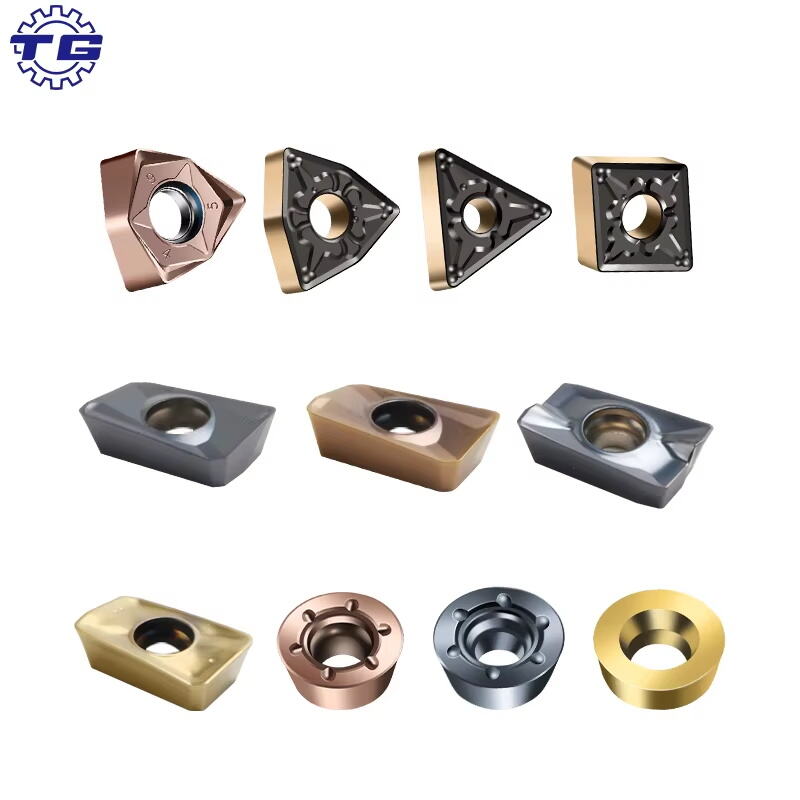
Round turning inserts represent a fundamental component in modern machining operations, designed specifically to facilitate efficient metal cutting and turning processes across diverse industrial applications. These specialized cutting tools feature a distinctive circular geometry that sets them apart from conventional insert shapes, offering unique advantages in terms of versatility and performance. The primary function of round turning inserts centers on their ability to perform smooth, continuous cutting operations while maintaining consistent edge engagement throughout the machining cycle. Their circular design eliminates the presence of sharp corners, which means that every point along the cutting edge can be utilized effectively, maximizing the insert's usable life and providing exceptional value to manufacturing operations. Technologically, round turning inserts incorporate advanced carbide compositions and sophisticated coating technologies that enhance their durability and cutting performance. The absence of weak corner points inherent in their round design significantly reduces the risk of edge chipping and premature failure, making them particularly suitable for interrupted cuts and challenging machining environments. These inserts excel in applications requiring profile turning, contour machining, and operations where the depth of cut varies continuously. Manufacturing facilities across automotive, aerospace, energy, and general engineering sectors rely on round turning inserts for producing complex curved surfaces, radius forms, and intricate component geometries. The technological features embedded within these inserts include precision-ground cutting edges, optimized rake angles, and carefully engineered chip breaker geometries that facilitate efficient chip evacuation and thermal management during cutting operations. Round turning inserts are compatible with various tool holder systems, providing flexibility in machine tool integration and operational setup. Their robust construction and balanced design contribute to reduced vibration during machining, resulting in superior surface finishes and dimensional accuracy on finished workpieces. The versatility of round turning inserts extends to their capability to machine multiple materials, including steels, stainless steels, cast irons, and non-ferrous alloys, making them indispensable tools in diverse production environments where adaptability and reliability are paramount considerations for achieving operational excellence.


New Products

The practical benefits of round turning inserts make them an intelligent investment for manufacturing operations seeking to optimize productivity and reduce overall machining costs. One significant advantage lies in their exceptional economy of use, as the circular geometry allows operators to index the insert to multiple cutting positions, effectively multiplying the number of usable cutting edges available from a single insert. This multi-positional capability translates directly into reduced tooling inventory requirements and lower per-component tooling costs, delivering tangible financial benefits to production budgets. The strength inherent in the round design provides remarkable resistance to mechanical and thermal shock, enabling these inserts to withstand demanding cutting conditions that would quickly damage inserts with vulnerable corner geometries. This durability results in extended tool life, fewer tool changes, reduced machine downtime, and improved overall equipment effectiveness, all contributing to enhanced production efficiency. Operators benefit from simplified setup procedures because round turning inserts eliminate concerns about precise positioning relative to corner angles, making tool changes faster and reducing the skill level required for insert indexing. The consistent cutting radius throughout the entire periphery ensures predictable machining results regardless of which cutting position is engaged, providing reliability and repeatability that quality-conscious manufacturers demand. Round turning inserts demonstrate superior performance in applications involving varying depths of cut, as their geometry naturally accommodates changes in engagement without compromising cutting efficiency or surface quality. The reduced cutting forces generated by the favorable geometry mean less stress on machine tool spindles, bearings, and structural components, potentially extending equipment service life and reducing maintenance requirements. Vibration dampening characteristics inherent in the balanced circular design contribute to quieter operation and improved workplace environments while simultaneously enhancing surface finish quality on machined parts. These inserts prove particularly valuable when machining challenging materials or operating under less-than-ideal conditions where tool reliability becomes critical to maintaining production schedules. The versatility of round turning inserts allows manufacturers to consolidate their tooling inventory, reducing the variety of insert geometries required to accommodate different operations and simplifying procurement, storage, and management processes. Heat dissipation benefits from the distributed cutting action across the rounded edge, preventing localized thermal concentration that accelerates tool wear in conventional insert designs. Ultimately, manufacturers who adopt round turning inserts experience measurable improvements in productivity metrics, cost per part reductions, and enhanced capability to meet demanding quality specifications consistently across production runs.

Latest News

What is high speed steel and how does it work?

30

Dec

What is high speed steel and how does it work?

High speed steel represents one of the most significant innovations in metallurgy and machining technology. This specialized alloy has revolutionized manufacturing processes across countless industries, enabling precision cutting operations at speeds...
View More
How does high speed steel differ from carbon steel?

30

Dec

How does high speed steel differ from carbon steel?

Manufacturing and machining industries rely heavily on selecting the right steel type for specific applications, with high speed steel and carbon steel representing two of the most significant categories in industrial tooling. Understanding the funda...
View More
When should you use high speed steel cutting tools?

31

Mar

When should you use high speed steel cutting tools?

High speed steel cutting tools have revolutionized modern machining operations since their introduction in the early 1900s. These specialized alloys offer exceptional hardness, wear resistance, and heat tolerance that make them indispensable in vario...
View More
Why Advanced Holemaking Methods Improve Product Quality

31

Mar

Why Advanced Holemaking Methods Improve Product Quality

Manufacturing precision directly correlates with product quality, and nowhere is this relationship more evident than in holemaking operations. Advanced holemaking methods represent a significant evolution from traditional drilling techniques, offerin...
View More

Get a Free Quote

Our representative will contact you soon.
Email
Mobile
Name
Company Name
Message
0/1000

round turning inserts

Superior Edge Utilization and Extended Tool Life

Superior Edge Utilization and Extended Tool Life

The circular geometry of round turning inserts delivers unmatched edge utilization efficiency that fundamentally changes the economics of machining operations. Unlike square, triangular, or diamond-shaped inserts that concentrate cutting forces at vulnerable corner points, round turning inserts distribute loads evenly across their entire periphery, eliminating weak points susceptible to chipping or catastrophic failure. This design philosophy means that virtually the entire circumference of the insert serves as a potential cutting edge, providing numerous indexing positions that extend the productive life of each insert far beyond conventional alternatives. Manufacturing operations benefit from this extended usability through reduced frequency of tool changes, which directly minimizes non-productive downtime and maximizes spindle utilization rates. The economic impact becomes particularly significant in high-volume production environments where even small reductions in tool change frequency accumulate into substantial productivity gains over time. The absence of sharp corners also means that round turning inserts maintain consistent cutting performance throughout their service life, avoiding the progressive degradation in surface finish quality that often accompanies corner wear in conventional inserts. Operators appreciate the simplified decision-making process when indexing these inserts, as any fresh portion of the circular edge provides equivalent cutting capability without requiring precise angular positioning. This user-friendly characteristic reduces the potential for setup errors and accelerates tool change procedures, contributing to overall operational efficiency. The structural integrity provided by the round configuration enables manufacturers to push cutting parameters more aggressively when conditions permit, extracting higher material removal rates without compromising tool security. Heat generation during cutting operations distributes more uniformly around the circular edge, preventing the localized thermal spikes that accelerate crater wear and coating degradation in conventional insert geometries. This thermal management advantage proves especially valuable when machining heat-resistant alloys or operating at elevated cutting speeds where thermal considerations become limiting factors in tool performance. The extended tool life characteristic of round turning inserts translates into reduced tooling expenditure per manufactured component, improved cost predictability in production planning, and enhanced competitiveness in price-sensitive markets where marginal cost advantages determine business success.
Exceptional Versatility Across Diverse Machining Applications

Exceptional Versatility Across Diverse Machining Applications

Round turning inserts distinguish themselves through remarkable operational versatility that enables manufacturers to address a broad spectrum of machining challenges with a single tool geometry. This adaptability stems from the continuous radius that characterizes their cutting edge, allowing seamless transitions between different cutting depths, feed rates, and approach angles without compromising performance or requiring specialized tooling variations. Manufacturing facilities benefit tremendously from this versatility through simplified tooling inventories, reduced capital investment in specialized cutting tools, and enhanced flexibility to respond to changing production requirements without extensive tooling changeovers. The round insert geometry proves exceptionally well-suited for profile turning operations where complex curved surfaces and radius forms must be generated with precision and efficiency. Traditional insert shapes with defined corners often require multiple tool positions or specialized form tools to achieve similar results, increasing setup complexity and programming requirements. Round turning inserts accomplish these tasks naturally, following contoured paths while maintaining consistent cutting action and surface finish quality throughout the entire profile. This capability extends to facing operations, chamfering tasks, and light grooving work, allowing manufacturers to consolidate multiple operations into single setups that reduce handling time and improve dimensional accuracy by eliminating cumulative positioning errors. The material versatility of round turning inserts encompasses ferrous and non-ferrous metals, including challenging materials like hardened steels, stainless alloys, titanium, and high-temperature superalloys used in aerospace and energy generation applications. Advanced coating technologies applied to these inserts further extend their application range, with specialized coatings optimized for specific material families ensuring optimal performance across diverse workpiece materials. Manufacturing engineers value the design flexibility that round turning inserts provide when developing new machining processes or optimizing existing operations, as the predictable behavior and robust performance characteristics reduce development time and minimize risk during process validation. The compatibility of round turning inserts with various tool holder systems and machine tool configurations ensures seamless integration into existing production equipment, avoiding costly capital investments while upgrading cutting tool performance. This universal applicability makes round turning inserts particularly attractive for job shops and contract manufacturers who must accommodate diverse customer requirements and frequent product changeovers without maintaining extensive specialized tooling inventories. The balanced geometry contributes to stable cutting action even in semi-finishing and finishing operations where surface quality requirements are stringent and vibration must be minimized to achieve specified tolerances.
Enhanced Cutting Stability and Surface Finish Quality

Enhanced Cutting Stability and Surface Finish Quality

The inherent geometric advantages of round turning inserts deliver superior cutting stability that directly translates into exceptional surface finish quality and dimensional precision on machined components. The continuous circular edge eliminates the directional variations in cutting forces that occur with angular insert geometries, creating a more balanced and predictable cutting action throughout the engagement cycle. This stability proves particularly valuable in applications requiring fine surface finishes where even minor vibrations or chatter can degrade workpiece quality and necessitate additional finishing operations. Manufacturing operations benefit from reduced scrap rates, minimized rework requirements, and enhanced capability to achieve tight tolerances consistently across production runs. The vibration-dampening characteristics inherent in the round design result from the absence of intermittent shock loading that occurs when discrete corners enter and exit the cutting zone in conventional insert geometries. This smoother cutting action reduces excitation of machine tool resonances, enabling higher metal removal rates while maintaining surface finish quality that meets or exceeds specifications. Operators working with challenging materials or machining thin-walled components particularly appreciate the stability advantages of round turning inserts, as these difficult applications amplify any tendency toward vibration or chatter that compromises part quality. The predictable cutting forces associated with round insert geometry also contribute to extended machine tool life by reducing stress on spindle bearings, way systems, and structural components that accumulate fatigue damage from repetitive shock loading. Quality assurance personnel recognize the consistency benefits that round turning inserts provide, as the uniform cutting action produces more predictable dimensional outcomes that reduce variation in critical part features and improve process capability indices. The thermal stability afforded by distributed heat generation across the circular edge helps maintain dimensional accuracy throughout extended cutting operations where thermal expansion might otherwise compromise precision in conventional tooling approaches. Programming simplicity represents another practical advantage, as the constant radius eliminates complex tool path calculations required to avoid gouging or leaving excess material when using inserts with defined corner geometries. This programming efficiency reduces cycle times, simplifies CNC code development, and minimizes opportunities for costly programming errors that damage workpieces or cutting tools. Surface finish consistency across the entire machined profile proves especially valuable in applications where appearance quality matters or where subsequent coating operations require uniform surface preparation. The reliable performance of round turning inserts in achieving specified surface finishes reduces dependency on secondary finishing operations, streamlining production workflows and reducing overall manufacturing costs per component.
round turning inserts-0
round turning inserts-1

Get a Free Quote

Our representative will contact you soon.
Email
Mobile
Name
Company Name
Message
0/1000