
 EN
EN
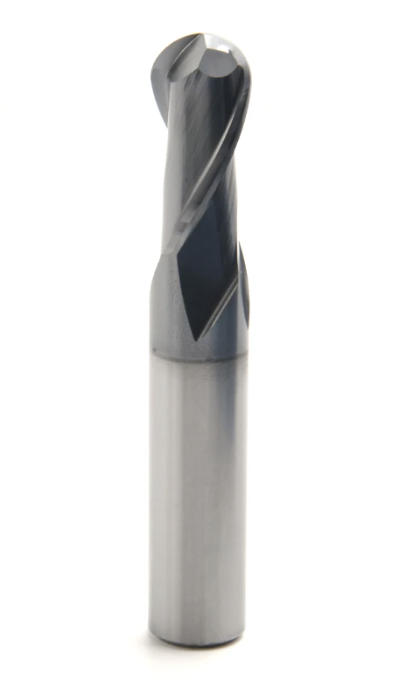
Aerospace manufacturing demands absolute precision. Every component produced must meet exacting tolerances and surface finish specifications that directly impact flight safety, fuel efficiency, and component longevity. The choice of cutting tool fundamentally determines whether aerospace parts meet these critical requirements, and a high-precision cnc end mill stands as one of the most essential tools in modern aerospace production. Understanding why a cnc end mill quality directly correlates with superior component finish requires examining the relationship between tool geometry, material science, and machining dynamics in the aerospace sector.
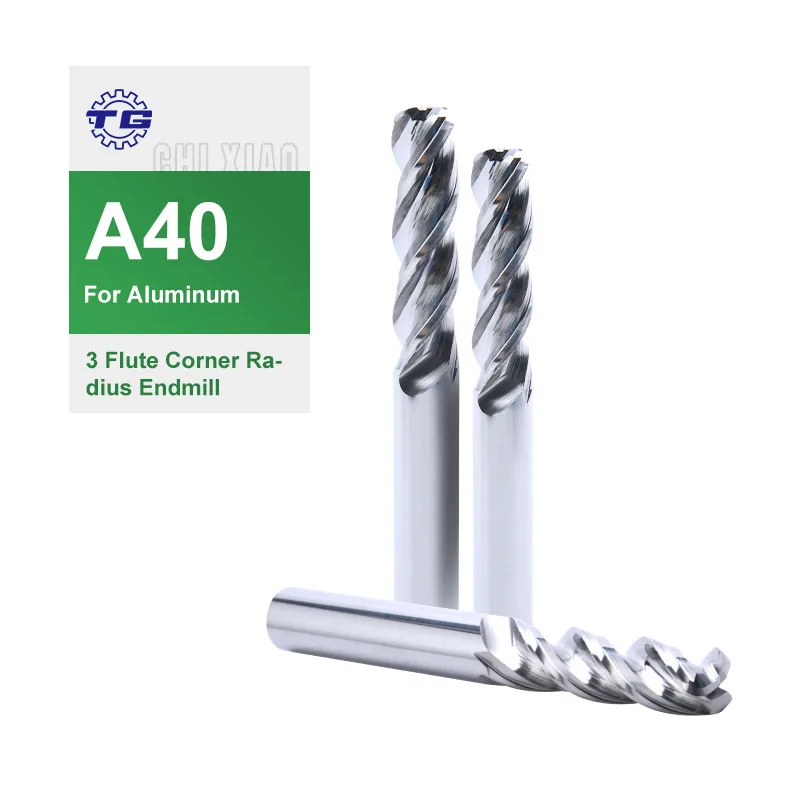
Aerospace components represent the highest tier of manufacturing challenges. Titanium alloys, aluminum superalloys, and nickel-based materials require cutting tools engineered for extreme conditions. A cnc end mill designed specifically for aerospace applications delivers the edge geometry, material composition, and coating technology needed to produce flawless surfaces on these demanding alloys. Without proper tool selection, manufacturers face surface defects, dimensional inconsistencies, and costly rework that jeopardize both schedule and profitability.
Precision Tool Geometry and Surface Finish Quality
How Flute Design Affects Aerospace Finish
The flute geometry of a cnc end mill directly influences the quality of the surface left behind on machined aerospace parts. Aerospace components often require surface finishes of Ra 0.8 microinches or better, a specification that demands tool precision measured in ten-thousandths of an inch. A cnc end mill with precisely ground flutes, optimized chip evacuation paths, and carefully engineered rake and relief angles produces cleaner cuts with minimal built-up edge formation. The corner radius on a cnc end mill, in particular, plays a crucial role in finishing operations where the cutting edge must transition smoothly without causing microscopic tearing or stress marks on the workpiece.
When a cnc end mill operates at optimized spindle speeds and feed rates, the controlled flute engagement generates predictable chip formation and heat distribution. Aerospace manufacturers choose cnc end mill options with optimized helix angles because these reduce vibration and chatter, two factors that immediately degrade surface finish quality. A cnc end mill with superior edge geometry also maintains its cutting performance longer, reducing tool wear that would otherwise compromise finish consistency across production runs. This consistency is non-negotiable in aerospace, where every component in a batch must perform identically.
Material Selection in Carbide Cnc End Mill Tools
The substrate material of a cnc end mill fundamentally determines its cutting performance on aerospace alloys. Solid carbide cnc end mill tools outperform high-speed steel alternatives by an enormous margin in aerospace applications. Carbide maintains hardness at the elevated temperatures generated during high-speed machining of titanium and superalloys, while high-speed steel tools soften and wear rapidly under the same conditions. A cnc end mill made from premium carbide grades, often with cobalt additions for toughness, survives the thermal shock and interrupted cuts common in aerospace fixture work. This durability translates directly to consistent surface finish, as a dulling cnc end mill immediately begins producing surface imperfections and dimensional drift.
Coating Technology and Aerospace Material Compatibility
Advanced Coatings on Precision Cnc End Mill Tools
Modern cnc end mill tools feature multi-layer coatings engineered to address specific challenges posed by aerospace materials. Titanium alloys exhibit extreme chemical affinity for uncoated carbide, a phenomenon called galling that causes catastrophic tool wear and surface damage. A cnc end mill coated with specialized titanium nitride, aluminum oxide, or chromium nitride barriers prevents this adhesion and maintains a sharp edge throughout the cutting process. The coating on a cnc end mill acts as a thermal barrier as well, protecting the carbide substrate from thermal shock when cutting nickel superalloys that reach cutting zone temperatures exceeding 1000 degrees Celsius. Aerospace manufacturers specifically select cnc end mill options with proven coating performance on their particular alloy families because finish quality depends critically on this coating stability.
The thickness and adhesion quality of a cnc end mill coating determine how long the tool maintains its finish-producing edge geometry. Aerospace production often involves finishing passes where dimensional accuracy and surface quality matter more than material removal rate. A cnc end mill with a robust coating survives these finishing passes without developing the microchipping that causes surface scratches, tool marks, or dimensional inconsistency. Premium cnc end mill suppliers invest in advanced coating processes that ensure coating uniformity across all flute surfaces and edges, eliminating weak points where coating failure might begin.
Choosing Cnc End Mill Coatings for Specific Aerospace Alloys
Different aerospace materials demand different cnc end mill coating strategies. Aluminum components tolerate more aggressive cutting parameters, so a cnc end mill for aluminum uses thinner, lower-friction coatings optimized for chip evacuation. Titanium alloy machining requires a cnc end mill with tougher, thicker coatings that can withstand the chemical reactivity and work hardening behavior of these metals. Superalloy machining demands a cnc end mill engineered with heat-resistant coatings that maintain hardness even as cutting temperatures rise. Aerospace facilities that machine multiple alloy types maintain separate cnc end mill inventories, each optimized for its intended application. Mixing tool types or using a generalized cnc end mill across different materials almost always results in compromised finish quality because no single tool can perform optimally across such diverse material families.
Spindle Speed, Feed Rate, and CNC End Mill Performance Dynamics
Optimizing Cutting Parameters for Finish Quality
Aerospace facilities achieve superior component finish by matching their cnc end mill capabilities to optimized cutting parameters. A high-precision cnc end mill performs only as well as the spindle speed and feed rate allow. Modern aerospace CNC machines feature rigid spindles and servo-controlled axes that enable the high-speed, low-feed finishing passes that produce aerospace-grade surfaces. When operators select a cnc end mill and establish the correct cutting parameters, they create predictable, repeatable cutting conditions that hold dimensional tolerance and surface finish consistently. This predictability is what separates aerospace-capable cnc end mill usage from general-purpose machining.
Vibration control directly impacts whether a cnc end mill achieves the finish quality aerospace demands. Aerospace CNC machines employ tool holders with precise runout tolerance, often less than 0.0005 inches, because runout causes the cnc end mill to chatter and mark the workpiece surface. When tool runout combines with machine spindle eccentricity and inadequate workholding, even a premium cnc end mill produces mediocre finish. Aerospace shops invest heavily in spindle maintenance, precision tool holders, and rigid fixtures specifically to ensure that their cnc end mill tools perform at their intended capability level. This infrastructure investment is non-negotiable if a cnc end mill is to deliver aerospace-grade results.
Finish Passes and Surface Integrity
Many aerospace components require dedicated finishing passes using a specialized cnc end mill selected strictly for surface generation rather than bulk material removal. These finishing cnc end mill passes often use shallow depths of cut and lower feed rates to generate surfaces without subsurface work hardening or stress. A cnc end mill optimized for finishing removes minimal material but creates surfaces of exceptional smoothness and metallurgical integrity. The surface produced by a precision cnc end mill used on finishing passes exhibits no built-up edge, no tearing, and no tool marks, meeting the demanding visual and microscopic inspection criteria aerospace components must satisfy. This finishing emphasis explains why aerospace manufacturers maintain separate tool inventories and why a single cnc end mill cannot serve both roughing and finishing roles effectively.
FAQ
Why does a cnc end mill wear faster when machining aerospace alloys compared to general steel?
Aerospace alloys generate extreme heat and exhibit chemical reactivity that attacks unprotected cutting edges. Titanium undergoes severe work hardening during cutting, and nickel superalloys maintain strength even at cutting zone temperatures exceeding 1000 degrees Celsius. A cnc end mill encounters these conditions continuously, causing thermal shock, chemical diffusion into the carbide substrate, and accelerated edge wear. Aerospace-grade cnc end mill coatings and geometries are engineered to withstand these specific stresses that a cnc end mill designed for general machining would not survive effectively.
How does cnc end mill corner radius affect aerospace component surface finish?
The corner radius on a cnc end mill determines how the tool transitions between cutting edges and influences the finish quality on flat and contoured surfaces. A cnc end mill with a precisely engineered corner radius produces smoother surface transitions and reduces the microfinishing marks that appear when radius geometry is inconsistent. Aerospace components often feature tight corner radii specifications because they affect aerodynamic flow and structural stress concentration. Precision cnc end mill tools maintain consistent corner radius throughout their service life, ensuring that every component produced maintains uniform surface quality.
Can a single cnc end mill be used for both rough and finish machining of aerospace components?
In practice, using a single cnc end mill across roughing and finishing operations compromises both operations. Roughing passes generate different chip formation, cutting temperatures, and tool stress than finishing passes, and a cnc end mill optimized for one operation performs poorly during the other. Aerospace manufacturers maintain separate tool sets, with one cnc end mill for rough material removal and another for precision finishing. This specialization ensures that each cnc end mill operates within its design parameters, preserving edge geometry and coating integrity to deliver superior results in its intended role.