Contact me immediately if you encounter problems!

All Categories

square turning inserts

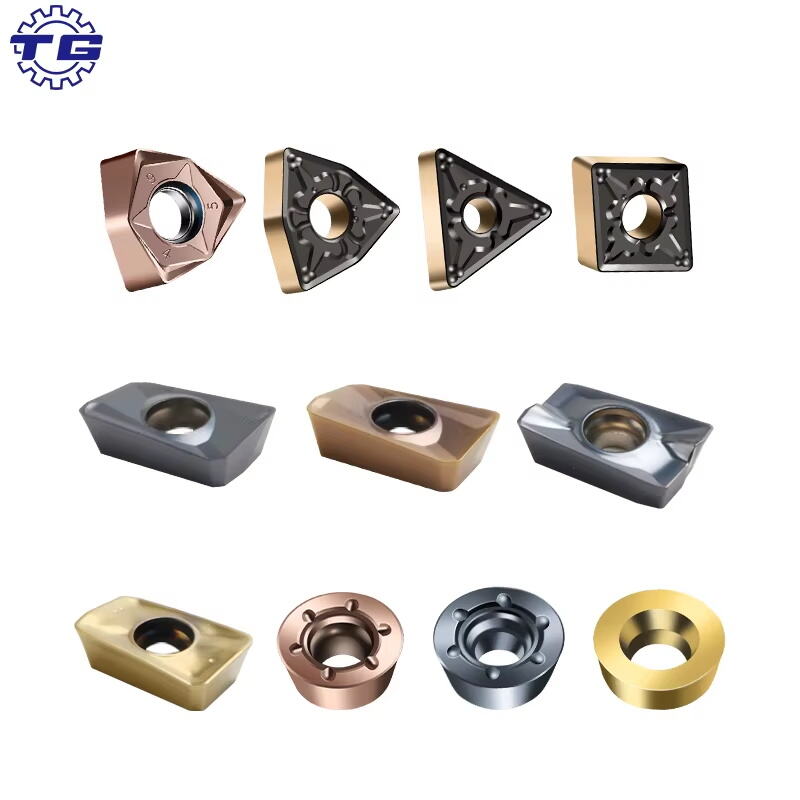
Square turning inserts represent a fundamental category of cutting tools designed specifically for metalworking and machining operations. These precisely engineered carbide or ceramic inserts feature a distinctive square geometry that provides four identical cutting edges, maximizing tool life and cost-effectiveness. Square turning inserts are indexable cutting tools that mount onto tool holders, enabling operators to rotate the insert to a fresh edge when one becomes worn, thereby extending the usable life of each insert significantly. The main function of square turning inserts centers on material removal during turning operations, where they excel at creating cylindrical shapes, facing operations, and profile turning on various workpieces. These inserts accommodate both external and internal turning applications, making them versatile solutions for manufacturing environments. Technological features include advanced coating technologies such as titanium nitride, titanium carbonitride, and aluminum oxide layers that enhance wear resistance and reduce friction during cutting. The square geometry offers a strong cutting edge with a 90-degree angle, providing excellent stability during heavy-duty machining operations. Modern square turning inserts incorporate chipbreaker designs that control chip formation and evacuation, preventing chip buildup and ensuring smooth cutting action. Manufacturers produce these inserts in various sizes, typically ranging from small inserts measuring 6mm on each side to larger variants exceeding 25mm, accommodating different machining requirements and workpiece dimensions. Applications for square turning inserts span numerous industries including automotive manufacturing, aerospace component production, oil and gas equipment fabrication, and general engineering workshops. They effectively machine materials ranging from soft metals like aluminum and brass to hardened steels, stainless steel alloys, and exotic superalloys. The square configuration proves particularly advantageous when machining shoulders, facing operations, and general turning tasks where the 90-degree corner facilitates precise dimensional control. Tool manufacturers design these inserts to meet international standards such as ISO specifications, ensuring compatibility across different tool holder systems and machining centers worldwide.


New Product Recommendations

Square turning inserts deliver numerous practical benefits that directly impact manufacturing efficiency and cost management. The most significant advantage lies in their four usable cutting edges, which means operators can index the insert three additional times after the initial edge wears out, effectively quadrupling the tool life compared to non-indexable cutting tools. This extended usability translates to reduced tooling costs and fewer tool changes during production runs, minimizing machine downtime and maximizing productivity. The robust 90-degree corner angle provides exceptional strength and rigidity during cutting operations, enabling these inserts to withstand heavy cutting forces without chipping or breaking. This durability makes them ideal for roughing operations where material removal rates are high and cutting conditions are demanding. Users benefit from improved surface finishes on machined parts because the stable cutting geometry minimizes vibration and chatter during operation. The square shape simplifies tool setup and programming since all four edges are identical, reducing the learning curve for machine operators and eliminating confusion during tool changes. Cost savings extend beyond the insert itself, as the indexable design eliminates the need for regrinding services required by traditional brazed tools. Manufacturers appreciate the inventory management advantages since stocking square turning inserts in various grades covers a wide range of applications, reducing the total number of different tools required in the facility. The predictable wear patterns of square turning inserts enable operators to schedule tool changes proactively, preventing unexpected tool failures that could damage workpieces or cause production delays. Environmental benefits emerge from reduced material waste since the entire insert body is utilized before disposal, and many manufacturers offer recycling programs for spent carbide inserts. Square turning inserts accommodate both finishing and roughing operations by simply selecting the appropriate grade and chipbreaker geometry, providing operational flexibility without requiring completely different tooling systems. The standardized mounting systems mean these inserts work with existing tool holders, eliminating the need for specialized equipment investments. Performance consistency across multiple edges ensures uniform part quality throughout production runs, which is critical for maintaining tight tolerances in precision manufacturing. Quick changeover capability supports lean manufacturing initiatives by reducing setup times when transitioning between different production jobs. The widespread availability of square turning inserts from multiple suppliers creates competitive pricing and ensures reliable supply chains for manufacturing operations of all sizes.

Latest News

How does high speed steel differ from carbon steel?

30

Dec

How does high speed steel differ from carbon steel?

Manufacturing and machining industries rely heavily on selecting the right steel type for specific applications, with high speed steel and carbon steel representing two of the most significant categories in industrial tooling. Understanding the funda...
View More
Why Do Milling Cutters Break and How to Prevent It?

10

Feb

Why Do Milling Cutters Break and How to Prevent It?

Manufacturing precision relies heavily on the performance and reliability of cutting tools, with the milling cutter serving as one of the most critical components in modern machining operations. Despite their robust design and engineering excellence,...
View More
How CNC Tools Improve Accuracy in Precision Manufacturing

28

Feb

How CNC Tools Improve Accuracy in Precision Manufacturing

Precision manufacturing has revolutionized modern industry by delivering components with unprecedented accuracy and consistency. At the heart of this technological advancement lies the sophisticated world of CNC tools, which have transformed how manu...
View More
What are the main uses of tungsten carbide?

28

Feb

What are the main uses of tungsten carbide?

Tungsten carbide represents one of the most versatile and durable materials in modern industrial applications, combining exceptional hardness with remarkable wear resistance. This compound material, formed by combining tungsten and carbon atoms in eq...
View More

Get a Free Quote

Our representative will contact you soon.
Email
Mobile
Name
Company Name
Message
0/1000

square turning inserts

Superior Versatility Across Multiple Machining Operations

Superior Versatility Across Multiple Machining Operations

Square turning inserts demonstrate remarkable versatility that makes them indispensable tools in modern machine shops and manufacturing facilities. This versatility stems from the fundamental square geometry that naturally accommodates a wide spectrum of turning applications without requiring specialized tooling configurations. When performing external turning operations, square turning inserts excel at both longitudinal turning along the workpiece axis and facing cuts perpendicular to the rotation axis. The 90-degree corner angle creates perfect shoulders and faces, eliminating the need for secondary operations or additional tools to achieve these common features. This capability significantly streamlines production workflows and reduces the total number of tool changes required to complete complex parts. The versatility extends to profiling operations where the insert follows programmed contours to create shaped surfaces on turned components. Manufacturers utilize square turning inserts for chamfering operations, creating precise angular transitions between surfaces that improve part functionality and eliminate sharp edges. The same insert geometry that works for roughing cuts, removing large volumes of material quickly, also performs finishing passes when paired with appropriate cutting parameters and finer chipbreaker geometries. This dual-purpose functionality reduces tooling inventory requirements and simplifies tool management systems. Square turning inserts adapt to various material types ranging from non-ferrous metals like aluminum, copper, and brass to ferrous materials including carbon steels, alloy steels, and stainless steel variants. Advanced insert grades even handle difficult-to-machine materials such as titanium alloys, Inconel, and hardened steels that challenge lesser cutting tools. The versatility encompasses both wet and dry machining environments, with appropriate coating selections enabling effective cutting with or without coolant application. This flexibility proves valuable in facilities transitioning toward environmentally friendly dry machining practices. Tool manufacturers offer square turning inserts with different nose radii, allowing users to optimize surface finish quality and corner strength for specific applications. Smaller nose radii produce finer surface finishes ideal for precision components, while larger radii provide stronger cutting edges for heavy roughing operations. The modular nature of indexable tooling systems means operators can maintain multiple insert grades and geometries, quickly selecting the optimal combination for each job without investing in completely different tool holders or machine setups.
Advanced Coating Technologies Maximizing Performance and Tool Life

Advanced Coating Technologies Maximizing Performance and Tool Life

Modern square turning inserts incorporate sophisticated coating technologies that dramatically enhance cutting performance, extend tool life, and enable higher productivity levels in demanding machining environments. These advanced surface treatments represent significant technological achievements in materials science, creating ultra-thin layers that fundamentally alter how the insert interacts with workpiece materials during cutting. Physical vapor deposition and chemical vapor deposition processes apply coatings measured in microns that provide hardness levels exceeding the base carbide substrate while maintaining toughness at the core. Titanium nitride coatings, recognized by their distinctive gold color, were among the first generation of insert coatings and continue to provide excellent general-purpose performance across various materials. These coatings increase surface hardness, reduce friction at the tool-chip interface, and provide thermal barriers that protect the underlying carbide from heat-related degradation. Titanium carbonitride coatings build upon this foundation with enhanced wear resistance particularly suited to machining steel alloys where abrasive wear predominates. Aluminum oxide coatings contribute exceptional chemical stability and thermal resistance, making them ideal for high-speed machining applications where cutting temperatures reach extreme levels. Modern multi-layer coating architectures combine different coating materials in strategic sequences, leveraging the unique properties of each layer to create synergistic performance improvements. These sophisticated coating stacks might include a tough inner layer for adhesion and crack resistance, intermediate layers for wear protection, and outer layers optimized for low friction and chemical stability. The result is square turning inserts capable of running at significantly higher cutting speeds and feeds compared to uncoated equivalents, directly translating to reduced cycle times and increased production output. Diamond-like carbon coatings offer ultra-low friction properties that prevent built-up edge formation when machining aluminum and other non-ferrous materials prone to adhesion. These specialized coatings enable dry machining of materials that traditionally required flood coolant, supporting environmentally conscious manufacturing initiatives. Coating technologies continue advancing with nanostructured and nano-layered architectures that manipulate material properties at the atomic scale, achieving unprecedented combinations of hardness, toughness, and thermal stability. Manufacturers carefully match coating selections to specific workpiece materials and cutting conditions, providing guidance through grade recommendations that simplify tool selection for end users. The investment in coated square turning inserts delivers measurable return on investment through extended tool life that can double or triple the number of parts produced per cutting edge compared to uncoated alternatives.
Optimized Chipbreaker Designs Ensuring Reliable Chip Control

Optimized Chipbreaker Designs Ensuring Reliable Chip Control

Chipbreaker geometry represents a critical design element in square turning inserts that profoundly influences machining performance, operational safety, and overall process reliability. These precisely engineered grooves and land configurations molded into the insert rake face actively manipulate chip formation during cutting, transforming continuous ribbons of metal into manageable chip shapes that evacuate cleanly from the cutting zone. Effective chip control prevents numerous machining problems including chip wrapping around the workpiece or tool holder, chip accumulation in the work area, and dangerous flying chips that pose safety hazards to operators. The chipbreaker functions by imposing specific curl patterns on the emerging chip as it separates from the parent material, controlling the radius of curvature and ultimately causing the chip to break into predictable segments. Square turning inserts are available with multiple chipbreaker designs optimized for different cutting conditions, material types, and depth of cut ranges. Roughing chipbreakers feature more aggressive geometries that accommodate heavy feeds and deep cuts, forcefully breaking chips into shorter segments despite the large cross-sectional areas involved in high material removal operations. These designs incorporate wider lands and deeper grooves that can handle the substantial chip loads generated during roughing without clogging. Finishing chipbreakers utilize finer geometries with tighter control over chip curl radius, producing smaller chips that result in superior surface finishes while preventing chip marking on the finished workpiece surface. Medium chipbreakers provide balanced performance across a range of cutting parameters, offering versatility when operations involve varying depths of cut and feed rates. The chipbreaker design directly impacts cutting forces and power consumption, with optimized geometries reducing the energy required to shear material and curl the chip, translating to lower spindle loads and reduced energy costs. Modern chipbreaker development involves sophisticated finite element analysis and high-speed imaging of actual cutting processes, enabling engineers to predict and optimize chip flow behavior before physical prototypes are manufactured. Some advanced square turning inserts feature multi-functional chipbreaker designs that perform effectively across wider parameter ranges, reducing the number of different insert types required in tool inventory. The interaction between chipbreaker geometry and cutting parameters is well documented by insert manufacturers who provide detailed application charts specifying optimal chipbreaker selections for different materials, cutting speeds, feed rates, and depths of cut. Proper chipbreaker selection ensures consistent chip formation throughout the entire cutting edge life, maintaining process stability even as the insert wears and approaches the end of its useful life. Chip control reliability reduces machine downtime associated with clearing jammed chips and cleaning accumulated swarf from machine tool work envelopes, contributing to overall equipment effectiveness improvements.
square turning inserts-0
square turning inserts-1

Get a Free Quote

Our representative will contact you soon.
Email
Mobile
Name
Company Name
Message
0/1000