Contact me immediately if you encounter problems!

All Categories

insert end mill

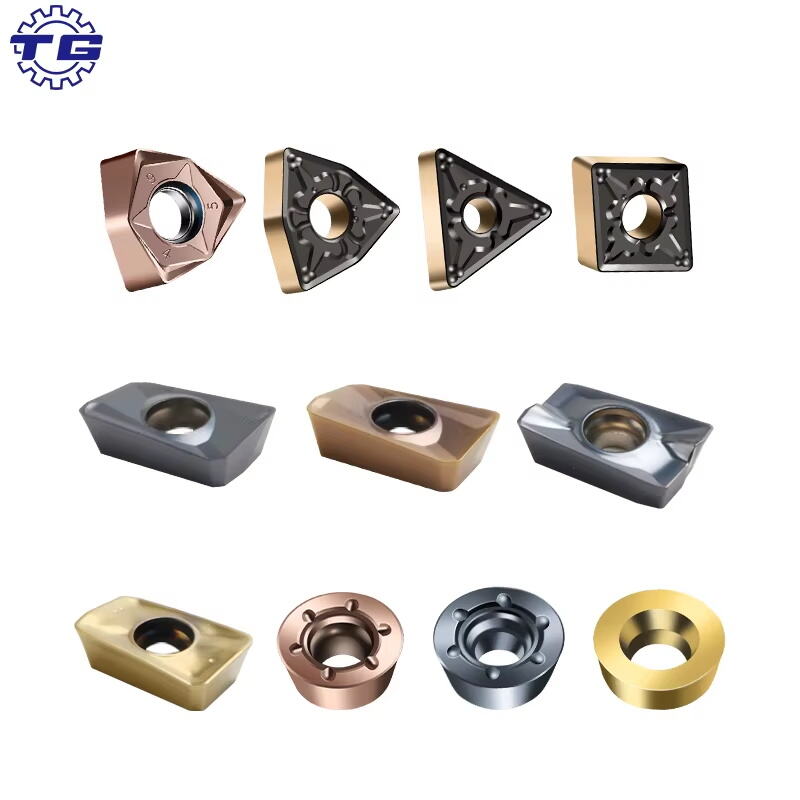
An insert end mill represents a sophisticated cutting tool designed for precision machining operations in modern manufacturing environments. Unlike traditional solid end mills, this tool features replaceable cutting inserts that mount securely onto a durable tool body, creating a cost-effective and versatile solution for various milling applications. The insert end mill combines mechanical engineering principles with practical functionality to deliver exceptional performance in both roughing and finishing operations. The tool body, typically manufactured from high-grade steel or specialized alloys, provides structural integrity while the carbide or ceramic inserts handle the actual cutting action. This design philosophy separates the consumable cutting edges from the tool holder, allowing operators to replace only the worn inserts rather than discarding the entire tool. The insert end mill functions primarily through rotational cutting motion, removing material from workpieces with precision and efficiency. Its main functions include face milling, shoulder milling, slotting, and contouring operations across diverse materials ranging from aluminum and steel to exotic alloys and hardened materials. Technological features distinguish these tools in competitive manufacturing settings. The indexable insert system enables quick changeovers, with most designs allowing tool changes in under two minutes without removing the tool from the machine spindle. Advanced insert geometries incorporate chip breakers, precise cutting angles, and specialized coatings such as TiAlN, TiCN, or diamond-like carbon that enhance wear resistance and extend tool life. The mechanical clamping systems utilize screws, levers, or wedges to secure inserts firmly, maintaining positional accuracy even under demanding cutting conditions. Applications for the insert end mill span aerospace component fabrication, automotive part production, die and mold making, and general engineering workshops. These tools excel in high-volume production environments where tool change speed and cost management directly impact profitability. The insert end mill serves industries requiring consistent quality, dimensional accuracy, and efficient material removal rates while maintaining economic viability through reduced tooling costs and minimized machine downtime.

New Product Recommendations

Choosing an insert end mill for your machining operations brings substantial economic benefits that directly improve your bottom line. You replace only the worn cutting edges instead of purchasing entirely new tools, which reduces your tooling expenses by up to seventy percent compared to solid carbide alternatives. This cost structure becomes particularly advantageous when machining abrasive materials or running high-volume production batches where tool wear occurs rapidly. Your inventory management simplifies significantly because you stock fewer tool bodies and maintain a selection of inserts suitable for different materials and applications. This approach frees up capital and reduces storage space requirements in your facility. The quick-change capability of insert end mills transforms your operational efficiency by minimizing machine downtime. You complete insert changes at the machine in minutes without requiring specialized tools or lengthy setup procedures. This speed matters tremendously in production environments where every minute of spindle time translates to revenue. Your operators appreciate the straightforward indexing process that rotates a fresh cutting edge into position without complex adjustments or re-qualification procedures. The predictable tool life of inserts allows you to schedule changes during natural production breaks rather than experiencing unexpected tool failures that disrupt workflow and potentially damage workpieces. You gain remarkable versatility through the wide selection of insert geometries and grade materials available for a single tool body. You adapt the same end mill to machine aluminum in the morning and steel in the afternoon simply by changing inserts, eliminating the need for multiple dedicated tools. This flexibility extends to adjusting cutting parameters for different operations, using aggressive geometries for roughing cuts and fine-edged inserts for finishing passes. The technological sophistication built into modern inserts delivers superior surface finishes and dimensional accuracy that meet stringent quality standards. Advanced coatings reduce friction and heat generation, allowing you to increase cutting speeds and feed rates for faster cycle times. You achieve consistent results across production runs because each new insert brings factory-fresh cutting edges with precisely controlled geometry. The robust construction of insert end mills withstands demanding applications including interrupted cuts and challenging materials that would quickly destroy solid tools. Your maintenance burden decreases substantially since you never sharpen or recondition these tools, eliminating the costs and quality variations associated with tool grinding services. Environmental considerations favor insert end mills as well, since you discard only small inserts rather than large tool bodies, reducing material waste and supporting sustainability initiatives in your operation.

Practical Tips

What Types of Milling Cutter Tools Are Best for Different Materials?

28

Feb

What Types of Milling Cutter Tools Are Best for Different Materials?

Modern manufacturing relies heavily on precision machining to create complex components across various industries. The selection of appropriate milling cutter tools forms the cornerstone of successful CNC operations, directly impacting surface finish...
View More
When should you use high speed steel cutting tools?

31

Mar

When should you use high speed steel cutting tools?

High speed steel cutting tools have revolutionized modern machining operations since their introduction in the early 1900s. These specialized alloys offer exceptional hardness, wear resistance, and heat tolerance that make them indispensable in vario...
View More
What industries rely most on high-speed steel tools?

31

Mar

What industries rely most on high-speed steel tools?

High-speed steel tools have become indispensable across numerous industrial sectors due to their exceptional hardness, heat resistance, and cutting performance. These specialized cutting implements maintain their sharpness and structural integrity ev...
View More
What Safety Measures Are Essential in Holemaking Operations?

31

Mar

What Safety Measures Are Essential in Holemaking Operations?

Holemaking operations represent one of the most fundamental yet potentially hazardous processes in manufacturing environments. These operations involve creating precise holes in various materials using drilling, reaming, boring, and related machining...
View More

Get a Free Quote

Our representative will contact you soon.
Email
Mobile
Name
Company Name
Message
0/1000

insert end mill

Revolutionary Cost Efficiency Through Replaceable Insert Technology

Revolutionary Cost Efficiency Through Replaceable Insert Technology

The economic advantages of insert end mill technology fundamentally change how manufacturing operations manage tooling budgets and control production costs. Traditional solid end mills require complete replacement when cutting edges wear, forcing you to discard substantial amounts of carbide or high-speed steel material that retains significant residual value. The insert end mill eliminates this wasteful practice by separating the tool body from the consumable cutting elements. You invest once in a precision-engineered tool holder that serves reliably for years, then purchase only the small inserts that perform the actual cutting work. This distinction creates savings that compound dramatically over time, especially in high-production environments where tool consumption represents a major expense category. Consider a typical manufacturing scenario where a solid carbide end mill costs one hundred fifty dollars and provides approximately two hours of cutting time before requiring replacement. An insert end mill system might involve a two hundred dollar tool body paired with inserts costing twenty dollars each, with each insert delivering similar cutting performance. After the initial tool body investment, your per-operation costs drop substantially, and the economic advantage grows with each subsequent insert change. The financial benefits extend beyond simple replacement costs to encompass inventory management efficiencies. You maintain fewer unique tool body sizes while stocking diverse insert varieties that address different materials and cutting conditions. This rationalized inventory approach reduces capital tied up in tooling, minimizes storage space requirements, and simplifies procurement processes. Your purchasing department orders inserts in standardized quantities, often qualifying for volume discounts that further reduce costs. The predictable consumption patterns of inserts enable accurate forecasting and just-in-time inventory strategies that optimize cash flow. Quality consistency represents another economic dimension where insert end mills deliver value. Each new insert brings factory-manufactured cutting edges with precisely controlled geometries and coating thicknesses, eliminating the variability introduced by tool resharpening services. You avoid the quality issues and dimensional inconsistencies that plague reground tools, reducing scrap rates and rework expenses while improving first-pass yield percentages that directly impact profitability.
Maximized Productivity Through Rapid Tool Changes and Minimal Downtime

Maximized Productivity Through Rapid Tool Changes and Minimal Downtime

Manufacturing competitiveness increasingly depends on maximizing productive spindle time and minimizing non-cutting activities that consume resources without adding value. The insert end mill addresses this imperative through innovative quick-change mechanisms that drastically reduce tool change intervals compared to traditional alternatives. When a solid end mill reaches the end of its useful life, you must stop production, remove the worn tool from the machine spindle, retrieve a replacement from tool storage, install and indicate the new tool, then resume operations. This sequence typically requires fifteen to thirty minutes depending on machine configuration and operator skill level. The insert end mill transforms this process by enabling cutting edge changes without removing the tool body from the spindle. You simply loosen the insert clamping mechanism, rotate or replace the insert, retighten the clamp, and immediately resume cutting. Skilled operators complete this procedure in under two minutes, representing a massive reduction in downtime that translates directly to increased production capacity. The productivity implications extend throughout your operation, affecting production planning, scheduling flexibility, and overall equipment effectiveness metrics. Shorter tool changes enable more aggressive cutting parameters since you can replace worn inserts before they catastrophically fail or produce out-of-specification parts. This proactive approach prevents the costly consequences of tool breakage including damaged workpieces, potential machine damage, and extended unplanned downtime for cleanup and reset procedures. The predictable tool life of inserts supports accurate production scheduling where tool changes occur during natural breaks between parts or at shift changes rather than interrupting critical production runs. Your planning personnel incorporate tool change intervals into production schedules with confidence, improving on-time delivery performance and customer satisfaction. The operational simplicity of insert changes reduces skill requirements and training time for machine operators, allowing newer team members to perform tool maintenance tasks that might otherwise require experienced technicians. This democratization of tool changing capability improves workforce flexibility and reduces bottlenecks where production waits for specialized personnel availability. The cumulative effect of these productivity enhancements manifests in improved machine utilization rates, increased throughput, and better return on capital invested in manufacturing equipment.
Superior Machining Performance Across Diverse Materials and Applications

Superior Machining Performance Across Diverse Materials and Applications

Modern manufacturing demands machining solutions that perform reliably across diverse materials, cutting conditions, and application requirements without requiring extensive tool inventories or complex setup procedures. The insert end mill excels in this multifaceted environment through the remarkable variety of insert designs, substrate materials, and coating technologies available from specialized manufacturers. You select inserts optimized for specific challenges your operations encounter, matching tool capabilities precisely to application demands. Machining aluminum requires different cutting geometries and edge preparations than machining hardened steel, and the insert end mill accommodates these contrasting requirements using the same tool body with application-specific inserts. Sharp cutting edges and polished rake faces minimize built-up edge formation in aluminum, while tougher edge preparations and wear-resistant coatings handle the demands of ferrous materials. This adaptability extends to exotic aerospace alloys, titanium, heat-resistant superalloys, and other challenging materials where specialized insert grades deliver performance impossible with general-purpose solid tools. The technological sophistication incorporated into modern inserts represents decades of materials science research and cutting tool development. Substrate materials range from fine-grain carbides for general applications to specialized compositions incorporating tantalum, niobium, or other elements that enhance toughness or wear resistance for specific conditions. Advanced coating technologies apply multiple layers of ceramic materials through physical vapor deposition processes, creating surface characteristics that reduce friction, resist wear, and enable higher cutting speeds. You leverage this technology simply by selecting appropriate inserts, gaining access to cutting-edge performance without requiring deep technical expertise in materials science. The geometric design of inserts addresses specific machining challenges through features like chip breakers that control chip formation, variable helix angles that reduce vibration, and wiper flats that improve surface finish. You achieve results previously requiring multiple operations or specialized equipment simply by choosing inserts engineered for your specific requirements. The versatility of insert end mills extends to different machining strategies including high-speed machining, heavy roughing, and precision finishing operations. You optimize cutting parameters for each application phase, using aggressive inserts and high feed rates to remove material quickly during roughing, then switching to finishing inserts that deliver superior surface quality and dimensional accuracy. This flexibility improves overall process efficiency and part quality while reducing total cycle time from raw material to finished component.
insert end mill-0
insert end mill-1

Get a Free Quote

Our representative will contact you soon.
Email
Mobile
Name
Company Name
Message
0/1000