Contact me immediately if you encounter problems!

All Categories

square milling inserts

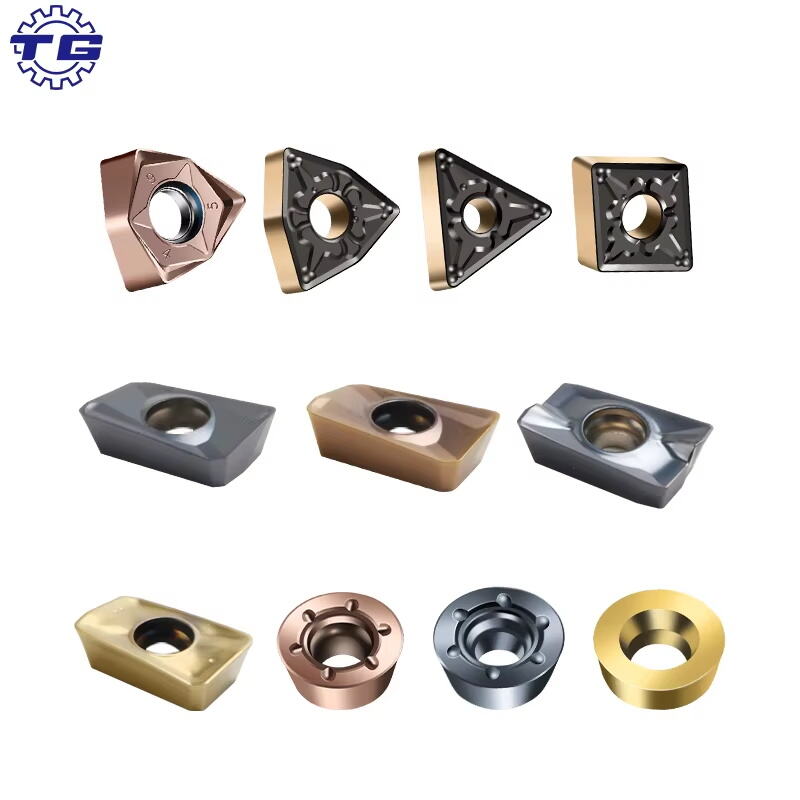
Square milling inserts represent a fundamental cutting tool component widely utilized in modern machining operations across various manufacturing sectors. These precision-engineered inserts feature a distinctive square geometry that provides four usable cutting edges, making them an economical choice for metalworking professionals. The square milling inserts are designed to fit into milling cutter bodies, where they perform material removal operations on workpieces with exceptional efficiency and accuracy. Their robust construction typically involves carbide materials, ceramics, or other advanced compounds that withstand extreme cutting forces and elevated temperatures during machining processes. The primary function of square milling inserts centers on face milling, shoulder milling, and slot milling applications where stable cutting conditions exist. Their technological features include advanced coating technologies that enhance wear resistance, precise edge preparation for optimal chip formation, and standardized dimensions ensuring compatibility with various tool holder systems. Manufacturers employ sophisticated grinding and lapping processes to achieve tight tolerances on insert dimensions, guaranteeing consistent performance across production runs. The square configuration offers superior strength at the cutting edge compared to other geometries, reducing the risk of chipping or breakage during interrupted cuts. These inserts accommodate different rake angles, clearance angles, and chipbreaker designs tailored to specific workpiece materials ranging from soft aluminum alloys to hardened steels and exotic superalloys. Applications span automotive component production, aerospace structural parts fabrication, mold and die manufacturing, general engineering workshops, and heavy equipment construction. The versatility of square milling inserts makes them indispensable in both roughing operations where high material removal rates are required and finishing operations demanding superior surface quality. Their indexable nature allows operators to rotate the insert to a fresh cutting edge when one becomes worn, maximizing tool life and minimizing downtime for tool changes, thereby contributing to enhanced productivity and reduced operational costs in competitive manufacturing environments.

New Product Releases

The practical benefits of square milling inserts make them an outstanding investment for manufacturers seeking to optimize their machining operations. First and foremost, these inserts deliver exceptional cost-effectiveness through their four-sided design, which means each insert provides four distinct cutting edges. When one edge becomes dull or damaged, operators simply loosen the clamping screw, rotate the insert to an unused edge, and resume machining within minutes. This approach eliminates the need to purchase a new cutting tool for every wear occurrence, reducing tooling expenses by up to seventy-five percent compared to solid cutting tools. The time savings associated with quick indexing translates directly into increased machine uptime and higher production output. Another significant advantage lies in their predictable and stable cutting performance. The square geometry creates balanced cutting forces that minimize vibration during machining, resulting in improved surface finishes on workpieces and extended spindle life. This stability proves particularly valuable when working with challenging materials or when tight dimensional tolerances must be maintained throughout production runs. Manufacturing facilities benefit from simplified inventory management since square milling inserts follow international standards, meaning a single insert grade can often serve multiple applications across different machines and cutting tools. This standardization reduces the complexity of tooling procurement and storage while ensuring that replacement inserts are readily available when needed. The durability of modern square milling inserts, enhanced by advanced coating technologies like titanium aluminum nitride or diamond-like carbon, enables them to withstand extreme cutting conditions without premature failure. These coatings reduce friction between the insert and chip, lowering cutting temperatures and further extending tool life. Operators appreciate the ease of installation and removal, which requires only basic tools and minimal training, making these inserts accessible even to less experienced machinists. The environmental benefits should not be overlooked either, as the indexable design generates less waste compared to regrinding solid tools or disposing of worn brazed inserts. Energy consumption decreases due to more efficient cutting action and reduced machine idle time during tool changes. From a quality perspective, square milling inserts maintain consistent chip control through precisely engineered chipbreaker geometries, preventing long stringy chips that can interfere with machining operations or pose safety hazards. This reliability ensures that production schedules remain on track and that finished components meet stringent quality specifications without extensive secondary operations or rework.

Practical Tips

What is high speed steel and how does it work?

30

Dec

What is high speed steel and how does it work?

High speed steel represents one of the most significant innovations in metallurgy and machining technology. This specialized alloy has revolutionized manufacturing processes across countless industries, enabling precision cutting operations at speeds...
View More
How to extend the lifespan of high-speed steel cutting tools?

20

Jan

How to extend the lifespan of high-speed steel cutting tools?

Modern manufacturing industries demand exceptional accuracy and efficiency in their machining operations, making steel precision cutting tools an indispensable component of successful production processes. These specialized instruments represent the ...
View More
Which Shapes of Carbide Inserts Are Best for Steel?

28

Feb

Which Shapes of Carbide Inserts Are Best for Steel?

When machining steel components, selecting the appropriate carbide inserts for steel becomes critical for achieving optimal performance, tool life, and surface finish quality. The geometry and shape of these cutting tools directly influence chip form...
View More
Why Are Carbide End Mills Better for Metal Cutting?

31

Mar

Why Are Carbide End Mills Better for Metal Cutting?

When it comes to precision metal cutting operations, the choice of cutting tool directly impacts productivity, surface finish quality, and overall manufacturing costs. Carbide end mills have emerged as the preferred solution for demanding metal cutti...
View More

Get a Free Quote

Our representative will contact you soon.
Email
Mobile
Name
Company Name
Message
0/1000

square milling inserts

Exceptional Four-Edge Economy and Extended Tool Life

Exceptional Four-Edge Economy and Extended Tool Life

One of the most compelling attributes of square milling inserts is their inherent economic advantage stemming from the four usable cutting edges built into each insert. This design philosophy fundamentally changes the economics of machining operations by extending the productive life of each insert by a factor of four compared to single-edge tools. When machinists work with square milling inserts, they can confidently complete multiple production runs before needing to replace the insert entirely. Each edge delivers consistent cutting performance, maintaining dimensional accuracy and surface finish quality throughout its operational life. The rotation process from one edge to the next takes mere seconds, requiring only the loosening of a single clamping screw, rotating the insert ninety degrees, and retightening the clamp. This simplicity means that even during high-volume production scenarios, tool change interruptions remain minimal, keeping machines productive and meeting tight delivery schedules. The extended tool life characteristic of square milling inserts also stems from advanced substrate materials and surface treatments. Modern carbide grades incorporate precisely controlled grain sizes and binder content to optimize hardness and toughness simultaneously. Coating systems applied through physical vapor deposition or chemical vapor deposition create micro-thin protective layers that dramatically reduce wear mechanisms such as abrasion, adhesion, and diffusion. These technological enhancements allow square milling inserts to maintain sharp cutting edges even when processing abrasive materials or operating at elevated cutting speeds. The economic impact extends beyond direct tooling costs to encompass labor savings, as maintenance personnel spend less time managing tool inventories and performing tool changes. Production planners benefit from more predictable tool life data, enabling accurate cost estimation for quoting purposes and better resource allocation. The four-edge design also contributes to sustainability objectives by reducing material consumption and waste generation, aligning manufacturing practices with environmental responsibility goals while simultaneously improving the bottom line through reduced operating expenses and enhanced productivity metrics.
Superior Cutting Stability and Versatile Application Range

Superior Cutting Stability and Versatile Application Range

Square milling inserts excel in delivering remarkable cutting stability across diverse machining scenarios, making them the preferred choice for operations requiring precision and reliability. The geometric configuration of these inserts creates balanced force distribution during cutting, which minimizes deflection and vibration that can compromise workpiece quality and machine tool integrity. This stability becomes particularly critical when executing face milling operations on large surface areas where any vibration would manifest as visible chatter marks or waviness on the finished surface. The robust construction of square milling inserts, with their substantial cross-sectional area at the cutting edge, provides resistance against chipping even during interrupted cuts where the tool repeatedly enters and exits the workpiece material. This resilience makes them suitable for machining castings with scale, forgings with hard spots, or welded assemblies where material inconsistencies exist. The versatility of square milling inserts manifests in their compatibility with various workpiece materials spanning the hardness spectrum. Manufacturers offer different grades optimized for specific material groups, including dedicated solutions for aluminum alloys requiring sharp edges and polished rake faces, general-purpose grades for steel machining, and specialized heat-resistant grades for processing titanium, Inconel, and other difficult-to-machine materials. The chipbreaker geometries available on square milling inserts further enhance their application range, with aggressive breakers for roughing operations that generate thick chips, moderate breakers for general machining, and fine breakers for finishing cuts requiring superior surface quality. This adaptability means that manufacturing facilities can standardize on square milling inserts for a significant portion of their milling operations, simplifying training requirements and reducing the learning curve for operators transitioning between different jobs. The inserts perform admirably in both conventional milling where the cutter rotation opposes the feed direction and climb milling where rotation aligns with feed, providing process engineers with flexibility in programming optimal tool paths. Their effectiveness extends from low-speed heavy-duty roughing in older manual mills to high-speed finishing operations in contemporary machining centers equipped with forty-thousand-rpm spindles, demonstrating remarkable range that few other cutting tool geometries can match.
Simplified Tool Management and Manufacturing Efficiency

Simplified Tool Management and Manufacturing Efficiency

The implementation of square milling inserts transforms tool management practices within manufacturing facilities, delivering substantial improvements in operational efficiency and organizational simplicity. Unlike brazed tools or solid carbide cutters that require specialized sharpening equipment and skilled grinding technicians, square milling inserts eliminate the entire regrinding infrastructure from the equation. When an edge becomes worn, operators handle the replacement or indexing procedure directly at the machine, eliminating transportation delays to and from tool cribs or external grinding services. This decentralization of tool maintenance empowers production personnel and reduces dependency on specialized support staff, creating more flexible and responsive manufacturing operations. The standardization inherent in square milling inserts significantly streamlines inventory management systems. International standards govern insert dimensions, clamping mechanisms, and identification codes, meaning that purchasing departments can source compatible products from multiple suppliers, fostering competitive pricing and supply chain resilience. Tool cribs maintain smaller inventories since each insert serves multiple edges and applications, freeing up valuable storage space and reducing capital tied up in tooling assets. The clear identification markings on square milling inserts, including grade designation, geometry code, and size information, enable quick visual verification and selection, minimizing the risk of mounting incorrect inserts that could damage workpieces or machines. From a production efficiency standpoint, square milling inserts contribute to faster setup times and reduced non-productive periods. Maintenance records become simpler to track since each insert change represents a discrete event with clear documentation of which edge is in use, enabling data-driven decisions about optimal cutting parameters and realistic tool life expectations. Quality control benefits from the consistency these inserts provide, as dimensional variations between inserts from the same production lot remain minimal, ensuring that machined features maintain specifications throughout extended production runs. The predictability of tool performance allows process engineers to establish stable machining parameters that can be replicated across shifts and operators, reducing variability that often leads to scrap or rework. Training new machinists becomes more straightforward since the concepts of insert indexing, grade selection, and troubleshooting apply universally across different machines and applications, accelerating skill development and building workforce competency more rapidly than with proprietary or non-standard tooling systems.

square milling inserts-0
square milling inserts-1

Get a Free Quote

Our representative will contact you soon.
Email
Mobile
Name
Company Name
Message
0/1000