Contact me immediately if you encounter problems!

All Categories

carbide rods

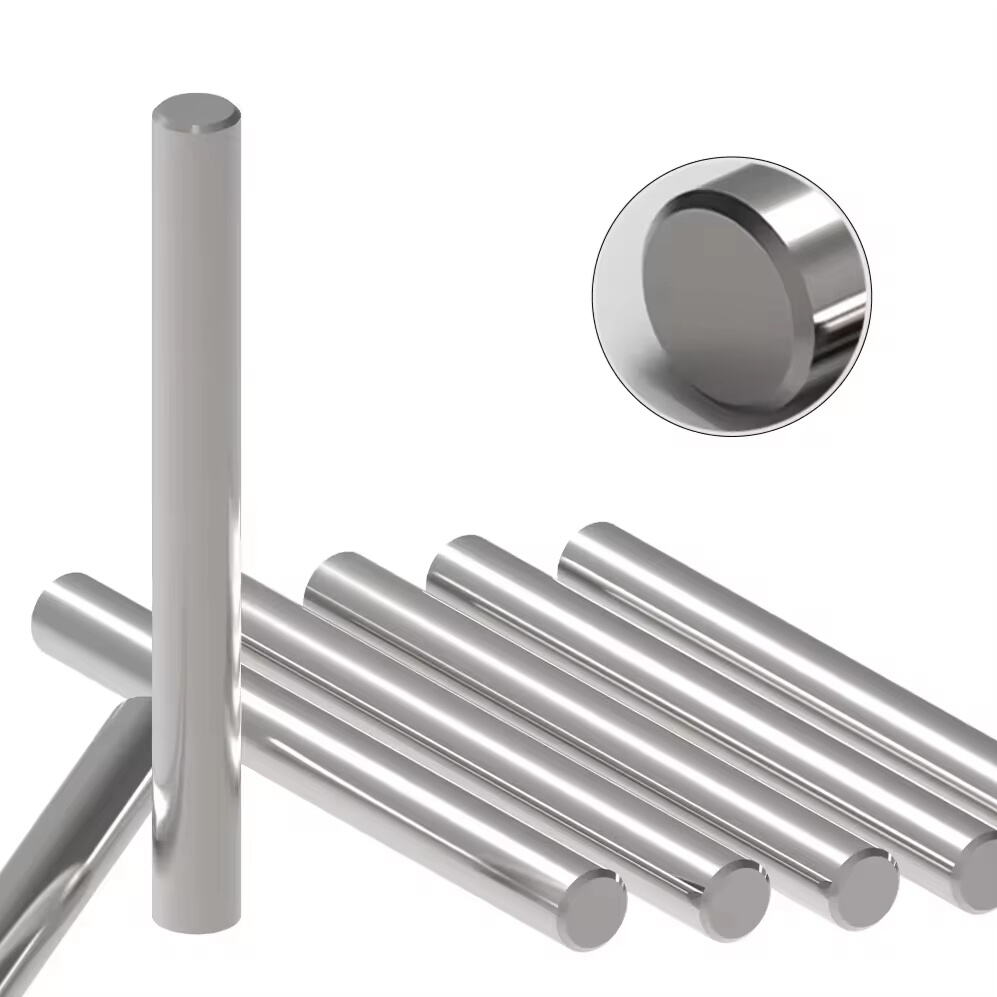
Carbide rods represent a cornerstone of modern manufacturing and industrial tooling, offering unparalleled performance in demanding applications across multiple sectors. These solid cylindrical components are manufactured from tungsten carbide, a compound known for its exceptional hardness and wear resistance. Carbide rods serve as the foundation for producing cutting tools, drill bits, end mills, reamers, and specialized industrial components that require superior durability and precision. The manufacturing process involves mixing fine tungsten carbide powder with a metallic binder, typically cobalt, followed by compaction and sintering at extremely high temperatures to create a dense, homogeneous structure. This process results in products that exhibit remarkable consistency in both physical properties and dimensional accuracy. The main functions of carbide rods include serving as raw material for tool manufacturing, providing structural support in wear-resistant applications, and enabling precision machining operations in challenging materials. Technological features distinguish these products from conventional steel alternatives, including hardness ratings that can exceed 90 HRA on the Rockwell scale, compressive strength exceeding 500,000 PSI, and thermal stability that maintains structural integrity at elevated temperatures. The grain size of carbide rods can be controlled during manufacturing to optimize performance for specific applications, ranging from submicron grades for ultra-fine finishes to coarser grades for maximum toughness. Applications span aerospace component manufacturing, automotive parts production, electronics industry tooling, medical device fabrication, mining equipment components, and oil and gas drilling operations. The versatility of carbide rods makes them indispensable in any operation requiring extended tool life, consistent performance under stress, and the ability to machine hardened materials efficiently. Modern carbide rods incorporate advanced metallurgical techniques to enhance properties such as transverse rupture strength and corrosion resistance, ensuring reliable performance in diverse environmental conditions.


Popular Products

Investing in carbide rods delivers tangible benefits that directly impact your bottom line and operational efficiency. The most significant advantage is exceptional longevity, as these components outlast conventional steel tools by factors ranging from ten to fifty times, depending on the application. This extended lifespan translates to fewer tool changes, reduced downtime, and lower overall tooling costs despite higher initial investment. Manufacturers benefit from consistent dimensional accuracy throughout the tool's service life, maintaining tight tolerances and producing parts that meet stringent quality standards without constant adjustments. The superior hardness of carbide rods enables machining of materials that would quickly destroy ordinary tools, including hardened steels, exotic alloys, abrasive composites, and heat-resistant superalloys used in aerospace applications. This capability expands your production possibilities and allows you to accept contracts requiring specialized material processing. Carbide rods maintain their cutting edge geometry far longer than alternatives, resulting in superior surface finishes that often eliminate secondary finishing operations, saving both time and labor costs. The material's high thermal conductivity efficiently dissipates heat generated during cutting operations, preventing thermal damage to workpieces and extending tool life even further. Operators appreciate the predictable performance characteristics, as carbide rods deliver consistent results across production runs, reducing scrap rates and improving process control. The rigidity of carbide rods minimizes deflection during heavy cuts, enabling aggressive material removal rates that boost productivity significantly. This stiffness also reduces chatter and vibration, producing cleaner cuts and extending machine tool life by reducing wear on spindles and bearings. Carbide rods resist chemical corrosion, making them suitable for machining corrosive materials and operating in harsh environments where conventional tools would deteriorate rapidly. The material's dimensional stability across temperature ranges ensures precision work even when thermal cycling occurs during production processes. Manufacturing facilities benefit from simplified inventory management, as the extended life of carbide rods means fewer replacement parts needed in stock. Training costs decrease because operators spend less time changing worn tools and more time on productive machining. Environmental benefits include reduced waste generation, as fewer discarded tools end up in landfills, and lower energy consumption per part produced due to more efficient material removal. The ability to run higher speeds and feeds with carbide rods shortens cycle times, increasing throughput without requiring additional equipment investment.

Latest News

Which drill bit type works best for concrete projects?

30

Dec

Which drill bit type works best for concrete projects?

Selecting the right drill bit for concrete projects can make the difference between a successful installation and a frustrating experience filled with broken tools and damaged materials. Concrete drilling requires specialized equipment designed to ha...
View More
What Types of Milling Cutter Tools Are Best for Different Materials?

28

Feb

What Types of Milling Cutter Tools Are Best for Different Materials?

Modern manufacturing relies heavily on precision machining to create complex components across various industries. The selection of appropriate milling cutter tools forms the cornerstone of successful CNC operations, directly impacting surface finish...
View More
How CNC Tools Improve Accuracy in Precision Manufacturing

28

Feb

How CNC Tools Improve Accuracy in Precision Manufacturing

Precision manufacturing has revolutionized modern industry by delivering components with unprecedented accuracy and consistency. At the heart of this technological advancement lies the sophisticated world of CNC tools, which have transformed how manu...
View More
When should you use high speed steel cutting tools?

31

Mar

When should you use high speed steel cutting tools?

High speed steel cutting tools have revolutionized modern machining operations since their introduction in the early 1900s. These specialized alloys offer exceptional hardness, wear resistance, and heat tolerance that make them indispensable in vario...
View More

Get a Free Quote

Our representative will contact you soon.
Email
Mobile
Name
Company Name
Message
0/1000

carbide rods

Unmatched Durability for Long-Term Cost Savings

Unmatched Durability for Long-Term Cost Savings

The exceptional durability of carbide rods fundamentally transforms operational economics in manufacturing environments. Unlike traditional tooling materials that wear rapidly under stress, carbide rods maintain their structural integrity and functional properties through extended use cycles that dramatically reduce replacement frequency. This durability stems from the unique molecular structure of tungsten carbide, where extremely hard carbide particles are bound together in a tough metallic matrix that resists both abrasive wear and impact damage. When you implement carbide rods in your production processes, you immediately notice the reduction in tool change interruptions that previously disrupted workflow and reduced machine utilization rates. Maintenance departments report significant decreases in emergency tool replacements, allowing for better scheduling of preventive maintenance activities and more predictable production planning. The financial implications extend beyond simple tool replacement costs to encompass reduced labor expenses for tool changes, lower inventory carrying costs for replacement tooling, and decreased machine downtime that directly impacts production capacity. Manufacturing operations running three shifts particularly benefit, as the extended tool life often allows carbide rods to survive entire production runs without replacement, eliminating the need for tool changes during premium-rate night shifts. Quality managers appreciate how the consistent wear characteristics of carbide rods maintain dimensional accuracy throughout their service life, reducing the statistical variation in produced parts and improving process capability indices. This consistency eliminates the quality fluctuations often seen with conventional tools that gradually lose accuracy as they wear. Engineering teams can design more aggressive machining strategies knowing that carbide rods will withstand the increased mechanical and thermal stresses involved in high-performance cutting. The durability advantage becomes particularly pronounced in automated manufacturing cells and lights-out machining operations where tool failures can halt production for extended periods until operators arrive to resolve issues. Carbide rods provide the reliability needed for these advanced manufacturing approaches, giving you confidence to implement automation strategies that maximize equipment utilization and minimize labor costs.
Superior Performance in Challenging Materials

Superior Performance in Challenging Materials

Carbide rods excel where conventional tooling fails, particularly when machining difficult materials that have become increasingly common in modern manufacturing. The aerospace industry relies on superalloys and titanium components that generate extreme heat and work-hardening during machining, conditions that rapidly destroy ordinary cutting tools. Carbide rods maintain their hardness at elevated temperatures, continuing to cut effectively when tool temperatures exceed levels that would soften and deform steel tools. This hot hardness characteristic proves essential when processing materials like Inconel, Waspaloy, and other nickel-based alloys used in jet engine components and industrial gas turbines. Medical device manufacturers working with cobalt-chrome alloys and hardened stainless steels depend on carbide rods to achieve the mirror finishes and precise dimensions required for implantable devices and surgical instruments. The automotive industry uses carbide rods extensively for machining cast iron engine blocks, hardened transmission components, and the increasingly common high-strength steel structures in modern vehicles. Electronics manufacturers utilize carbide rods to produce precision components from abrasive materials like silicon, ceramics, and composite circuit board substrates that would rapidly wear conventional tooling. Mining and construction equipment producers machine through wear-resistant alloys and hardfacing materials using carbide rods that withstand the extreme abrasion inherent in these applications. The ability to machine pre-hardened tool steels eliminates the distortion risks associated with post-machining heat treatment, allowing manufacturers to produce precision molds and dies to final dimensions without subsequent grinding operations. Composite materials combining fibers with polymer matrices present unique challenges, as the abrasive fibers wear tools while the matrix materials can cause built-up edge formation. Carbide rods handle these contrasting characteristics effectively, maintaining sharp cutting edges that cleanly shear fibers while resisting chemical interaction with matrix materials. This versatility eliminates the need to stock multiple specialized tool materials, simplifying inventory management and reducing capital tied up in tooling. Production planners gain flexibility to accept diverse projects knowing their carbide rods can handle whatever materials specifications require, expanding market opportunities and revenue potential for the operation.
Precision Engineering for Consistent Quality Output

Precision Engineering for Consistent Quality Output

The manufacturing precision inherent in carbide rods directly influences the quality and consistency of finished products across diverse applications. Modern production techniques create carbide rods with remarkably uniform density distribution, eliminating the internal variations that cause unpredictable performance and premature failure in lesser materials. This homogeneity ensures that every millimeter of a carbide rod exhibits identical mechanical properties, providing consistent cutting characteristics whether using the beginning or end of a rod for tool production. Grinding operations that transform carbide rods into finished cutting tools achieve superior accuracy because the material's uniform hardness prevents the localized variations that complicate precision grinding of heterogeneous materials. The dimensional stability of carbide rods throughout temperature fluctuations maintains clearances and tolerances in precision applications where thermal expansion could compromise functionality. Manufacturing facilities with climate-controlled environments and those experiencing seasonal temperature variations both benefit from this stability, as carbide rods maintain their dimensions regardless of ambient conditions. The fine grain structures available in premium carbide rods enable cutting edges to be ground to extraordinarily sharp geometries that remain stable during use rather than chipping or rounding as softer materials do. This edge retention capability proves critical in applications requiring consistent surface finishes, as the cutting edge geometry directly influences surface texture and dimensional accuracy of machined parts. Quality control becomes more straightforward when using carbide rods because their predictable performance characteristics reduce the variables that quality engineers must monitor and control. Statistical process control charts show tighter distributions and fewer outliers when carbide rods replace conventional tooling, improving process capability and reducing the inspection burden on quality departments. The magnetic properties of some carbide rod grades facilitate fixturing and workholding in specialized applications, while non-magnetic grades serve applications where magnetic interference could compromise precision measurement or electronic functionality. Manufacturers producing medical devices, aerospace components, and precision instrumentation particularly value the consistency that carbide rods bring to their operations, as these industries face stringent regulatory requirements and zero-defect quality expectations. The repeatability achieved with carbide rods reduces prototype iterations during new product development, accelerating time-to-market for innovative products while maintaining the quality standards that protect brand reputation and customer satisfaction.
carbide rods-0
carbide rods-1

Get a Free Quote

Our representative will contact you soon.
Email
Mobile
Name
Company Name
Message
0/1000