Superior Surface Finish Capabilities for Complex Geometries
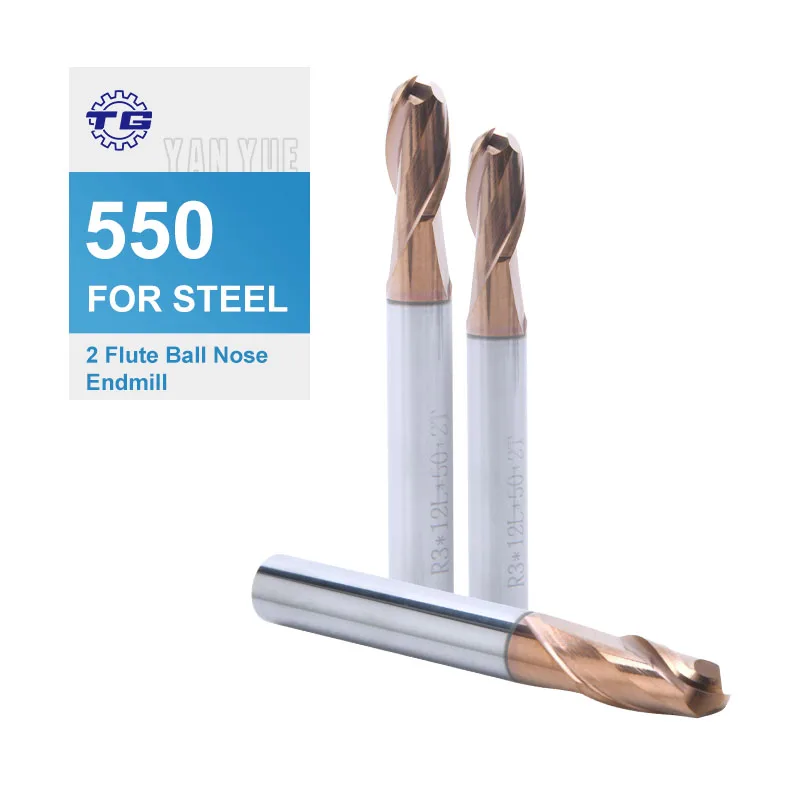
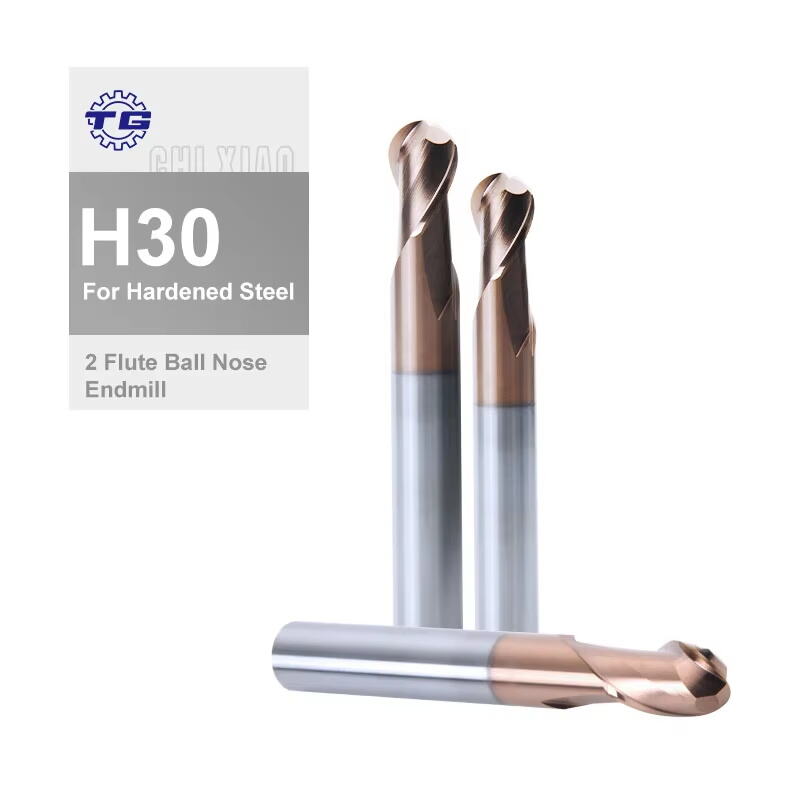
The carbide ball nose cutter excels at producing exceptional surface finishes on three-dimensional contoured surfaces, curved features, and complex geometries that present significant challenges for conventional flat-end mills or other cutting tool configurations. The hemispherical tip geometry of the carbide ball nose cutter creates a continuous cutting action that eliminates the cusps, steps, and toolpath marks commonly left by flat-bottom tools when machining curved surfaces. This smooth cutting action translates directly into workpiece surfaces that exhibit fine finishes with minimal visible toolpath lines, reducing or completely eliminating time-consuming secondary finishing processes like hand polishing, surface grinding, or abrasive blasting. For manufacturers, the ability to achieve final surface specifications directly from the milling operation represents significant cost savings in labor, consumable materials, and production time. The carbide ball nose cutter achieves these superior finishes through several complementary design features working in concert. The rounded tool geometry distributes cutting forces more evenly across the cutting edge compared to sharp corners that concentrate stress, resulting in smoother material removal with less vibration and chatter that would otherwise degrade surface quality. Premium carbide ball nose cutters feature precisely ground flute forms with optimized rake angles that shear material cleanly rather than tearing or deforming it, leaving behind surfaces with excellent integrity and minimal subsurface stress. The carbide material itself contributes to surface quality by maintaining sharp cutting edges that slice through workpiece material rather than rubbing or burnishing it, which can work-harden surfaces and create residual stresses that affect part performance. When machining molds, dies, or sculptured components, the carbide ball nose cutter enables manufacturers to faithfully reproduce the smooth flowing surfaces designed in CAD systems, ensuring that physical parts match digital intent without requiring skilled craftspeople to manually blend and finish surfaces after machining. This capability proves particularly valuable in industries where surface finish directly impacts product performance, such as fluid-handling components where surface roughness affects flow characteristics, optical molds where surface defects transfer to molded parts, or medical implants where surface finish influences biocompatibility and tissue integration. The carbide ball nose cutter also enables finishing operations in a single setup, eliminating the need to transfer parts between different machines or workholding fixtures that introduce alignment errors and increase the risk of dimensional variations. By consolidating roughing and finishing operations with a single tool type, manufacturers simplify programming, reduce setup complexity, and improve the geometric accuracy of finished components.

 EN
EN