Contact me immediately if you encounter problems!

All Categories

thread cutting carbide inserts

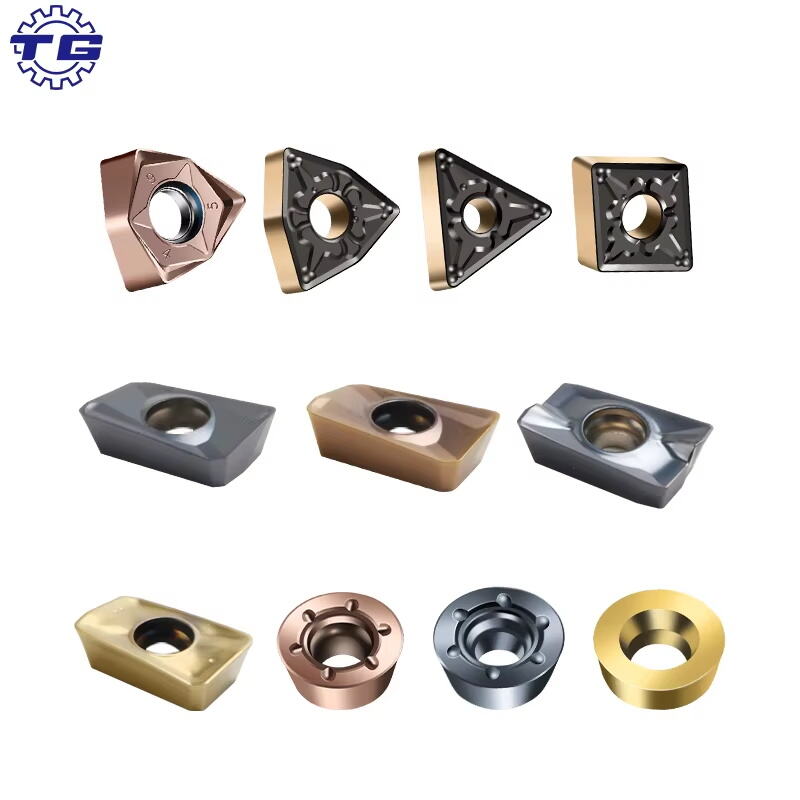
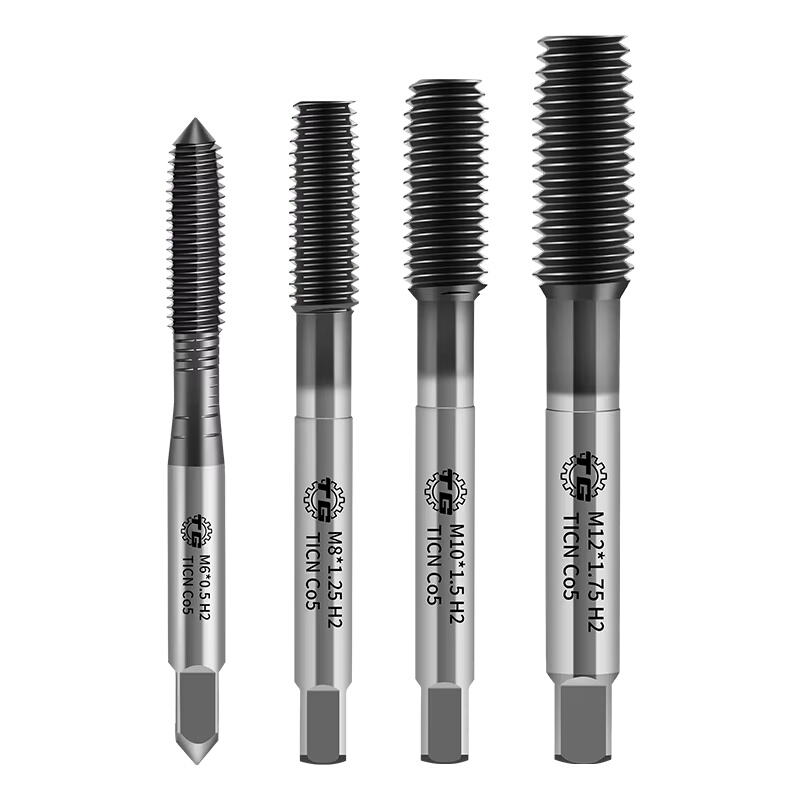
Thread cutting carbide inserts represent a revolutionary advancement in precision machining technology, designed specifically for creating accurate internal and external threads on various workpieces. These specialized cutting tools are manufactured from tungsten carbide, a compound known for its exceptional hardness and wear resistance, making them ideal for demanding threading operations. Thread cutting carbide inserts serve as replaceable cutting edges that mount onto thread cutting toolholders, eliminating the need for regrinding and providing consistent performance throughout their service life. The main functions of these inserts include producing standardized thread profiles such as metric, unified, and custom thread forms with remarkable precision and repeatability. Their technological features encompass advanced substrate compositions, specialized coatings like TiN, TiCN, or TiAlN that enhance surface hardness and reduce friction, and precisely ground geometries that ensure optimal chip formation and evacuation. The insert design incorporates multiple cutting edges, allowing users to rotate the insert to a fresh edge when one becomes worn, maximizing tool life and reducing operational costs. Thread cutting carbide inserts find extensive applications across diverse industries including automotive manufacturing, aerospace component production, oil and gas equipment fabrication, medical device manufacturing, and general engineering workshops. These inserts excel in machining materials ranging from soft aluminum alloys to hardened steels, stainless steels, and exotic alloys like titanium and Inconel. The threading process using carbide inserts can be performed on CNC lathes, manual lathes, and threading machines, offering flexibility in production environments from high-volume automated operations to custom job shops. Their standardized dimensions conform to ISO standards, ensuring compatibility with toolholders from various manufacturers worldwide, which simplifies tool management and inventory control for manufacturing facilities of all sizes.


New Product Releases

Thread cutting carbide inserts deliver numerous practical benefits that directly impact your bottom line and production efficiency. First and foremost, these inserts dramatically reduce your tooling costs compared to traditional solid carbide threading tools or high-speed steel taps. When a cutting edge wears out, you simply rotate the insert to a fresh edge rather than purchasing an entirely new tool, which means each insert provides multiple cutting edges before replacement becomes necessary. This indexable design translates into significant savings, especially in high-volume production environments where tool consumption can represent a substantial expense. The consistency and precision of thread cutting carbide inserts ensure that every thread you produce meets exact specifications, reducing rejection rates and eliminating costly rework. Unlike taps that can break inside workpieces causing expensive damage and downtime, these inserts operate with controlled cutting forces that minimize the risk of tool failure. The superior wear resistance of carbide material means you can maintain production for extended periods without tool changes, increasing machine uptime and throughput. Your operators will appreciate the simplicity of tool changes, which require only loosening a single screw to rotate or replace the insert, reducing setup time and allowing quick response to production demands. The versatility of thread cutting carbide inserts enables you to handle a wide range of thread sizes and profiles with minimal tool inventory, freeing up valuable storage space and reducing capital tied up in tooling. These inserts perform exceptionally well at higher cutting speeds compared to traditional threading methods, which means you can complete threading operations faster and move workpieces through your production line more efficiently. The predictable tool life of carbide inserts allows for better production planning and scheduling, as you can accurately estimate when tool changes will be necessary based on the number of parts produced. Surface finish quality achieved with thread cutting carbide inserts often surpasses that of other threading methods, resulting in stronger thread engagement and better assembly performance in your final products. The reduced cutting forces associated with properly selected carbide inserts mean less stress on your machine tools, extending their service life and reducing maintenance requirements. Environmental benefits also accrue from using thread cutting carbide inserts, as the reduced material waste and longer tool life contribute to more sustainable manufacturing practices while maintaining the productivity levels your business demands.

Tips And Tricks

Which drill bit type works best for concrete projects?

30

Dec

Which drill bit type works best for concrete projects?

Selecting the right drill bit for concrete projects can make the difference between a successful installation and a frustrating experience filled with broken tools and damaged materials. Concrete drilling requires specialized equipment designed to ha...
View More
Why Endmills Are Crucial in CNC Milling Operations

28

Feb

Why Endmills Are Crucial in CNC Milling Operations

CNC milling operations form the backbone of modern manufacturing, transforming raw materials into precision components that power industries worldwide. At the heart of these sophisticated machining processes lie endmills, cutting tools that define th...
View More
What industries rely most on high-speed steel tools?

31

Mar

What industries rely most on high-speed steel tools?

High-speed steel tools have become indispensable across numerous industrial sectors due to their exceptional hardness, heat resistance, and cutting performance. These specialized cutting implements maintain their sharpness and structural integrity ev...
View More
What are the differences between high-speed steel and carbide tools?

31

Mar

What are the differences between high-speed steel and carbide tools?

Manufacturing professionals constantly face critical decisions about cutting tool selection, with material choice being perhaps the most fundamental consideration. The choice between high-speed steel and carbide tools directly impacts machining perfo...
View More

Get a Free Quote

Our representative will contact you soon.
Email
Mobile
Name
Company Name
Message
0/1000

thread cutting carbide inserts

Exceptional Durability and Extended Tool Life Performance

Exceptional Durability and Extended Tool Life Performance

The exceptional durability of thread cutting carbide inserts stands as one of their most compelling advantages, fundamentally changing how manufacturers approach threading operations and tool management strategies. Carbide material exhibits hardness levels that far exceed high-speed steel and other conventional tool materials, enabling these inserts to maintain sharp cutting edges through thousands of threading cycles without significant degradation. This extraordinary wear resistance stems from the tungsten carbide substrate composition, which combines tungsten and carbon particles bonded together under extreme pressure and temperature to create a material that resists abrasion, heat, and deformation. Modern thread cutting carbide inserts often feature advanced coating technologies that further enhance their durability by providing additional protection against wear mechanisms. These coatings, applied through physical vapor deposition or chemical vapor deposition processes, create hard ceramic layers that reduce friction between the insert and workpiece material, dissipate heat more effectively, and prevent chemical reactions that could damage the cutting edge. The multi-edge design of thread cutting carbide inserts maximizes the return on your tooling investment by providing multiple usable cutting edges on a single insert, typically offering four to six edges depending on the insert geometry. When one edge shows wear, operators can quickly index the insert to present a fresh cutting edge, maintaining consistent thread quality without interrupting production flow for extended periods. This indexability means that the true tool life extends far beyond what single-edge tools can deliver, reducing the frequency of tool purchases and minimizing inventory carrying costs. In practical production scenarios, thread cutting carbide inserts can produce significantly more threaded parts compared to traditional taps or chasers before requiring replacement, with some applications reporting tool life improvements of three to ten times depending on the material being machined and cutting conditions employed. The predictability of wear patterns with carbide inserts enables proactive tool management, allowing you to schedule tool changes during planned downtime rather than responding to unexpected tool failures that disrupt production schedules. This reliability proves especially valuable in automated manufacturing environments where unattended operation requires confidence that tools will perform consistently throughout production runs without premature failure or quality degradation.
Superior Threading Precision and Consistent Quality Output

Superior Threading Precision and Consistent Quality Output

Thread cutting carbide inserts deliver unmatched precision in thread profile creation, ensuring that every thread produced meets exacting dimensional and geometric specifications required for reliable assembly and function. The manufacturing process for these inserts involves precision grinding operations that achieve tolerances measured in micrometers, creating thread forms that replicate standard thread profiles with remarkable accuracy. This precision begins with the insert substrate itself, which is pressed and sintered to near-net shape before final grinding operations refine the cutting edges and thread form geometry to exact specifications. The rigidity and stability of carbide material during cutting operations prevents the deflection and vibration that can compromise thread quality with less robust tool materials, resulting in threads with consistent pitch, diameter, and flank angles throughout the entire threaded length. Thread cutting carbide inserts maintain their dimensional accuracy even under the elevated temperatures generated during high-speed machining operations, whereas softer tool materials may deform slightly under heat stress, leading to dimensional variations in the threads produced. The consistent chip formation achieved with properly designed carbide insert geometries ensures that material removal occurs uniformly along the thread profile, preventing the ragged edges, torn surfaces, or incomplete thread forms that can result from poor chip control. This controlled cutting action produces threads with superior surface finish characteristics, reducing friction during assembly and improving the load distribution across thread flanks for enhanced joint strength and reliability. For manufacturers producing components that must meet strict quality standards or pass dimensional inspection, thread cutting carbide inserts provide the consistency necessary to maintain high first-pass yield rates and minimize rejection costs. The repeatability of carbide insert performance means that thread dimensions remain stable from the first part produced to the last, eliminating the gradual dimensional drift that can occur as conventional tools wear and requiring constant process monitoring and adjustment. In applications where thread quality directly impacts product safety or performance, such as aerospace fasteners, medical implants, or automotive powertrain components, the precision of thread cutting carbide inserts provides confidence that every threaded feature will meet design requirements and perform reliably in service. The ability to produce accurate threads across a wide range of materials, from soft non-ferrous metals to hardened steels and difficult-to-machine alloys, demonstrates the versatility and capability of modern thread cutting carbide inserts in meeting diverse manufacturing challenges.
Enhanced Productivity Through Faster Cutting Speeds and Reduced Cycle Times

Enhanced Productivity Through Faster Cutting Speeds and Reduced Cycle Times

Thread cutting carbide inserts enable substantial productivity improvements by supporting significantly faster cutting speeds compared to traditional threading methods, directly reducing the time required to complete threading operations and increasing overall manufacturing throughput. The superior heat resistance of carbide material allows these inserts to operate effectively at cutting speeds that would quickly destroy high-speed steel tools or cause premature failure of less robust threading solutions. This capability to run at elevated speeds means that threading operations that once consumed considerable cycle time can now be completed in a fraction of the period, freeing up machine capacity for additional production and improving asset utilization across your manufacturing facility. The time savings extend beyond just the cutting operation itself, as thread cutting carbide inserts eliminate or reduce secondary operations that might otherwise be necessary to achieve acceptable thread quality. The excellent surface finish produced by carbide inserts often eliminates the need for thread rolling, burnishing, or other finishing processes, allowing parts to proceed directly from threading to subsequent assembly or finishing operations. Quick-change tooling systems designed for thread cutting carbide inserts enable operators to switch between different thread sizes or profiles in minutes rather than the extended setup times required for changing solid threading tools or reconfiguring tap holders. This flexibility proves invaluable in high-mix production environments where frequent changeovers between different part numbers are necessary to meet customer demand and delivery schedules. The reliability and predictability of thread cutting carbide inserts reduce unplanned downtime associated with tool failures, broken taps, or quality issues that require production stops for problem resolution. Manufacturers can confidently run threading operations during lights-out production shifts, knowing that carbide insert performance will remain consistent without operator intervention to monitor tool condition or adjust cutting parameters. The reduced cutting forces associated with sharp carbide cutting edges and optimized insert geometries mean that threading operations can be performed on less rigid workpiece setups or lighter-duty machines that might struggle with the forces generated by conventional threading methods. This capability expands the range of components that can be successfully threaded and may eliminate the need for dedicated heavy threading equipment for certain applications. In lean manufacturing environments focused on eliminating waste and maximizing value-added time, thread cutting carbide inserts contribute to these objectives by minimizing non-productive time associated with tool changes, setup adjustments, and quality inspections while maintaining the process capability necessary to produce conforming parts consistently.
thread cutting carbide inserts-0
thread cutting carbide inserts-1

Get a Free Quote

Our representative will contact you soon.
Email
Mobile
Name
Company Name
Message
0/1000