
 EN
EN
CNC milling operations form the backbone of modern manufacturing, transforming raw materials into precision components that power industries worldwide. At the heart of these sophisticated machining processes lie endmills, cutting tools that define the quality, efficiency, and accuracy of every milled part. Understanding the critical role of endmills in CNC milling operations reveals why these specialized tools are indispensable for manufacturers seeking optimal performance and competitive advantage in today's demanding marketplace.
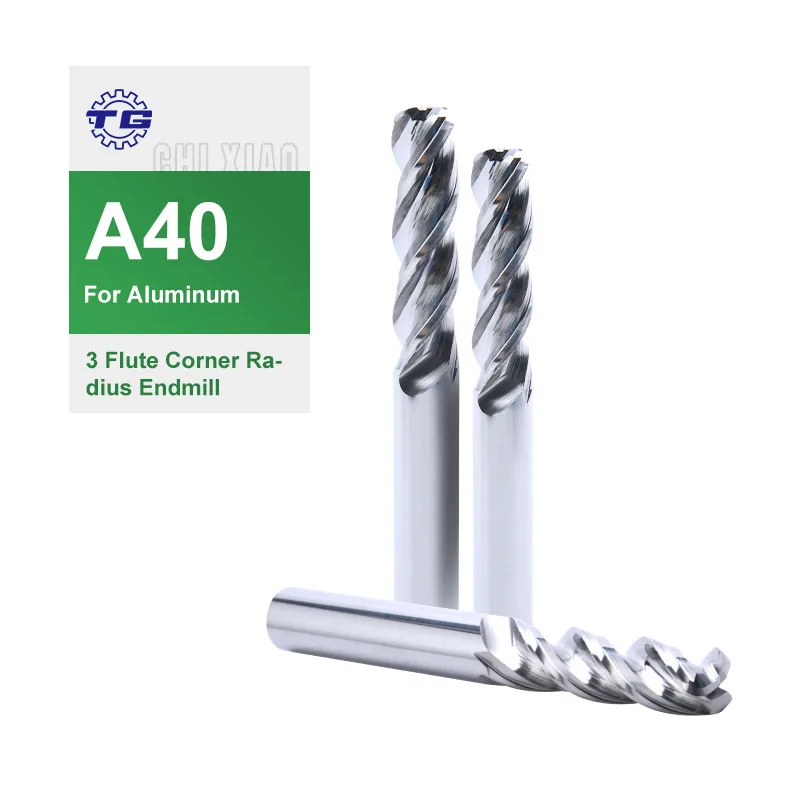
The evolution of CNC milling technology has consistently emphasized the importance of selecting appropriate cutting tools for specific applications. Endmills represent the cutting edge of this evolution, literally and figuratively, as they determine the final surface finish, dimensional accuracy, and overall quality of machined components. Modern manufacturing environments demand tools that can handle diverse materials, complex geometries, and tight tolerances while maintaining consistent performance across extended production runs.
Understanding Endmill Fundamentals in CNC Machining
Core Design Characteristics of Modern Endmills
The fundamental design of endmills incorporates multiple cutting edges strategically positioned along the tool's circumference and end face. These cutting edges work in harmony to remove material efficiently while maintaining dimensional precision. The geometry of endmills includes several critical elements: helix angle, rake angle, relief angle, and cutting edge preparation, each contributing to the tool's performance characteristics in specific machining scenarios.
Material composition plays an equally important role in endmill effectiveness. Carbide endmills offer exceptional hardness and wear resistance, making them ideal for high-speed machining applications and extended tool life. High-speed steel endmills provide excellent toughness and versatility, particularly in applications requiring frequent setup changes or specialized geometries. Coated endmills enhance performance through improved surface properties that reduce friction, increase hardness, and extend operational life.
Flute Configuration and Its Impact on Performance
The number and configuration of flutes on endmills significantly influence their cutting capabilities and application suitability. Two-flute endmills excel in slotting operations and provide excellent chip evacuation in softer materials. Three-flute configurations offer balanced performance between material removal rates and surface finish quality, making them versatile choices for general milling operations. Four-flute and higher configurations maximize surface finish quality and stability in finishing operations while maintaining rigidity for precision work.
Flute geometry extends beyond simple count considerations to include helix angle variations that affect cutting forces, chip formation, and surface quality. Variable helix endmills incorporate different helix angles across flutes to minimize vibration and improve surface finish in challenging applications. The relationship between flute count, helix angle, and core diameter determines the tool's strength, rigidity, and performance envelope in specific machining scenarios.
Material Removal Efficiency Through Advanced Endmill Technology
Optimizing Cutting Parameters for Maximum Productivity
The efficiency of material removal in CNC milling operations depends heavily on the proper selection and application of endmills matched to specific cutting parameters. Spindle speed, feed rate, axial depth of cut, and radial width of cut must be carefully coordinated with endmill specifications to achieve optimal performance. Modern endmills are designed to operate within specific parameter windows that maximize material removal while maintaining tool life and part quality.
Advanced endmill geometries incorporate chip breaker features and variable cutting edge preparations that enhance material removal efficiency across diverse applications. These design elements control chip formation, reduce cutting forces, and improve heat dissipation, enabling higher productivity without compromising quality. The integration of cooling strategies, whether through flood coolant, mist systems, or through-tool coolant delivery, further enhances the material removal capabilities of modern endmills.
Workpiece Material Considerations and Tool Selection
Different workpiece materials present unique challenges that require specific endmill characteristics for optimal performance. Aluminum machining benefits from sharp cutting edges, aggressive helix angles, and specialized coatings that prevent built-up edge formation. Steel machining requires endmills with balanced sharpness and strength, often incorporating chip breaker geometries to manage the tougher chip formation characteristics of ferrous materials.
Exotic materials such as titanium, Inconel, and other superalloys demand specialized endmill designs with enhanced heat resistance, wear resistance, and cutting edge stability. These applications often require endmills with specific substrate grades, coating systems, and geometry modifications that address the unique challenges presented by difficult-to-machine materials. The selection process involves balancing tool life, surface quality, and productivity requirements specific to each material and application combination.
Precision and Surface Quality Enhancement
Surface Finish Control Through Proper Tool Selection
The quality of surface finish achieved in CNC milling operations directly correlates with endmill selection and application parameters. Surface roughness, waviness, and lay patterns are all influenced by cutting edge geometry, tool path strategies, and machining parameters. Fine-grain carbide endmills with polished cutting edges produce superior surface finishes in finishing operations, while roughing endmills with aggressive geometries prioritize material removal over surface quality.
Corner radius endmills provide an optimal balance between strength and surface quality, particularly in applications requiring both roughing and finishing capabilities. The radius eliminates the sharp corner that can cause premature tool failure while maintaining the ability to achieve tight corner radii in machined features. Variable helix endmills further enhance surface quality by reducing harmonic vibrations that can create chatter marks and surface irregularities.
Dimensional Accuracy and Tolerance Achievement
Achieving tight dimensional tolerances in CNC milling operations requires endmills with exceptional runout characteristics, thermal stability, and wear resistance. The relationship between tool deflection, cutting forces, and dimensional accuracy becomes critical in precision applications where tolerances measured in micrometers are routine. Rigid endmills with optimized geometry minimize deflection while maintaining cutting performance across the entire tool engagement envelope.
Tool wear patterns significantly impact dimensional accuracy over extended production runs. Endmills designed for consistent wear characteristics maintain dimensional stability longer, reducing the frequency of tool changes and minimizing dimensional drift. Advanced coating systems and substrate materials contribute to predictable wear patterns that enable more accurate tool life predictions and replacement scheduling in production environments.
Versatility Across Manufacturing Applications
Roughing Operations and Material Removal Strategies
Roughing operations in CNC milling require endmills specifically designed for aggressive material removal while maintaining reasonable tool life. Roughing endmills incorporate serrated cutting edges or chip-breaking geometries that reduce cutting forces and improve chip evacuation. These design features enable deeper cuts and higher feed rates without overloading the machine tool or compromising dimensional accuracy in subsequent finishing operations.
The selection of appropriate endmills for roughing operations considers factors such as machine tool rigidity, workpiece material properties, and required surface finish after roughing. Coarse-pitch endmills excel in soft materials where chip evacuation is critical, while fine-pitch designs provide better surface finish and reduced vibration in harder materials. The balance between productivity and surface quality preparation for finishing operations guides the selection process for roughing endmills.
Finishing Operations and Precision Requirements
Finishing operations demand endmills with exceptional surface quality capabilities, dimensional accuracy, and consistency across extended tool life. Finishing endmills typically feature more cutting edges, finer surface finishes, and optimized geometries that prioritize surface quality over material removal rates. The cutting edge preparation becomes critical in finishing applications, with options ranging from sharp edges for fine finishes to slightly honed edges for enhanced edge strength and longevity.
Ball nose endmills provide unique capabilities for three-dimensional contouring and complex surface generation in finishing operations. The spherical cutting geometry enables smooth surface transitions and complex curve machining that would be impossible with flat-end tools. Variable helix ball nose endmills further enhance performance by reducing vibration and improving surface quality in challenging three-dimensional machining applications where endmills must operate at varying engagement conditions.
Tool Life and Cost Optimization Strategies
Maximizing Endmill Performance and Longevity
Optimizing tool life requires understanding the relationship between cutting parameters, tool geometry, and application requirements. Modern endmills incorporate design features that extend operational life while maintaining performance standards. These features include optimized coating systems, enhanced substrate materials, and geometry modifications that reduce wear rates and improve cutting efficiency throughout the tool's operational envelope.
Proper application of cutting fluids, whether through conventional flood cooling or advanced through-tool delivery systems, significantly impacts endmill longevity. The cooling strategy must match the tool design and application requirements to maximize effectiveness. Some endmills perform optimally with minimal or no cutting fluid, while others require specific cooling strategies to achieve their designed performance and tool life characteristics.
Cost-Benefit Analysis in Tool Selection
The economic impact of endmill selection extends beyond initial tool cost to include productivity, quality, and operational efficiency considerations. Premium endmills with advanced geometries, coatings, and substrate materials often provide lower cost-per-part despite higher initial investment. The analysis must consider tool life, cycle time reduction, quality improvements, and reduced machine downtime when evaluating different endmill options.
Total cost of ownership calculations for endmills should include factors such as tool changing frequency, setup time, inspection requirements, and potential quality issues. Advanced endmills that provide longer tool life and more consistent performance often justify their premium pricing through reduced labor costs, improved productivity, and enhanced quality consistency across production runs.
Integration with Modern CNC Systems
Tool Path Optimization for Endmill Performance
Modern CAM software provides sophisticated tool path strategies specifically designed to maximize endmill performance and longevity. Adaptive clearing, trochoidal milling, and high-efficiency milling strategies optimize the engagement conditions between endmills and workpiece materials. These strategies maintain consistent chip loads, reduce heat generation, and minimize tool wear while maximizing material removal rates.
The integration of endmill specifications into CAM programming enables automatic optimization of cutting parameters based on tool geometry, material properties, and machine capabilities. This integration ensures that endmills operate within their designed performance envelopes while maximizing productivity and tool life. Advanced programming strategies also incorporate tool wear compensation and automatic tool life management to maintain dimensional accuracy throughout production runs.
Monitoring and Control Systems
Advanced CNC systems incorporate real-time monitoring capabilities that track endmill performance and predict tool life based on actual cutting conditions. These systems monitor parameters such as cutting forces, vibration, temperature, and power consumption to optimize performance and prevent catastrophic tool failure. The integration of these monitoring systems with endmill selection and application strategies enables predictive maintenance and automated tool management.
Tool management systems that track endmill usage, performance, and replacement schedules contribute significantly to manufacturing efficiency and cost control. These systems maintain databases of tool performance across different applications, enabling continuous improvement in tool selection and application strategies. The data collected from these systems provides valuable insights for optimizing endmill selection and application parameters across diverse manufacturing scenarios.
Future Developments in Endmill Technology
Advanced Materials and Coating Systems
The development of advanced substrate materials and coating systems continues to expand the capabilities of endmills in demanding applications. Ultrafine grain carbides provide enhanced edge sharpness and wear resistance, while ceramic and cermet materials offer improved performance in specific high-temperature applications. Diamond coatings and advanced PVD coating systems provide superior performance in non-ferrous materials and extend tool life in challenging applications.
Nanostructured coatings and multi-layer coating systems represent the cutting edge of endmill technology development. These advanced coatings provide tailored properties that address specific application requirements while maintaining the flexibility to perform across diverse machining scenarios. The development of smart coatings that provide real-time feedback on tool condition represents an emerging frontier in endmill technology.
Digitalization and Industry 4.0 Integration
The integration of endmills into digital manufacturing ecosystems enables unprecedented levels of optimization and control. Smart endmills with embedded sensors provide real-time data on cutting conditions, tool wear, and performance metrics. This data integration with manufacturing execution systems enables predictive maintenance, automated tool selection, and continuous process optimization based on actual performance data.
Artificial intelligence and machine learning applications in endmill selection and optimization represent significant opportunities for future development. These technologies can analyze vast amounts of machining data to identify optimal tool selections, cutting parameters, and application strategies for specific combinations of materials, geometries, and quality requirements. The potential for autonomous tool management and optimization systems continues to evolve with advances in digital manufacturing technologies.
FAQ
What factors should be considered when selecting endmills for specific applications
The selection of endmills requires careful consideration of workpiece material properties, required surface finish, dimensional tolerances, machine tool capabilities, and production volume requirements. Material hardness, chip formation characteristics, and thermal properties influence tool geometry and coating selection. Surface finish requirements determine cutting edge preparation and flute count considerations. Machine tool rigidity and spindle capabilities limit the size and type of endmills that can be effectively utilized. Production volume affects the balance between tool cost and performance requirements.
How do different endmill geometries affect machining performance
Endmill geometry significantly impacts cutting forces, surface finish, tool life, and material removal rates. Helix angle affects cutting smoothness and chip evacuation, with higher helix angles providing smoother cutting but potentially reducing rigidity. Rake angle influences cutting forces and surface finish, with positive rake angles reducing cutting forces but potentially weakening the cutting edge. The number of flutes affects surface finish and feed rate capabilities, with more flutes generally providing better surface finish but limiting chip evacuation space.
What role do coatings play in endmill performance
Coatings enhance endmill performance through improved wear resistance, reduced friction, and enhanced thermal properties. TiN coatings provide general-purpose wear resistance and thermal stability. TiCN coatings offer increased hardness and wear resistance for steel machining applications. TiAlN coatings provide excellent high-temperature performance for high-speed machining and difficult materials. Diamond coatings excel in non-ferrous materials and provide exceptional wear resistance. The selection of appropriate coatings depends on workpiece material, cutting parameters, and application requirements.
How can manufacturers optimize endmill tool life and reduce costs
Optimizing endmill tool life requires proper selection of cutting parameters, appropriate cooling strategies, and regular monitoring of tool condition. Maintaining optimal cutting speeds and feed rates within manufacturer recommendations prevents premature wear and catastrophic failure. Proper coolant application and selection enhance tool life by managing heat generation and chip evacuation. Regular tool inspection and replacement based on actual wear conditions rather than arbitrary time intervals maximizes tool utilization. Implementation of tool management systems enables tracking of tool performance and identification of optimization opportunities across different applications and materials.
Table of Contents
- Understanding Endmill Fundamentals in CNC Machining
- Material Removal Efficiency Through Advanced Endmill Technology
- Precision and Surface Quality Enhancement
- Versatility Across Manufacturing Applications
- Tool Life and Cost Optimization Strategies
- Integration with Modern CNC Systems
- Future Developments in Endmill Technology
- FAQ