Contact me immediately if you encounter problems!

All Categories

acme thread carbide inserts

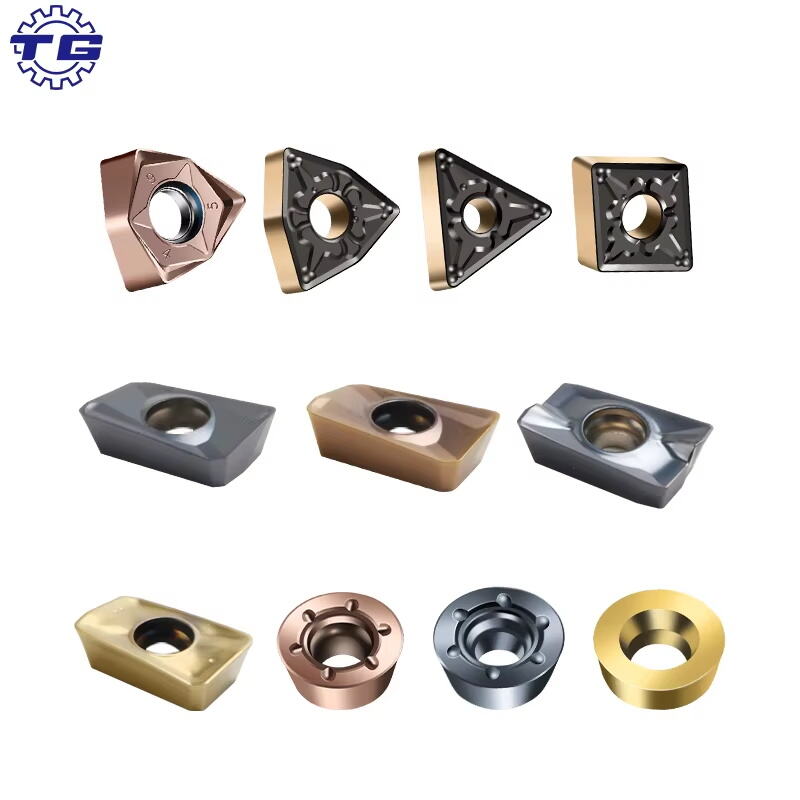
Acme thread carbide inserts represent a specialized cutting tool solution designed specifically for machining Acme trapezoidal threads with precision and efficiency. These inserts are engineered from high-grade carbide materials, combining exceptional hardness with remarkable wear resistance to deliver consistent threading performance across various workpiece materials. The primary function of acme thread carbide inserts centers on creating accurate 29-degree trapezoidal thread profiles commonly used in lead screws, jack screws, and power transmission applications. The carbide composition ensures these inserts maintain sharp cutting edges even under demanding machining conditions, reducing the frequency of tool changes and minimizing production downtime. Technological features include precision-ground cutting edges that replicate exact Acme thread geometries, advanced chip breaker designs that facilitate efficient material removal, and robust insert bodies that withstand cutting forces without deflection. Many acme thread carbide inserts incorporate multi-layered coatings such as titanium nitride or aluminum oxide, which further enhance surface hardness and thermal resistance. These inserts are manufactured to strict tolerances, ensuring thread dimensions meet critical specifications for proper fit and function in mechanical assemblies. Applications span numerous industries including aerospace, automotive manufacturing, industrial machinery production, and hydraulic equipment fabrication. In aerospace applications, acme thread carbide inserts create precise threads for actuator mechanisms and flight control systems. Automotive manufacturers utilize these inserts for producing steering components and adjustment mechanisms. Industrial machinery relies on threads cut by these inserts for positioning systems and heavy-duty lifting equipment. The versatility of acme thread carbide inserts extends to both external and internal threading operations, with various insert geometries available to accommodate different thread pitches and depths. Their compatibility with modern CNC turning centers and conventional lathes makes them accessible for both high-volume production environments and specialized job shops requiring flexibility and reliability in thread cutting operations.

Popular Products

The advantages of acme thread carbide inserts deliver tangible benefits that directly impact your manufacturing efficiency and bottom line. First and foremost, these inserts dramatically extend tool life compared to traditional high-speed steel cutting tools. The superior hardness of carbide materials means your tools stay sharper for longer periods, allowing you to complete more parts between tool changes. This extended lifespan translates into fewer interruptions in your production schedule and reduced tooling costs over time. You will notice immediate improvements in surface finish quality when using acme thread carbide inserts. The precision-ground edges create cleaner threads with smoother surfaces, reducing or eliminating secondary finishing operations. This improvement saves you time and labor costs while ensuring your threaded components meet exact specifications without additional processing steps. Another significant advantage lies in the consistency these inserts provide throughout their usable life. Unlike tools that gradually degrade, carbide inserts maintain dimensional accuracy from the first cut to the last, ensuring every thread meets your quality standards. This consistency proves especially valuable when producing large batches where uniformity across all parts is essential. The productivity gains from acme thread carbide inserts are substantial. These tools allow you to run higher cutting speeds and feed rates than traditional threading tools, meaning you complete parts faster without sacrificing quality. Faster cycle times directly increase your output capacity, enabling you to fulfill orders more quickly or take on additional work without expanding your machine base. Cost efficiency extends beyond just tool longevity. The indexable design of most acme thread carbide inserts means you simply rotate or flip the insert to access fresh cutting edges rather than replacing entire tool holders. This design reduces material waste and keeps your tooling inventory manageable. When an edge does wear out, replacement takes seconds, minimizing machine downtime and keeping operators productive. These inserts also offer remarkable versatility across different materials. Whether you are threading steel, stainless steel, cast iron, or non-ferrous metals, acme thread carbide inserts maintain performance without requiring different tool materials or geometries. This adaptability simplifies your tooling management and reduces the variety of cutting tools you need to stock. The predictability of carbide insert performance helps you plan maintenance schedules and forecast tooling costs with greater accuracy, supporting better budget management and operational planning throughout your facility.

Practical Tips

How to choose the right drill bit size for your needs?

10

Feb

How to choose the right drill bit size for your needs?

Selecting the appropriate drill bit size is crucial for achieving precise holes, maintaining material integrity, and ensuring project success across various applications. Whether you're working with wood, metal, plastic, or composite materials, under...
View More
What Types of Milling Cutter Tools Are Best for Different Materials?

28

Feb

What Types of Milling Cutter Tools Are Best for Different Materials?

Modern manufacturing relies heavily on precision machining to create complex components across various industries. The selection of appropriate milling cutter tools forms the cornerstone of successful CNC operations, directly impacting surface finish...
View More
What industries rely most on high-speed steel tools?

31

Mar

What industries rely most on high-speed steel tools?

High-speed steel tools have become indispensable across numerous industrial sectors due to their exceptional hardness, heat resistance, and cutting performance. These specialized cutting implements maintain their sharpness and structural integrity ev...
View More
What are the differences between high-speed steel and carbide tools?

31

Mar

What are the differences between high-speed steel and carbide tools?

Manufacturing professionals constantly face critical decisions about cutting tool selection, with material choice being perhaps the most fundamental consideration. The choice between high-speed steel and carbide tools directly impacts machining perfo...
View More

Get a Free Quote

Our representative will contact you soon.
Email
Mobile
Name
Company Name
Message
0/1000

acme thread carbide inserts

Exceptional Durability and Extended Tool Life

Exceptional Durability and Extended Tool Life

The exceptional durability of acme thread carbide inserts stands as perhaps their most compelling feature, fundamentally changing how manufacturers approach threading operations. Carbide materials possess hardness ratings that far exceed conventional tool steels, typically measuring between 1500 and 2000 on the Vickers hardness scale compared to approximately 800 for high-speed steel. This superior hardness directly translates into cutting edges that resist wear, abrasion, and deformation even when machining tough materials or operating at elevated temperatures generated during metal cutting. When you implement acme thread carbide inserts in your operations, you immediately reduce the frequency of tool replacements, which carries multiple cascading benefits throughout your production environment. Fewer tool changes mean your machines spend more time cutting and less time idle, directly boosting your overall equipment effectiveness. Your operators become more productive because they spend less time at the tool crib and more time running production. The extended tool life also reduces the skill demands on your workforce since tool change procedures occur less frequently, making it easier to cross-train personnel across different machines and operations. From a financial perspective, the longevity of acme thread carbide inserts delivers substantial cost savings despite their higher initial purchase price compared to other tool options. While a carbide insert may cost more upfront, its ability to produce significantly more parts before requiring replacement means your cost per part drops dramatically. Many manufacturers report tool life improvements of five to ten times longer than high-speed steel alternatives, making the return on investment undeniable. Additionally, the predictable wear patterns of carbide allow you to implement planned tool replacement schedules rather than reacting to unexpected tool failures that disrupt production schedules. The durability advantages become even more pronounced when threading harder materials or when operating in challenging conditions. Stainless steels, hardened alloys, and abrasive materials that quickly destroy conventional tools have minimal impact on properly selected acme thread carbide inserts. This resilience opens opportunities to expand your capabilities into more demanding applications or customer segments that require threading in difficult materials, potentially creating new revenue streams for your business while leveraging your existing equipment investments.
Precision Engineering for Consistent Thread Quality

Precision Engineering for Consistent Thread Quality

Precision engineering distinguishes acme thread carbide inserts from alternative threading solutions, ensuring every thread you produce meets exacting dimensional and geometric requirements. The manufacturing process for these inserts employs advanced grinding techniques that create cutting edges accurate to within microns of the target geometry. This precision matters tremendously because Acme threads require specific 29-degree flank angles, precise thread depths, and exact pitch dimensions to function properly in mechanical assemblies. When threads deviate from specifications, mating components may bind, wear prematurely, or fail completely, potentially causing costly equipment downtime or safety issues. Acme thread carbide inserts eliminate these concerns by replicating the ideal thread form with each cut. The geometric accuracy built into these inserts ensures your threads maintain correct dimensions throughout the depth of cut, creating flanks that are truly straight rather than slightly curved or tapered. This geometric fidelity proves especially critical for longer thread lengths where even minor angle deviations compound into significant dimensional errors. The result is threads that assemble smoothly, operate efficiently, and deliver the expected service life in their intended applications. Another precision advantage comes from the dimensional stability of carbide materials under cutting loads and thermal stress. Softer tool materials may deflect slightly under cutting forces or expand from heat generation, introducing dimensional variations that compromise thread quality. Carbide's rigidity and thermal stability mean the cutting edge maintains its position and geometry throughout the cutting cycle, producing threads with consistent dimensions from the first part to the thousandth. This consistency becomes invaluable when producing components that must interchange or when maintaining tight tolerances is essential for functional performance. The precision of acme thread carbide inserts also supports tighter process control in your operations. When your threading tools produce predictable, consistent results, you can reduce inspection frequency and sampling rates without increasing quality risks. Statistical process control becomes more effective because tool-related variation is minimized, allowing you to identify and address other process variables more quickly. Many manufacturers find they can reduce scrap rates significantly simply by switching to precision carbide inserts, as the elimination of thread dimension problems prevents rejected parts and rework situations that consume resources without adding value.

Enhanced Productivity Through Superior Cutting Performance

Enhanced Productivity Through Superior Cutting Performance

Enhanced productivity represents a compelling reason to adopt acme thread carbide inserts, as these tools fundamentally improve your throughput without requiring capital investment in additional machinery. The superior cutting performance of carbide materials allows you to operate at significantly higher cutting speeds compared to conventional threading tools. While high-speed steel tools might limit you to surface speeds of 50 to 100 feet per minute depending on workpiece material, acme thread carbide inserts often permit speeds of 200 to 400 feet per minute or higher in suitable applications. This speed advantage directly reduces cycle time for each part, meaning you complete more components during each shift and maximize the return on your existing equipment investments. Beyond pure cutting speed, these inserts also support more aggressive feed rates, allowing you to complete threads in fewer passes or reduce the time required for each threading operation. The combination of higher speeds and feeds can reduce threading cycle times by 50 percent or more compared to traditional methods, creating capacity for additional production without expanding your machine base. This productivity improvement becomes especially valuable when you face increasing demand, tight delivery schedules, or opportunities to bring outsourced work back in-house. The time savings accumulate rapidly across production runs, turning small per-part improvements into substantial daily or weekly capacity gains. The chip control characteristics of modern acme thread carbide inserts further enhance productivity by preventing chip-related interruptions. Advanced chip breaker geometries integrated into these inserts break chips into manageable segments that evacuate cleanly from the cutting zone rather than forming long stringy chips that tangle around the workpiece or tool. Effective chip control reduces the need for operator intervention during machining, allowing unattended operation for longer periods and supporting lights-out manufacturing strategies. Fewer chip-related stoppages mean smoother production flow and better utilization of both equipment and labor resources. Productivity advantages also extend to setup and changeover situations. The indexable design of most acme thread carbide inserts means tool changes take only seconds rather than the minutes required to remove and replace entire toolholders. Quick-change tool systems compatible with these inserts further reduce setup time, helping you respond faster to schedule changes or rush orders. This flexibility supports smaller batch production economically, allowing you to serve customers who require shorter runs or more frequent deliveries without sacrificing efficiency. The overall productivity impact positions acme thread carbide inserts as strategic tools that enhance your competitive position through improved delivery performance and cost competitiveness.
acme thread carbide inserts-0
acme thread carbide inserts-1

Get a Free Quote

Our representative will contact you soon.
Email
Mobile
Name
Company Name
Message
0/1000