
 EN
EN
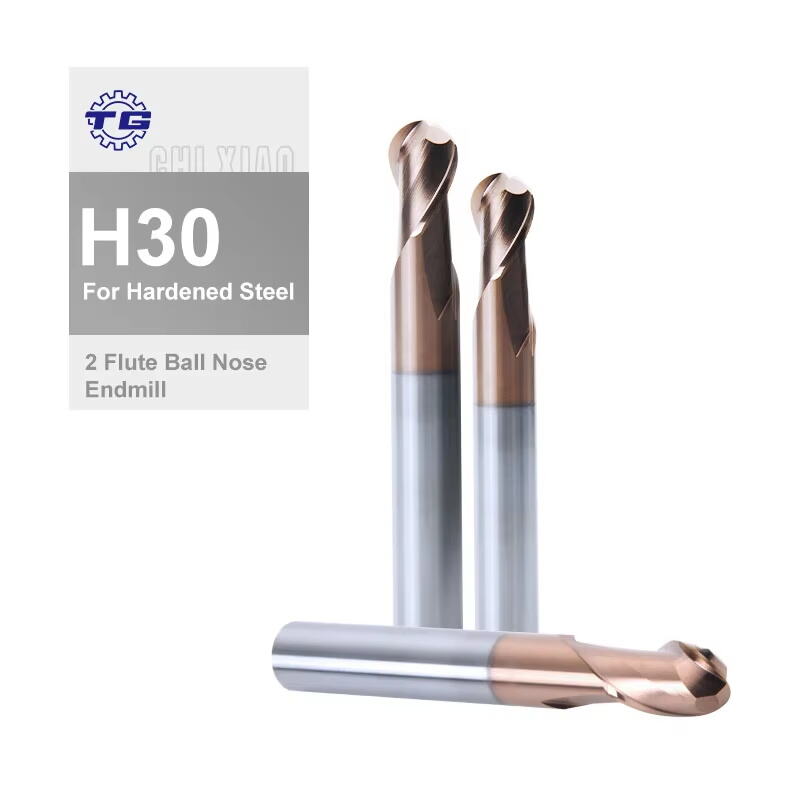
When it comes to precision metal cutting operations, the choice of cutting tool directly impacts productivity, surface finish quality, and overall manufacturing costs. Carbide end mills have emerged as the preferred solution for demanding metal cutting applications, offering superior performance characteristics that traditional high-speed steel tools simply cannot match. Understanding the fundamental advantages of carbide end mills reveals why they dominate modern machining operations across aerospace, automotive, and precision manufacturing industries.
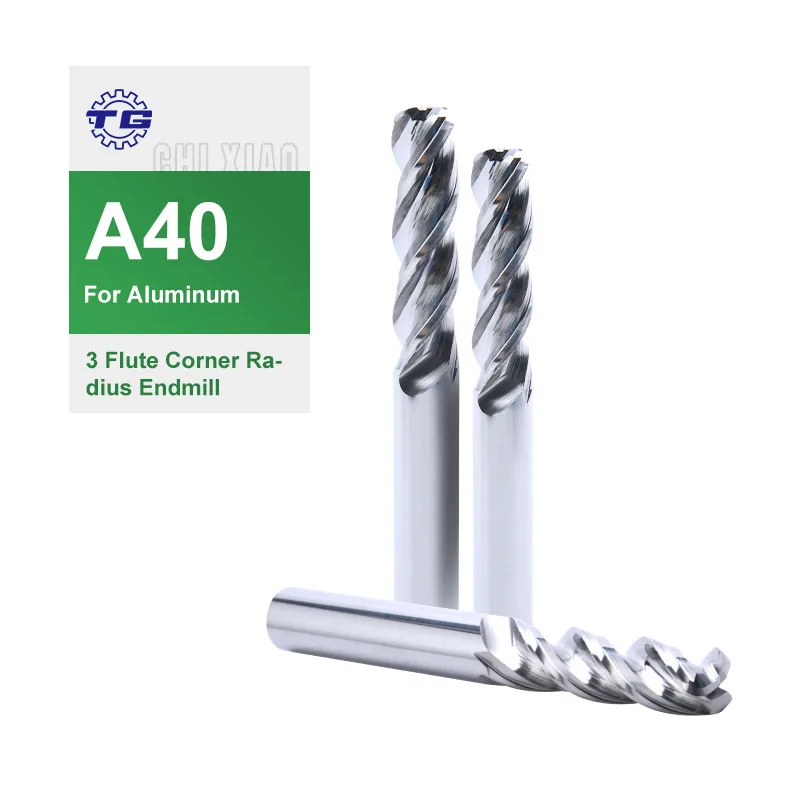
The superiority of carbide end mills stems from their unique material properties and advanced coating technologies that enable faster cutting speeds, extended tool life, and exceptional dimensional accuracy. These performance advantages translate directly into reduced cycle times, lower per-part costs, and improved production throughput. For manufacturers seeking to optimize their metal cutting processes, understanding why carbide end mills outperform alternative tooling options becomes essential for making informed equipment investment decisions.
Material Properties That Drive Performance Advantages
Exceptional Hardness and Wear Resistance
Carbide end mills derive their superior cutting performance from tungsten carbide's remarkable hardness rating of 89-93 HRA, significantly exceeding the 64-68 HRC hardness range of premium high-speed steel tools. This exceptional hardness allows carbide end mills to maintain sharp cutting edges throughout extended machining cycles, resulting in consistent surface finishes and dimensional accuracy. The wear resistance properties of carbide material enable these tools to cut through hardened steels, stainless alloys, and exotic metals without rapid edge degradation that plagued earlier cutting tool technologies.
The crystalline structure of tungsten carbide provides inherent resistance to abrasive wear, adhesive wear, and thermal degradation that commonly affect softer cutting materials. This wear resistance translates into predictable tool life performance, allowing manufacturers to establish reliable tool change intervals and maintenance schedules. Advanced carbide grades incorporate cobalt binders and grain refinement techniques that further enhance wear resistance while maintaining the toughness required for interrupted cuts and challenging workpiece geometries.
Superior Heat Resistance and Thermal Stability
Metal cutting operations generate substantial heat through plastic deformation and friction at the tool-workpiece interface, creating thermal challenges that can rapidly degrade cutting tool performance. Carbide end mills maintain their hardness and cutting edge integrity at temperatures exceeding 1000°C, while high-speed steel tools begin losing hardness around 600°C. This thermal stability enables carbide tools to operate at significantly higher cutting speeds without experiencing thermal softening or edge failure.
The thermal conductivity properties of carbide materials facilitate efficient heat dissipation away from the cutting zone, reducing the risk of thermal damage to both the workpiece and cutting tool. Modern carbide end mills often incorporate advanced coating systems that further enhance thermal barrier properties while reducing friction coefficients. These thermal management capabilities allow manufacturers to implement aggressive cutting parameters that maximize material removal rates while maintaining surface quality requirements.
Cutting Speed and Efficiency Advantages
Higher Surface Speeds and Feed Rates
The fundamental advantage of carbide end mills lies in their ability to operate at surface speeds 3-5 times higher than comparable high-speed steel tools while maintaining cutting edge integrity. These elevated cutting speeds directly translate into reduced cycle times and increased production throughput. For example, while HSS end mills typically operate at surface speeds of 50-100 surface feet per minute in steel applications, carbide end mills can effectively cut the same materials at 300-500 surface feet per minute.
The combination of high cutting speeds and aggressive feed rates enables carbide end mills to achieve material removal rates that dramatically exceed conventional tooling capabilities. This productivity advantage becomes particularly pronounced in high-volume production environments where cycle time reductions of 40-60% are commonly achieved through carbide tooling implementation. The ability to maintain consistent cutting performance at these elevated parameters ensures that surface finish quality and dimensional accuracy remain within specification requirements.
Extended Tool Life and Reduced Changeover Frequency
Carbide end mills typically deliver 5-10 times longer tool life compared to equivalent high-speed steel cutting tools, significantly reducing the frequency of tool changes and associated production interruptions. This extended tool life results from the superior wear resistance and thermal stability properties inherent in carbide materials. Longer tool life intervals translate into reduced tooling costs per machined part and decreased machine downtime for tool changes.
The predictable wear characteristics of carbide end mills enable manufacturers to implement condition-based maintenance strategies that optimize tool utilization while preventing unexpected tool failures. Advanced carbide grades and coating technologies continue to extend tool life performance, with some specialized applications achieving tool life improvements of 15-20 times over standard HSS tooling. These dramatic tool life extensions justify the higher initial investment in carbide tooling through reduced total cost of ownership calculations.
Precision and Surface Quality Benefits
Enhanced Dimensional Accuracy and Repeatability
The rigid structure and minimal deflection characteristics of carbide end mills contribute significantly to improved dimensional accuracy and geometric repeatability in precision machining operations. Carbide's high elastic modulus reduces tool deflection under cutting loads, enabling tighter tolerance control and improved positional accuracy. This rigidity becomes particularly important in deep cavity machining, thin-wall components, and complex three-dimensional geometries where tool deflection can compromise final part quality.
Modern carbide end mills incorporate advanced geometry designs that optimize chip evacuation while maintaining cutting edge strength and rigidity. The combination of sharp cutting edges, optimized rake angles, and controlled helix configurations enables carbide tools to produce superior surface finishes while maintaining dimensional accuracy requirements. These precision capabilities often eliminate secondary finishing operations, reducing overall manufacturing costs and lead times.
Superior Surface Finish Quality
Carbide end mills consistently produce superior surface finish quality compared to alternative cutting tool materials due to their ability to maintain sharp, stable cutting edges throughout extended machining cycles. The fine grain structure of modern carbide materials enables extremely sharp cutting edges that slice through workpiece materials with minimal tearing or surface distortion. This cutting action results in smoother surface finishes that often meet final part requirements without additional polishing or finishing operations.
Advanced coating technologies applied to carbide end mills further enhance surface finish quality by reducing friction and preventing material adhesion to cutting edges. These coatings create a barrier layer that promotes smooth chip flow while minimizing built-up edge formation that can degrade surface quality. The combination of sharp carbide cutting edges and optimized coating systems enables manufacturers to achieve mirror-like surface finishes directly from the machining operation.
Economic Advantages and Total Cost Benefits
Reduced Total Cost of Ownership
While carbide end mills require a higher initial investment compared to high-speed steel alternatives, their superior performance characteristics deliver significant total cost of ownership advantages. The extended tool life, higher cutting speeds, and reduced changeover frequency of carbide end mills combine to reduce the cost per machined part substantially. Detailed cost analyses typically reveal 30-50% reductions in total tooling costs when carbide end mills replace conventional cutting tools in appropriate applications.
The productivity improvements achieved through carbide tooling implementation often justify equipment investments through increased machine utilization and reduced cycle times. Manufacturers can process more parts per shift while maintaining quality requirements, directly improving profitability and competitive positioning. The predictable performance characteristics of carbide end mills also reduce scrap rates and rework costs associated with tool failure or performance degradation.
Increased Production Throughput and Efficiency
The combination of higher cutting speeds, extended tool life, and reduced changeover frequency enables carbide end mills to significantly increase overall production throughput. Manufacturing facilities often experience 25-40% increases in parts production when implementing carbide tooling strategies optimized for their specific applications. These throughput improvements translate directly into improved delivery performance and reduced manufacturing lead times.
Carbide end mills enable manufacturers to implement lights-out machining strategies where automated equipment can operate for extended periods without operator intervention. The predictable tool life and performance characteristics of carbide tooling support unmanned manufacturing operations that maximize equipment utilization while reducing labor costs. This automation capability becomes increasingly important as manufacturers seek to improve competitiveness in global markets.
Application-Specific Performance Advantages
Versatility Across Different Metal Types
Carbide end mills demonstrate exceptional versatility in machining diverse metal types, from soft aluminum alloys to hardened tool steels and exotic superalloys. Specialized carbide grades and coating systems optimize performance for specific material families, ensuring optimal cutting performance across the full spectrum of manufacturing applications. This versatility reduces tooling inventory requirements while simplifying tool selection and procurement processes.
The ability of carbide end mills to machine both ferrous and non-ferrous materials effectively makes them ideal for mixed production environments where multiple material types are processed on the same equipment. Advanced carbide formulations incorporate specific additives and microstructures that optimize performance for challenging materials such as titanium alloys, Inconel, and hardened steels that are difficult to machine with conventional tooling.
Performance in High-Speed Machining Operations
High-speed machining strategies rely heavily on carbide end mills to achieve the elevated cutting speeds and feed rates that characterize these advanced manufacturing processes. The thermal stability and wear resistance of carbide materials enable these tools to maintain cutting performance at spindle speeds exceeding 20,000 RPM while processing complex three-dimensional geometries. This high-speed capability enables manufacturers to achieve dramatic reductions in cycle times while maintaining surface quality requirements.
The dynamic balance characteristics and precision manufacturing tolerances of modern carbide end mills support high-speed operations without introducing vibration or chatter that can compromise surface quality. Advanced carbide end mills incorporate optimized flute geometries and variable helix angles that minimize harmonic resonance while maximizing material removal rates. These design features enable manufacturers to fully exploit the speed capabilities of modern CNC machining centers.
FAQ
How much longer do carbide end mills last compared to HSS tools?
Carbide end mills typically last 5-10 times longer than equivalent high-speed steel tools in most metal cutting applications. The exact tool life improvement depends on the specific application, cutting parameters, and workpiece material. In some specialized applications with optimized cutting conditions, carbide tools can achieve 15-20 times longer tool life than HSS alternatives. This extended tool life results from carbide's superior hardness, wear resistance, and thermal stability properties.
Can carbide end mills cut all types of metals effectively?
Carbide end mills can effectively cut virtually all metal types, from soft aluminum alloys to hardened steels and exotic superalloys. However, optimal performance requires selecting the appropriate carbide grade, coating system, and geometry for the specific material being machined. Different carbide formulations are optimized for ferrous materials, non-ferrous alloys, or specific challenging materials like titanium and Inconel. Proper tool selection ensures maximum performance and tool life in each application.
Are carbide end mills worth the higher initial cost?
Yes, carbide end mills typically provide significant total cost of ownership advantages despite their higher initial purchase price. The combination of extended tool life, higher cutting speeds, reduced changeover frequency, and improved productivity usually results in 30-50% lower total tooling costs per part. Additionally, the improved surface quality and dimensional accuracy often eliminate secondary operations, providing further cost savings. The return on investment is typically realized within the first few production runs.
What cutting speeds can be achieved with carbide end mills?
Carbide end mills can operate at surface speeds 3-5 times higher than comparable HSS tools. In steel applications, carbide tools typically run at 300-500 surface feet per minute, while aluminum and other non-ferrous materials can be cut at speeds exceeding 1000 surface feet per minute. The exact cutting speed depends on the workpiece material, carbide grade, coating system, and specific machining conditions. Modern high-performance carbide end mills continue to push these speed limits higher with advanced materials and geometries.