Versatile Application Range Across Industries
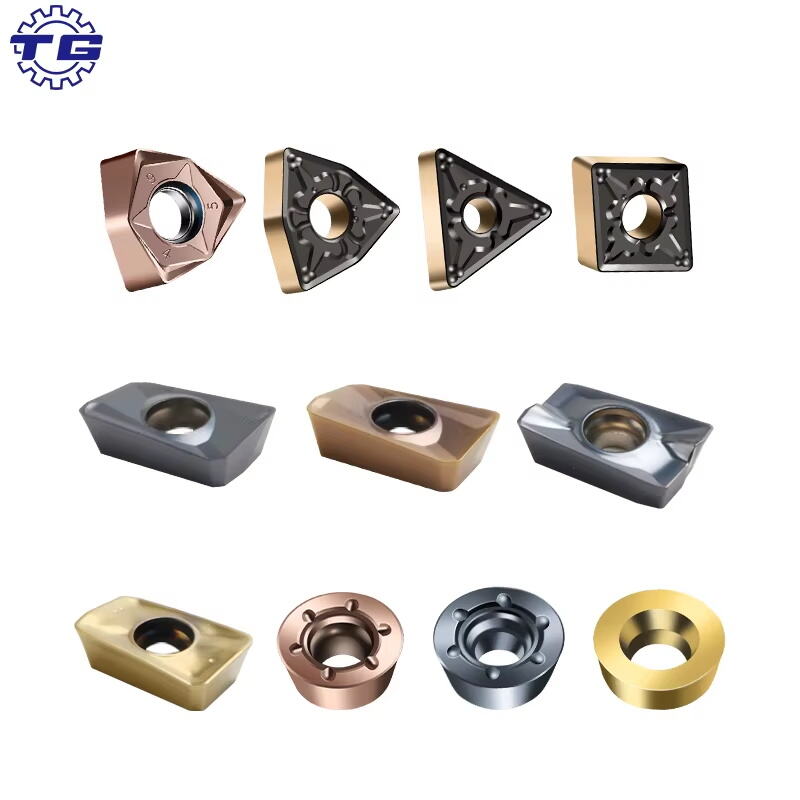
The remarkable versatility of hardstone carbide inserts makes them invaluable across an extensive spectrum of industries and machining applications, delivering reliable performance regardless of material type or operational demands. Automotive manufacturers depend on these inserts for high-volume production of engine components, transmission parts, suspension elements, and brake system components, where consistency and tool life directly impact profitability. The aerospace industry relies on hardstone carbide inserts to machine exotic materials including titanium alloys, Inconel, and other heat-resistant superalloys used in turbine engines, structural components, and landing gear assemblies where precision and surface integrity are non-negotiable. Medical device manufacturers utilize specialized grades of these inserts to produce surgical instruments, orthopedic implants, and diagnostic equipment components that demand exceptional surface finishes and strict dimensional tolerances. The oil and gas sector employs hardstone carbide inserts for manufacturing drill bits, valve components, and processing equipment that must withstand corrosive environments and extreme operating conditions. General manufacturing facilities processing steel, stainless steel, and cast iron components find these inserts indispensable for everyday production requirements, from simple turning operations to complex multi-axis machining centers. The mold and die industry benefits from hardstone carbide inserts when machining hardened tool steels, creating precise cavities and intricate details required for plastic injection molds and stamping dies. Electronics manufacturers use these cutting tools to process aluminum housings, heat sinks, and connector components with the tight tolerances necessary for modern electronic assemblies. The versatility extends across different machining operations, with specific insert geometries optimized for turning, facing, profiling, threading, grooving, parting, milling, drilling, and boring applications. Material compatibility spans soft aluminum alloys through hardened steels exceeding 60 HRC, with appropriate grade selection enabling efficient machining across this entire hardness range. The ability to handle both continuous and interrupted cuts makes hardstone carbide inserts suitable for machining solid bars, castings with surface irregularities, and forgings with scale, providing consistent performance despite varying workpiece conditions. This broad application capability allows manufacturers to standardize on hardstone carbide insert technology across diverse production requirements, simplifying procurement, reducing inventory complexity, and leveraging operator expertise across multiple machining scenarios for improved overall efficiency.

 EN
EN