Contact me immediately if you encounter problems!

All Categories

carbide tool inserts

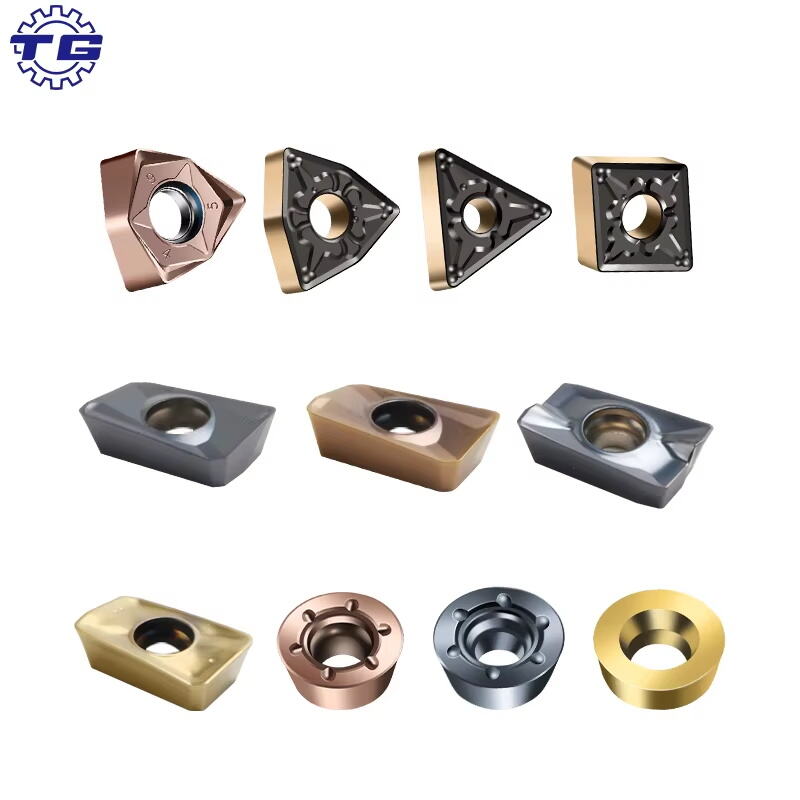
Carbide tool inserts represent a revolutionary advancement in modern machining and metalworking operations, providing manufacturers with exceptional cutting performance and extended tool life. These precision-engineered components are manufactured from tungsten carbide, a compound known for its remarkable hardness and heat resistance properties. Carbide tool inserts are replaceable cutting edges that attach to tool holders, enabling efficient material removal across various industrial applications. The primary function of carbide tool inserts involves cutting, shaping, and finishing metal workpieces with superior accuracy and consistency. These inserts excel in high-speed machining operations where conventional steel tools would quickly deteriorate. The technological features of carbide tool inserts include advanced geometries, specialized coatings, and optimized chip breaker designs that enhance cutting efficiency. Modern manufacturing processes ensure each insert maintains strict dimensional tolerances, guaranteeing reliable performance in demanding production environments. The applications of carbide tool inserts span multiple industries, including automotive manufacturing, aerospace engineering, energy production, and general metalworking. These components effectively machine various materials such as steel, stainless steel, cast iron, aluminum, and exotic alloys. The versatility of carbide tool inserts makes them indispensable in turning, milling, drilling, and threading operations. Manufacturers utilize different grades of carbide compositions tailored to specific machining conditions and workpiece materials. The replaceable nature of these inserts provides significant economic advantages by eliminating the need to replace entire cutting tools when edges become worn. This modular approach reduces downtime and inventory costs while maintaining consistent machining quality. Advanced coating technologies such as titanium nitride, titanium carbonitride, and aluminum oxide further enhance the performance characteristics of carbide tool inserts. These surface treatments improve wear resistance, reduce friction, and enable higher cutting speeds. The continuous development of carbide tool inserts reflects the metalworking industry's commitment to improving productivity, reducing costs, and achieving superior surface finishes across diverse manufacturing applications.


New Products

The advantages of carbide tool inserts deliver substantial practical benefits that directly impact your manufacturing efficiency and bottom line. First and foremost, these cutting components offer exceptional durability that significantly outlasts traditional high-speed steel tools. You can expect carbide tool inserts to maintain their cutting edge three to five times longer than conventional alternatives, which translates to fewer tool changes and reduced machine downtime. This extended tool life means your operators spend more time producing parts and less time adjusting equipment. The superior hardness of carbide tool inserts enables you to machine at higher cutting speeds, which accelerates production cycles and increases throughput. Your facility can complete more work orders in shorter timeframes, improving delivery schedules and customer satisfaction. The heat resistance properties of these inserts allow them to maintain their structural integrity even when cutting temperatures exceed 1000 degrees Celsius. This thermal stability ensures consistent dimensional accuracy throughout extended machining operations. You gain predictable results with minimal variation between the first part and the last part in a production run. The economic benefits become immediately apparent when you consider the replaceable insert system. Instead of purchasing complete cutting tools, you simply replace worn inserts at a fraction of the cost. This approach reduces your tooling expenses while maintaining optimal cutting performance. The standardized tool holder systems accommodate multiple insert geometries, allowing you to tackle diverse machining tasks with minimal inventory investment. Your tool crib requires less storage space and fewer different tool variations. Carbide tool inserts also improve surface finish quality, reducing or eliminating secondary finishing operations. Parts emerge from the machine closer to final specifications, saving additional processing time and labor costs. The precision cutting action generates less vibration and chatter, extending the life of your machine tools and spindles. This reduced wear on equipment lowers maintenance costs and prevents unexpected breakdowns. Environmental considerations also favor carbide tool inserts because their extended life generates less waste compared to disposable cutting tools. Your facility reduces its environmental footprint while maintaining high productivity levels. The versatility of these inserts accommodates various machining strategies, from roughing operations that remove material quickly to finishing passes that achieve tight tolerances. You maintain flexibility in your production planning without investing in specialized equipment for each operation. Training new operators becomes more straightforward because standardized insert systems simplify tool selection and installation procedures. Your workforce achieves proficiency faster, reducing the learning curve associated with complex machining operations.

Tips And Tricks

How do different drill bit materials affect performance?

30

Dec

How do different drill bit materials affect performance?

Understanding the relationship between drill bit materials and their performance characteristics is crucial for professionals working in manufacturing, construction, and metalworking industries. The material composition of a drill bit directly influe...
View More
When should you use carbide vs HSS end mill cutters?

10

Feb

When should you use carbide vs HSS end mill cutters?

Selecting the right cutting tool for machining operations is crucial for achieving optimal performance, surface finish, and tool longevity. The choice between carbide and high-speed steel (HSS) end mill cutters significantly impacts manufacturing eff...
View More
When should you use high speed steel cutting tools?

31

Mar

When should you use high speed steel cutting tools?

High speed steel cutting tools have revolutionized modern machining operations since their introduction in the early 1900s. These specialized alloys offer exceptional hardness, wear resistance, and heat tolerance that make them indispensable in vario...
View More
What Safety Measures Are Essential in Holemaking Operations?

31

Mar

What Safety Measures Are Essential in Holemaking Operations?

Holemaking operations represent one of the most fundamental yet potentially hazardous processes in manufacturing environments. These operations involve creating precise holes in various materials using drilling, reaming, boring, and related machining...
View More

Get a Free Quote

Our representative will contact you soon.
Email
Mobile
Name
Company Name
Message
0/1000

carbide tool inserts

Unmatched Durability and Extended Tool Life Performance

Unmatched Durability and Extended Tool Life Performance

The exceptional durability of carbide tool inserts represents one of their most valuable characteristics for manufacturing operations seeking to maximize productivity and minimize operational costs. These cutting components utilize tungsten carbide compositions that achieve hardness levels between 1500 and 2000 on the Vickers scale, making them significantly harder than high-speed steel alternatives. This fundamental material property enables carbide tool inserts to resist wear mechanisms that quickly degrade conventional cutting tools. When you implement these inserts in your machining operations, you immediately notice the substantial reduction in tool replacement frequency. The extended service life stems from the carbide's ability to maintain its sharp cutting edge even under extreme mechanical and thermal stresses. During continuous cutting operations, the contact zone between the insert and workpiece generates intense heat and pressure that would rapidly destroy lesser materials. Carbide tool inserts withstand these harsh conditions while maintaining dimensional stability and cutting performance. The practical implications for your production facility include dramatically reduced machine downtime for tool changes. Consider a typical turning operation where conventional tools require replacement every two hours. By switching to carbide tool inserts, you extend this interval to eight or ten hours, effectively quadrupling productive machining time. This improvement multiplies across all machines in your facility, creating substantial gains in overall equipment effectiveness. The consistency of carbide tool inserts throughout their service life ensures that parts produced at the beginning of a tool's life match those created near the end. This reliability eliminates quality variations that necessitate frequent adjustments and inspections. Your quality control processes become more efficient because dimensional drift occurs gradually and predictably. The financial benefits extend beyond simple tool replacement costs. Reduced downtime means operators remain productive rather than standing idle during tool changes. Your labor efficiency improves while maintaining or exceeding quality standards. The carbide composition resists edge chipping and fracturing, even when encountering interrupted cuts or challenging workpiece conditions. This robustness provides confidence in unmanned or lights-out manufacturing scenarios where tool failure could halt production for extended periods.
Superior Cutting Speed Capabilities and Thermal Management

Superior Cutting Speed Capabilities and Thermal Management

Carbide tool inserts revolutionize machining efficiency through their remarkable ability to operate at substantially higher cutting speeds than traditional tool materials. This performance advantage stems from the exceptional thermal properties and structural stability of tungsten carbide compounds under extreme operating conditions. When you increase cutting speeds in metalworking operations, the interface between the cutting edge and workpiece material generates significantly elevated temperatures. Standard tool materials soften and degrade rapidly under these thermal loads, limiting practical cutting speeds. Carbide tool inserts maintain their hardness and cutting geometry even when subjected to temperatures exceeding 1000 degrees Celsius. This thermal resilience allows you to push machining parameters well beyond conventional limits, dramatically reducing cycle times. The relationship between cutting speed and production output follows a direct correlation. Doubling your cutting speed can potentially halve the time required to complete each part, effectively doubling your manufacturing capacity without additional capital equipment investment. This productivity enhancement becomes particularly valuable in high-volume production environments where even small efficiency gains accumulate into substantial competitive advantages. The thermal management characteristics of carbide tool inserts also contribute to improved surface finish quality. Higher cutting speeds with properly selected carbide grades generate shearing action that produces smoother surface textures with reduced tool marks and feed patterns. Your parts achieve better finishes directly from the machining operation, potentially eliminating secondary polishing or grinding processes. The heat resistance of these inserts prevents thermal expansion issues that compromise dimensional accuracy in precision machining applications. Components maintain tight tolerances because the cutting tool remains geometrically stable throughout the operation. Modern carbide tool inserts incorporate specialized coatings that further enhance thermal performance. These multi-layer surface treatments create thermal barriers that protect the substrate carbide while reducing friction at the cutting interface. Lower friction generates less heat, creating a beneficial cycle that extends tool life while enabling even higher cutting speeds. Your facility benefits from this advanced technology through increased throughput, improved part quality, and reduced cost per component. The ability to machine faster without sacrificing quality or tool life represents a fundamental advantage that impacts every aspect of your manufacturing operation. Production schedulers gain flexibility to meet tight deadlines, while cost accountants appreciate the improved economics of reduced cycle times and extended tool life working in concert.
Economic Efficiency Through Replaceable Insert System Design

Economic Efficiency Through Replaceable Insert System Design

The replaceable insert system design of carbide tool inserts introduces profound economic advantages that fundamentally transform tooling cost structures in modern manufacturing facilities. This innovative approach separates the relatively expensive precision tool holder from the consumable cutting edge, creating a sustainable and cost-effective solution for diverse machining applications. Traditional solid cutting tools require complete replacement when the cutting edge wears beyond acceptable limits, discarding the entire tool body along with the dulled edge. Carbide tool inserts eliminate this wasteful practice by allowing you to replace only the worn cutting edge while retaining the tool holder indefinitely. The financial implications become substantial when you calculate annual tooling expenditures across multiple machines and operations. Consider a manufacturing facility operating twenty CNC machines in continuous production. Each machine might traditionally consume dozens of complete cutting tools monthly. By transitioning to carbide tool inserts, you reduce replacement costs by sixty to seventy percent because only the small insert requires replacement rather than the entire tool assembly. These savings accumulate rapidly, often recovering the initial investment in tool holders and insert inventory within months. The standardization inherent in insert tooling systems provides additional economic benefits through inventory optimization. A single tool holder design accommodates multiple insert geometries and grades, enabling you to address various machining requirements without maintaining extensive tool holder inventories. Your tool crib becomes more efficient, requiring less storage space and simplifying inventory management procedures. The quick-change capability of carbide tool inserts reduces setup times when transitioning between different operations or workpiece materials. Operators complete insert changes in seconds using simple clamping mechanisms, minimizing non-productive time. This efficiency proves particularly valuable in job shop environments where frequent changeovers occur throughout the workday. The predictable wear patterns of carbide tool inserts enable proactive tool management strategies that prevent unexpected failures during production runs. You can monitor insert condition and schedule replacements during planned downtime rather than responding to emergency tool failures that disrupt production schedules. This predictability improves production planning accuracy and reduces expediting costs associated with rush tool orders. The economic advantages extend to environmental considerations as well. Reduced material consumption through the insert system generates less manufacturing waste compared to discarding complete cutting tools. Your facility demonstrates environmental responsibility while simultaneously reducing disposal costs. The long-term cost trajectory favors carbide tool inserts because continuous improvements in carbide metallurgy and coating technologies enhance performance without requiring changes to tool holder infrastructure. You benefit from technological advances through simple insert upgrades rather than complete tooling system replacements.
carbide tool inserts-0
carbide tool inserts-1

Get a Free Quote

Our representative will contact you soon.
Email
Mobile
Name
Company Name
Message
0/1000