Contact me immediately if you encounter problems!

All Categories

carbide turning inserts

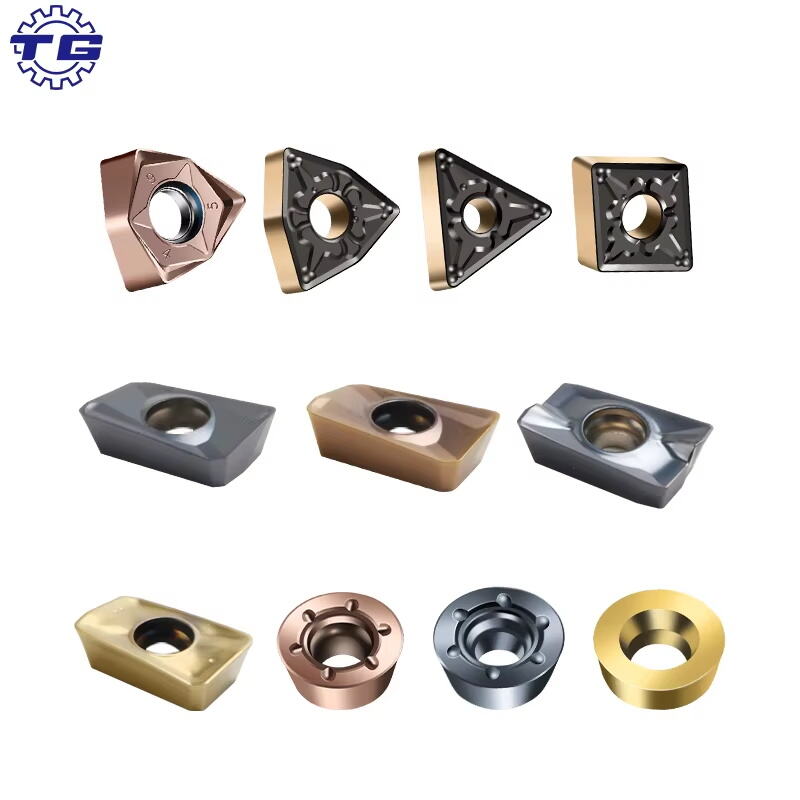
Carbide turning inserts represent a revolutionary advancement in metal cutting technology, serving as essential components for modern machining operations. These precision-engineered cutting tools are manufactured from tungsten carbide, a compound known for its exceptional hardness and wear resistance. Carbide turning inserts are designed to be mounted onto turning tool holders, where they perform the critical function of removing material from rotating workpieces to create desired shapes, dimensions, and surface finishes. The primary function of carbide turning inserts involves transforming raw metal stock into finished components through controlled material removal. These inserts excel in high-speed machining operations, maintaining their cutting edge integrity even under extreme temperatures and pressures. The technological features of carbide turning inserts include advanced coating technologies such as titanium nitride, titanium carbonitride, and aluminum oxide layers that enhance performance characteristics. These coatings reduce friction, prevent built-up edge formation, and extend tool life significantly. Modern carbide turning inserts incorporate sophisticated chip breaker geometries that control chip formation and evacuation, preventing chip entanglement and ensuring smooth operation. The geometric design features multiple cutting edges, allowing operators to rotate or flip the insert when one edge becomes worn, maximizing material utilization and reducing tooling costs. Applications for carbide turning inserts span virtually every manufacturing sector, including automotive, aerospace, medical device production, oil and gas, and general engineering. These inserts efficiently machine various materials ranging from soft aluminum alloys to hardened steels, stainless steels, cast iron, and even exotic superalloys. The versatility of carbide turning inserts makes them indispensable in both high-volume production environments and custom job shops. They perform operations such as external turning, internal boring, facing, grooving, threading, and profiling with remarkable precision and consistency, delivering tight tolerances and superior surface finishes that meet demanding quality standards.


New Product Recommendations

Carbide turning inserts deliver substantial cost savings through their multi-edge design, which provides multiple cutting opportunities from a single insert. When one cutting edge wears out, you simply rotate the insert to expose a fresh edge, eliminating the need for frequent tool replacements and reducing overall tooling expenses. This indexable feature means you get four, eight, or even more cutting edges from one insert, multiplying your investment value. The economic benefits extend beyond the insert itself, as reduced downtime for tool changes translates directly into increased productivity and lower labor costs. Your machine spends more time cutting and less time sitting idle, maximizing return on equipment investment. Carbide turning inserts significantly boost production efficiency by enabling faster cutting speeds compared to traditional high-speed steel tools. The superior hardness and thermal stability of carbide material allow your machines to operate at higher speeds and feeds without sacrificing tool life or part quality. This capability means you complete jobs faster, increase throughput, and meet tight delivery schedules with confidence. The consistent performance of carbide turning inserts ensures predictable machining results, reducing scrap rates and rework costs while improving overall process reliability. Quality improvements represent another compelling advantage, as carbide turning inserts maintain sharp cutting edges longer than alternative materials. This edge retention capability produces superior surface finishes consistently throughout the tool life, reducing or eliminating secondary finishing operations. The precision geometry of modern carbide turning inserts enables tight dimensional tolerances, ensuring parts meet exact specifications without extensive inspection or adjustment. Versatility stands as a key practical benefit, with carbide turning inserts available in numerous grades, geometries, and coating options to match specific application requirements. Whether you machine soft materials requiring sharp edges or hard materials demanding tough substrates, appropriate carbide turning inserts exist for your needs. This adaptability allows you to optimize tooling for each job, achieving best-in-class results across diverse materials and operations. The ease of use associated with carbide turning inserts simplifies operator training and reduces skill requirements. Quick tool changes using simple clamping mechanisms mean even less experienced operators can maintain production quality and efficiency. Environmental considerations also favor carbide turning inserts, as their extended life reduces waste generation and the recycling programs for worn inserts recover valuable tungsten carbide for reuse in new tool production.

Latest News

Which drill bit type works best for concrete projects?

30

Dec

Which drill bit type works best for concrete projects?

Selecting the right drill bit for concrete projects can make the difference between a successful installation and a frustrating experience filled with broken tools and damaged materials. Concrete drilling requires specialized equipment designed to ha...
View More
Why Do Milling Cutters Break and How to Prevent It?

10

Feb

Why Do Milling Cutters Break and How to Prevent It?

Manufacturing precision relies heavily on the performance and reliability of cutting tools, with the milling cutter serving as one of the most critical components in modern machining operations. Despite their robust design and engineering excellence,...
View More
What Types of Milling Cutter Tools Are Best for Different Materials?

28

Feb

What Types of Milling Cutter Tools Are Best for Different Materials?

Modern manufacturing relies heavily on precision machining to create complex components across various industries. The selection of appropriate milling cutter tools forms the cornerstone of successful CNC operations, directly impacting surface finish...
View More
What are the differences between high-speed steel and carbide tools?

31

Mar

What are the differences between high-speed steel and carbide tools?

Manufacturing professionals constantly face critical decisions about cutting tool selection, with material choice being perhaps the most fundamental consideration. The choice between high-speed steel and carbide tools directly impacts machining perfo...
View More

Get a Free Quote

Our representative will contact you soon.
Email
Mobile
Name
Company Name
Message
0/1000

carbide turning inserts

Extended Tool Life Through Advanced Coating Technology

Extended Tool Life Through Advanced Coating Technology

Carbide turning inserts feature sophisticated multi-layer coating systems that dramatically extend operational life and enhance cutting performance across demanding applications. These advanced coatings represent years of materials science research and development, combining multiple layers of different compounds to create synergistic protective barriers. The most common coating systems include titanium nitride, which provides a hard, low-friction surface that resists wear and reduces cutting forces. Titanium carbonitride layers offer enhanced hardness and chemical stability, particularly beneficial when machining steels and stainless materials. Aluminum oxide coatings deliver exceptional thermal barrier properties, protecting the carbide substrate from heat-related degradation during high-speed operations. Modern coating technology employs physical vapor deposition and chemical vapor deposition processes that create uniform, well-adhered layers measuring just a few microns thick yet providing substantial performance improvements. The coating architecture is engineered specifically for turning operations, where continuous cutting generates sustained thermal and mechanical stresses. By selecting carbide turning inserts with appropriate coating packages, manufacturers achieve tool life improvements ranging from fifty to three hundred percent compared to uncoated inserts. This extended durability translates directly into reduced tooling costs, fewer production interruptions for tool changes, and more consistent part quality throughout extended production runs. The thermal barrier properties of advanced coatings allow carbide turning inserts to withstand higher cutting speeds, enabling faster cycle times and increased productivity. Friction reduction from coating surfaces decreases power consumption and minimizes heat generation, creating more favorable cutting conditions that preserve workpiece material properties. The chemical inertness of coating layers prevents unwanted reactions between the cutting tool and workpiece material, reducing built-up edge formation and crater wear that commonly shorten tool life. For manufacturers seeking competitive advantages through operational efficiency, carbide turning inserts with advanced coatings deliver measurable improvements in cost per part, production capacity, and quality consistency that directly impact bottom-line profitability.
Precision Chip Control for Uninterrupted Machining Operations

Precision Chip Control for Uninterrupted Machining Operations

The chip breaker geometry engineered into carbide turning inserts represents a critical technological feature that ensures reliable, trouble-free machining across diverse materials and cutting conditions. Chip formation and evacuation significantly impact machining success, with improperly controlled chips causing machine downtime, surface finish problems, safety hazards, and tool damage. Modern carbide turning inserts incorporate scientifically designed chip breaker patterns that curl, break, and direct chips away from the cutting zone with remarkable effectiveness. These geometrical features include precisely positioned bumps, grooves, and contoured surfaces that mechanically stress the flowing chip, causing it to fracture into manageable segments. The chip breaker design is optimized for specific material types and cutting parameters, with variations tailored for finishing operations requiring light cuts and others designed for roughing operations involving heavy material removal. When chips break consistently into small, uniform pieces, they evacuate cleanly without tangling around the tool holder, workpiece, or machine components. This reliable chip control eliminates production interruptions caused by chip entanglement, reducing operator intervention and allowing unattended or minimally supervised machining operations. The safety benefits of effective chip breaking cannot be overstated, as short, broken chips pose minimal hazard compared to long, stringy chips that can cause injuries when they whip around rotating components. Proper chip control also protects surface finish quality by preventing chip re-cutting, where long chips drag across finished surfaces creating scratches and imperfections. The thermal management aspect of chip breaking helps preserve tool life, as efficiently evacuated chips carry away substantial heat that would otherwise transfer into the cutting edge and accelerate wear. Carbide turning inserts with optimized chip breaker geometries enable manufacturers to machine difficult materials like stainless steels and high-temperature alloys that naturally produce problematic chips. The predictable chip formation provided by engineered chip breakers allows process planners to establish robust machining parameters that deliver consistent results across production batches, reducing variability and improving statistical process control.
Material Grade Versatility for Comprehensive Machining Solutions

Material Grade Versatility for Comprehensive Machining Solutions

Carbide turning inserts are manufactured in an extensive range of material grades, each engineered with specific substrate compositions and properties optimized for particular workpiece materials and cutting conditions. This grade versatility ensures manufacturers can select carbide turning inserts precisely matched to their application requirements, achieving optimal performance rather than compromising with general-purpose solutions. The substrate composition of carbide turning inserts varies in tungsten carbide grain size, cobalt binder content, and additional carbide additives that modify mechanical and thermal properties. Fine-grain carbide substrates provide superior hardness and wear resistance, making them ideal for finishing operations on abrasive materials where edge sharpness and longevity are paramount. Medium-grain substrates balance hardness with toughness, offering versatility for general-purpose machining across various materials and conditions. Coarse-grain carbide substrates maximize toughness and impact resistance, essential for interrupted cutting operations and rough machining where mechanical shock loads would fracture harder, more brittle grades. Beyond grain structure, carbide turning inserts are categorized into application-specific grades for machining steel, stainless steel, cast iron, non-ferrous metals, and hardened materials. Steel-cutting grades incorporate substrate compositions and coatings optimized for the plastic deformation and continuous chip formation characteristic of steel machining. Stainless steel grades address the work-hardening tendency and thermal characteristics of austenitic and martensitic stainless alloys with specialized geometries and coating packages. Cast iron grades feature sharp edges and compositions that resist abrasive wear from silicon and carbon particles while accommodating the interrupted cutting nature of cast structures. Non-ferrous grades for aluminum, copper, and their alloys employ ultra-sharp edges and polished surfaces that prevent material adhesion and built-up edge formation common when machining these soft, ductile materials. Hardened material grades combine extreme hardness with thermal stability, enabling direct turning of heat-treated components as an alternative to grinding operations. This comprehensive grade selection empowers manufacturing engineers to optimize every turning operation, selecting carbide turning inserts that maximize productivity, tool life, and part quality for specific combinations of workpiece material, operation type, and cutting parameters, thereby achieving superior results compared to one-size-fits-all tooling approaches.
carbide turning inserts-0
carbide turning inserts-1

Get a Free Quote

Our representative will contact you soon.
Email
Mobile
Name
Company Name
Message
0/1000