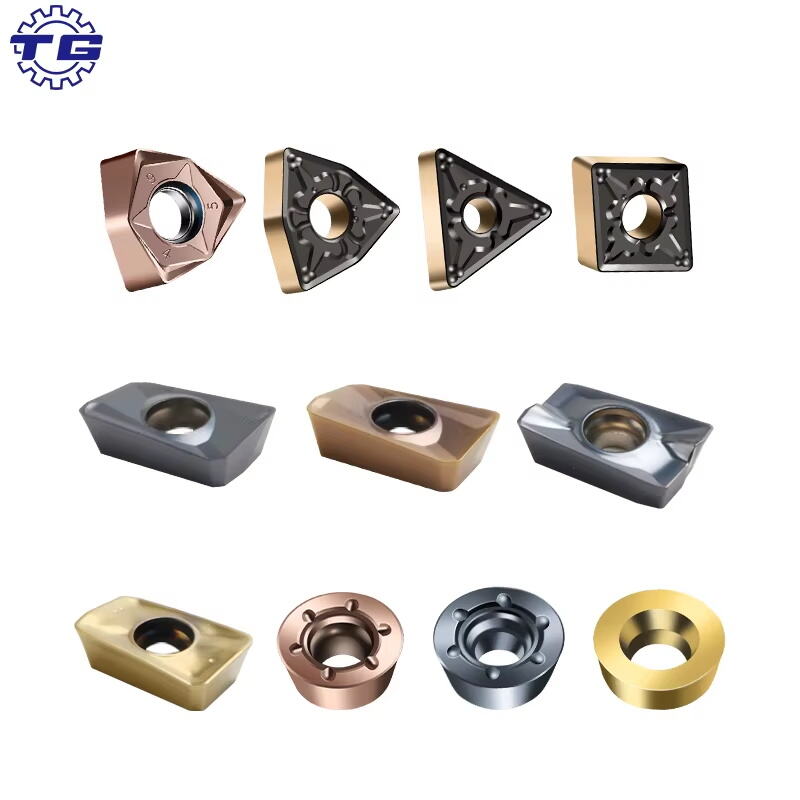
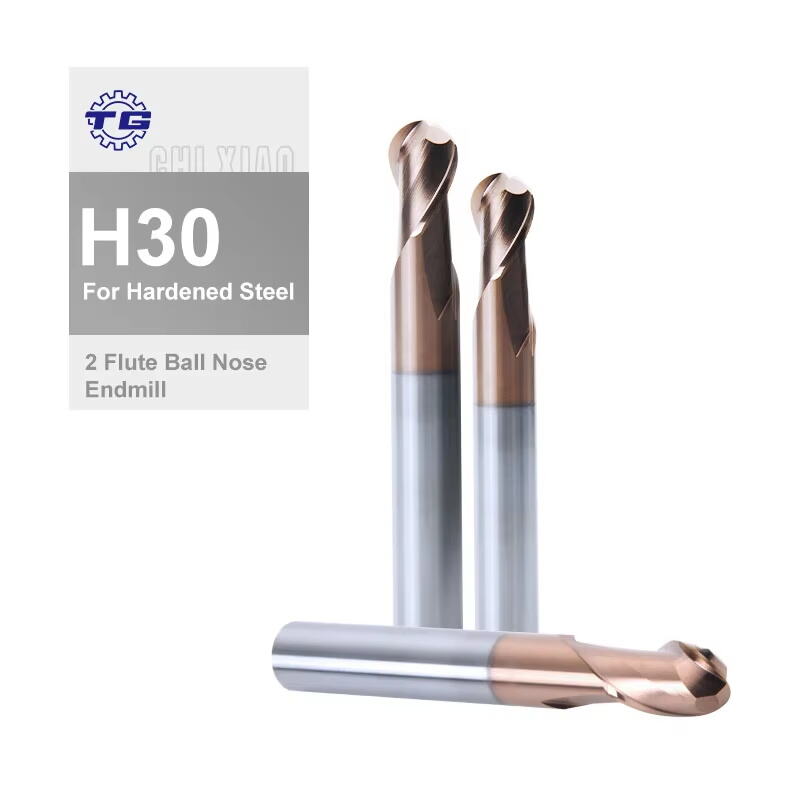
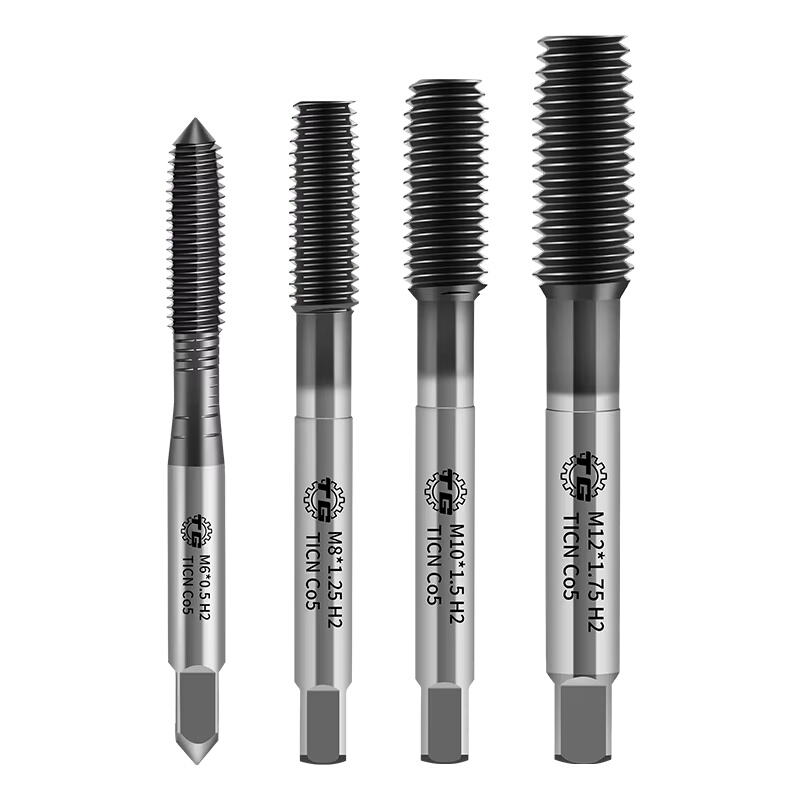
Contact me immediately if you encounter problems!

All Categories

carbide thread milling cutter

The carbide thread milling cutter represents a cutting-edge solution in modern manufacturing, designed to create precise internal and external threads across various materials with exceptional accuracy and efficiency. This specialized cutting tool combines advanced carbide materials with sophisticated geometries to deliver superior threading performance in demanding machining environments. Unlike traditional taps or dies, the carbide thread milling cutter operates through a helical interpolation process, where the cutter follows a programmed spiral path to generate threads of virtually any size or pitch. The main function of this tool centers on producing high-quality threaded holes and external threads while maintaining tight tolerances and excellent surface finishes. Its technological features include multiple cutting edges strategically positioned around the tool body, enabling continuous chip removal and reduced cutting forces during operation. The carbide construction provides remarkable hardness and wear resistance, allowing the tool to maintain sharp cutting edges throughout extended production runs. Modern carbide thread milling cutters incorporate precision-ground flutes that facilitate efficient chip evacuation, preventing chip accumulation that could compromise thread quality or damage the workpiece. The tools feature specially engineered cutting edge geometries that minimize vibration and chatter, resulting in smooth threading operations even in challenging materials like hardened steels, titanium alloys, and heat-resistant superalloys. Applications span diverse industries including aerospace manufacturing, automotive production, medical device fabrication, energy sector equipment, and general precision engineering. These cutters excel in creating threads in deep holes where traditional taps might break, in interrupted cuts where material consistency varies, and in situations requiring multiple thread sizes from a single tool. The versatility of carbide thread milling cutters makes them indispensable for both prototype development and high-volume production environments, offering manufacturers a reliable solution for thread generation across different materials, thread standards, and production requirements while maintaining consistent quality throughout the manufacturing process.

New Product Recommendations

Choosing a carbide thread milling cutter delivers numerous practical benefits that directly impact your production efficiency and bottom line. First, these tools significantly reduce your inventory costs because one carbide thread milling cutter can produce multiple thread sizes, eliminating the need to stock dozens of individual taps for different applications. This versatility translates into immediate cost savings and simplified tool management in your workshop. The durability of carbide material means your cutters last substantially longer than traditional high-speed steel alternatives, reducing replacement frequency and minimizing production interruptions for tool changes. You will notice improved thread quality with consistently smooth surface finishes and accurate thread profiles that meet or exceed industry standards, reducing rejection rates and rework expenses. The carbide thread milling cutter operates at higher cutting speeds than conventional threading methods, accelerating your production cycle and increasing throughput without sacrificing quality. When threading deep holes, these cutters provide a decisive advantage because they cannot break off inside the workpiece like taps often do, preventing costly scrap and time-consuming extraction procedures. Your operators will appreciate the reduced risk of tool breakage, which enhances workplace safety and confidence during threading operations. These cutters handle interrupted cuts smoothly, maintaining performance when threading through cross-holes, keyways, or other material discontinuities that would challenge traditional taps. You gain flexibility in thread direction because carbide thread milling cutters can produce both right-hand and left-hand threads with the same tool, simply by reversing the programmed toolpath. The precision of the milling process allows you to achieve tighter tolerances consistently, ensuring proper fit and function in threaded assemblies. Material versatility stands out as another significant advantage, as these cutters machine everything from soft aluminum to hardened tool steels and exotic alloys without requiring different tool types. Your maintenance costs decrease because carbide thread milling cutters resist wear effectively, maintaining dimensional accuracy throughout their service life. The elimination of specialized coolant requirements simplifies your machining setup, though proper coolant application still enhances performance and extends tool life. Thread repairs become straightforward because you can use the same cutter to chase existing threads, restoring damaged threads without removing excessive material. The controlled chip formation during thread milling prevents the chip packing problems common with tapping, especially in ductile materials that produce long, stringy chips. Your quality control processes benefit from the repeatability these cutters provide, ensuring every threaded hole matches specifications across production runs. Investment in carbide thread milling cutters pays dividends through reduced tooling costs, increased productivity, improved quality, enhanced operational flexibility, and decreased scrap rates, making them an intelligent choice for manufacturers seeking competitive advantages in threading operations.

Tips And Tricks

How to Choose the Right Milling Cutter for Your Project?

10

Feb

How to Choose the Right Milling Cutter for Your Project?

Selecting the appropriate milling cutter for your machining project is a critical decision that directly impacts production efficiency, surface finish quality, and overall manufacturing costs. Whether you're working with aluminum, steel, or exotic al...
View More
What Types of Milling Cutter Tools Are Best for Different Materials?

28

Feb

What Types of Milling Cutter Tools Are Best for Different Materials?

Modern manufacturing relies heavily on precision machining to create complex components across various industries. The selection of appropriate milling cutter tools forms the cornerstone of successful CNC operations, directly impacting surface finish...
View More
Why Endmills Are Crucial in CNC Milling Operations

28

Feb

Why Endmills Are Crucial in CNC Milling Operations

CNC milling operations form the backbone of modern manufacturing, transforming raw materials into precision components that power industries worldwide. At the heart of these sophisticated machining processes lie endmills, cutting tools that define th...
View More
Why Advanced Holemaking Methods Improve Product Quality

31

Mar

Why Advanced Holemaking Methods Improve Product Quality

Manufacturing precision directly correlates with product quality, and nowhere is this relationship more evident than in holemaking operations. Advanced holemaking methods represent a significant evolution from traditional drilling techniques, offerin...
View More

Get a Free Quote

Our representative will contact you soon.
Email
Mobile
Name
Company Name
Message
0/1000

carbide thread milling cutter

Exceptional Tool Life and Cost-Effectiveness Through Advanced Carbide Engineering

Exceptional Tool Life and Cost-Effectiveness Through Advanced Carbide Engineering

The carbide thread milling cutter delivers outstanding value through its exceptional longevity and cost-effectiveness, characteristics that stem from the advanced engineering and material science behind its construction. Carbide materials possess inherent properties that make them ideal for demanding threading applications, offering hardness levels that far exceed traditional tool steels while maintaining sufficient toughness to resist fracture under cutting loads. This unique combination allows the carbide thread milling cutter to maintain sharp cutting edges through thousands of threading operations, dramatically outlasting conventional taps and dies. The extended tool life directly translates into reduced tooling expenses, as you purchase replacement cutters far less frequently than traditional threading tools. Beyond simple replacement costs, the longevity of these cutters minimizes production disruptions for tool changes, keeping your machines running productively instead of sitting idle during changeovers. The economic benefits extend to reduced inventory carrying costs, as the versatility of a single carbide thread milling cutter to produce multiple thread sizes means you stock fewer tools overall. This consolidation simplifies inventory management, reduces storage space requirements, and decreases capital tied up in tooling assets. The wear resistance of carbide ensures consistent thread dimensions throughout the tool's service life, maintaining quality standards from the first thread to the last before replacement becomes necessary. This dimensional stability eliminates the gradual quality degradation common with softer tool materials that slowly lose their edge geometry through wear. Your quality assurance processes become more predictable and reliable when using carbide thread milling cutters because the tools perform consistently across extended production runs. The initial investment in carbide thread milling cutters pays returns through cumulative savings on tool purchases, reduced machine downtime, lower scrap rates from tool-related defects, and decreased labor costs associated with frequent tool changes. Manufacturing environments operating multiple shifts particularly benefit from the endurance of carbide thread milling cutters, as the tools reliably perform through extended production periods without requiring constant attention or replacement. The cost-effectiveness calculation must also consider the superior thread quality these cutters produce, which reduces rejection rates and eliminates expensive rework operations. When you factor in all these elements, the carbide thread milling cutter emerges as a financially smart choice that improves your operational efficiency while reducing overall threading costs, making it an investment that strengthens your competitive position in the marketplace.
Unmatched Versatility Enabling Multiple Threading Applications With Single Tool

Unmatched Versatility Enabling Multiple Threading Applications With Single Tool

The remarkable versatility of the carbide thread milling cutter revolutionizes how manufacturers approach threading operations, offering unprecedented flexibility that transforms production capabilities and operational efficiency. This versatility manifests in multiple dimensions, starting with the ability to produce various thread sizes from a single cutter, a capability that fundamentally changes tooling requirements and inventory management. Traditional tapping requires dedicated tools for each thread size, forcing manufacturers to maintain extensive tap inventories covering all specifications they might encounter. The carbide thread milling cutter eliminates this constraint because the helical interpolation process allows diameter adjustment through programmed toolpaths rather than fixed tool dimensions. You can generate threads ranging from slightly undersized to slightly oversized compared to the nominal cutter diameter, providing flexibility to accommodate different tolerance requirements or material spring-back characteristics. This adaptability extends to thread pitch, as many carbide thread milling cutters feature multi-form designs that accommodate several pitch values, further reducing the number of tools required in your facility. The directional versatility represents another significant advantage, with the same cutter producing both right-hand and left-hand threads simply by programming the appropriate helical direction. This bidirectional capability proves particularly valuable when products require both thread orientations, eliminating tool changes and setup time between operations. Material versatility distinguishes the carbide thread milling cutter as well, as these tools successfully machine threads in materials spanning the hardness spectrum from soft non-ferrous metals to hardened tool steels and challenging aerospace alloys. The consistent performance across material types simplifies your process planning and reduces the specialized knowledge required for threading different materials. Geometric versatility allows carbide thread milling cutters to create threads in challenging configurations, including threads in deep holes where tap length limitations would require special tooling, threads starting close to shoulders where tap chamfers cannot fit, and threads in thin-walled components where tap torque might cause distortion. The tools handle interrupted cuts that would break taps, making them ideal for threading through cross-holes, keyways, or castings with porosity. Application versatility extends from prototype shops producing one-off parts to high-volume production lines running thousands of identical components, with the carbide thread milling cutter delivering appropriate performance in both contexts. Your programming flexibility increases because these cutters work with various thread standards including metric, unified, pipe threads, and custom specifications, all achievable with appropriate programming rather than specialized tools. This comprehensive versatility consolidates threading capabilities into fewer tools, simplifying operations, reducing costs, and expanding your threading capabilities beyond what traditional methods could achieve.

Superior Thread Quality and Precision for Critical Manufacturing Applications

Superior Thread Quality and Precision for Critical Manufacturing Applications

The carbide thread milling cutter produces thread quality and precision that meets the exacting requirements of critical manufacturing applications across industries where thread integrity directly impacts product performance and safety. This superior quality stems from multiple factors inherent in the thread milling process and the carbide tool construction. The controlled cutting action of thread milling generates smooth surface finishes on thread flanks, reducing friction in threaded assemblies and improving the fatigue resistance of threaded connections subjected to cyclic loading. The precision-ground cutting edges of carbide thread milling cutters maintain consistent geometry throughout their service life, ensuring that every thread produced matches specifications regardless of whether it is the first thread or the thousandth thread generated by that tool. This consistency proves crucial in industries like aerospace and medical device manufacturing where thread variations can compromise product functionality or safety. The thread milling process eliminates the radial forces that tapping imposes on workpieces, preventing distortion in thin-walled components and maintaining positional accuracy in precisely located thread features. Your threaded holes remain concentric and perpendicular to datum surfaces because the controlled toolpath of thread milling avoids the alignment issues that can occur when taps follow the path of least resistance through material variations. The carbide thread milling cutter produces complete thread forms without the incomplete threads at the hole bottom that taps create, maximizing the number of usable threads and improving joint strength in applications where every thread counts. Thread dimensions remain accurate because the cutting process removes material predictably without the work-hardening effects that tapping can induce in certain materials, particularly stainless steels and nickel alloys that strain-harden readily. The surface integrity of threads produced by carbide thread milling cutters shows minimal subsurface damage or residual stress compared to forming processes, contributing to improved fatigue life in dynamic loading applications. Your quality control measurements will show tighter thread tolerance distributions when using carbide thread milling cutters compared to taps, indicating superior process capability and reduced variation. The thread form accuracy extends to thread angle, pitch diameter, and minor diameter, with all parameters remaining within specification consistently. This precision enables proper fit between mating threads, ensuring that assemblies achieve specified preload values when torqued and that threaded connections function reliably throughout product service life. Industries demanding traceability and documentation benefit from the predictable, repeatable performance of carbide thread milling cutters, as the stable process generates statistical process control data that demonstrates ongoing capability. The quality advantages include freedom from burrs at thread exits, reducing secondary deburring operations and associated costs while improving assembly ergonomics and safety. Thread repairs performed with carbide thread milling cutters restore original specifications accurately, maintaining the integrity of valuable components rather than scrapping them due to threading defects. The combination of surface finish, dimensional accuracy, geometric precision, and process consistency makes the carbide thread milling cutter the preferred choice for manufacturers who cannot compromise on thread quality.
carbide thread milling cutter-0
carbide thread milling cutter-1

Get a Free Quote

Our representative will contact you soon.
Email
Mobile
Name
Company Name
Message
0/1000