Contact me immediately if you encounter problems!

All Categories

internal thread tap

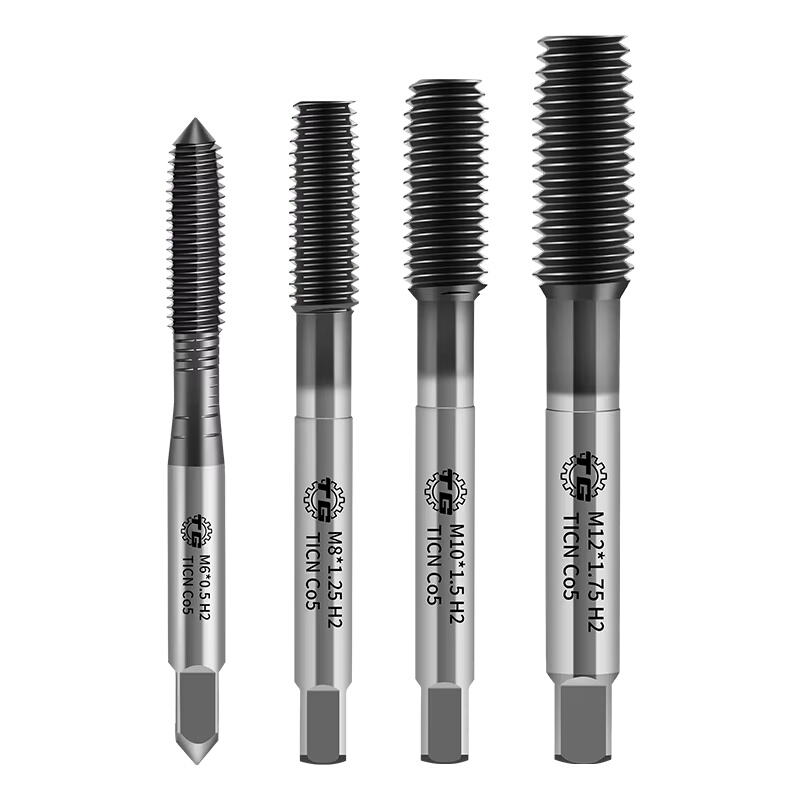
An internal thread tap represents a precision cutting tool designed specifically for creating threaded holes inside workpieces made from various materials including metals, plastics, and composites. This essential machining instrument serves manufacturing facilities, repair shops, and fabrication operations worldwide by producing accurate female threads that accept bolts, screws, and other fastening components. The internal thread tap operates through a methodical cutting process where its helical flutes remove material progressively as the tool rotates and advances into a pre-drilled pilot hole. Engineers and machinists rely on these tools to establish secure mechanical connections in assemblies ranging from automotive engines to aerospace structures. The design incorporates multiple cutting edges distributed along spiral or straight flutes that evacuate chips efficiently while maintaining dimensional accuracy throughout the threading operation. Modern internal thread tap manufacturing employs high-speed steel, cobalt steel alloys, or carbide materials to ensure extended service life and consistent performance across diverse production environments. The tool geometry features precisely ground cutting edges, relief angles, and chamfer lengths calibrated for specific material characteristics and thread specifications. Industrial applications demand internal thread tap solutions that deliver repeatability, durability, and compatibility with both manual operations and computer numerical control machinery. Threading operations utilize these tools in through-holes and blind holes, with specialized designs addressing each configuration's unique requirements. The internal thread tap remains indispensable for maintenance technicians performing repair work, prototype developers creating custom components, and production specialists manufacturing high-volume assemblies. Quality threading ensures proper load distribution, vibration resistance, and assembly integrity across mechanical systems. Whether establishing metric threads, unified national coarse threads, or specialized pipe threads, the internal thread tap provides manufacturers with reliable performance that meets stringent tolerance requirements and surface finish specifications demanded by contemporary engineering standards.


Popular Products

Implementing an internal thread tap in your workshop or production facility delivers immediate benefits that enhance both operational efficiency and final product quality. This threading solution reduces manufacturing costs significantly by eliminating the need for expensive welding operations or complex fastening alternatives that require additional hardware components. The straightforward installation process allows operators to create threaded holes quickly without extensive training periods, enabling new team members to contribute productively within minimal timeframes. Users appreciate how the internal thread tap produces clean, precise threads that ensure proper fit between mating components, reducing assembly difficulties and minimizing rejection rates caused by dimensional inconsistencies. The versatility of this tool accommodates various thread sizes and pitches, meaning workshops can address diverse project requirements without maintaining extensive inventories of specialized equipment for each application. Material compatibility extends across aluminum, steel, stainless steel, brass, bronze, and engineering plastics, providing flexibility to support multiple product lines with single tooling investments. Maintenance demands remain minimal compared to alternative threading methods, as proper cleaning and occasional sharpening restore cutting performance without requiring complete tool replacement. The compact design occupies limited storage space while delivering capabilities comparable to larger, more complex machinery systems. Production environments benefit from the speed advantages as internal thread tap operations complete threading tasks substantially faster than alternative methods like thread milling or single-point threading on lathes. The resulting threads exhibit superior strength characteristics because the cutting action work-hardens the material along thread flanks, creating more durable connections than cast or molded threads. Cost-effectiveness extends beyond initial tool purchase as the internal thread tap generates minimal waste material and requires no consumable supplies beyond standard cutting fluids. Operators working with these tools experience consistent results across production runs, supporting quality control initiatives and reducing variability in assembled products. The ability to repair damaged threads in existing components prevents costly part replacements and extends equipment service life throughout industrial operations. Businesses appreciate how internal thread tap technology scales efficiently from prototype development through high-volume manufacturing without requiring different process approaches or equipment changes that disrupt established workflows and training protocols.

Practical Tips

What is high speed steel and how does it work?

30

Dec

What is high speed steel and how does it work?

High speed steel represents one of the most significant innovations in metallurgy and machining technology. This specialized alloy has revolutionized manufacturing processes across countless industries, enabling precision cutting operations at speeds...
View More
Which drill bit type works best for concrete projects?

30

Dec

Which drill bit type works best for concrete projects?

Selecting the right drill bit for concrete projects can make the difference between a successful installation and a frustrating experience filled with broken tools and damaged materials. Concrete drilling requires specialized equipment designed to ha...
View More
Why Endmills Are Crucial in CNC Milling Operations

28

Feb

Why Endmills Are Crucial in CNC Milling Operations

CNC milling operations form the backbone of modern manufacturing, transforming raw materials into precision components that power industries worldwide. At the heart of these sophisticated machining processes lie endmills, cutting tools that define th...
View More
What are the main uses of tungsten carbide?

28

Feb

What are the main uses of tungsten carbide?

Tungsten carbide represents one of the most versatile and durable materials in modern industrial applications, combining exceptional hardness with remarkable wear resistance. This compound material, formed by combining tungsten and carbon atoms in eq...
View More

Get a Free Quote

Our representative will contact you soon.
Email
Mobile
Name
Company Name
Message
0/1000

internal thread tap

Precision Engineering for Superior Thread Quality

Precision Engineering for Superior Thread Quality

The internal thread tap achieves exceptional threading accuracy through carefully engineered design elements that distinguish it from conventional cutting tools. Manufacturing processes employ advanced grinding techniques that create cutting edges with micrometer-level precision, ensuring each thread profile matches specifications exactly throughout the tool's operational lifespan. The flute geometry incorporates mathematical calculations that optimize chip formation and evacuation, preventing material buildup that could compromise thread dimensions or surface finish quality. Thread crest and root profiles conform to international standards including ISO, ANSI, and DIN specifications, guaranteeing compatibility with fasteners sourced from global suppliers. This precision engineering translates directly into assembly benefits as properly formed threads distribute mechanical loads uniformly across engagement surfaces, maximizing joint strength and preventing premature failure under operational stresses. The internal thread tap maintains consistent pitch accuracy along the entire thread length, eliminating cumulative errors that affect longer threaded sections and ensuring proper engagement regardless of bolt insertion depth. Chamfer design at the tool's leading end gradually introduces cutting action, reducing initial torque requirements and preventing workpiece distortion that occurs when aggressive cutting forces concentrate at entry points. Relief angles ground behind cutting edges minimize friction between the tool and newly formed thread surfaces, reducing heat generation that could affect material properties or dimensional stability. Users working with critical applications such as hydraulic fittings, pressure vessels, or structural connections depend on this precision to meet safety certifications and performance standards. The consistency delivered by quality internal thread tap manufacturing enables automated inspection processes to verify thread dimensions efficiently, supporting lean manufacturing initiatives that reduce quality control bottlenecks. Precision threading also eliminates the need for secondary operations like thread chasing or manual finishing that add cost and complexity to production sequences. When aerospace manufacturers specify thread tolerances measured in ten-thousandths of an inch, or medical device producers require biocompatible surface finishes, the engineered precision of the internal thread tap becomes not merely advantageous but absolutely essential for regulatory compliance and product validation protocols.
Versatile Application Across Industries and Materials

Versatile Application Across Industries and Materials

The internal thread tap demonstrates remarkable adaptability across manufacturing sectors ranging from automotive production facilities to electronics assembly operations, making it an invaluable asset for businesses serving multiple markets. This versatility stems from the availability of specialized coatings, geometry variations, and material compositions tailored for specific cutting conditions and workpiece characteristics. Titanium nitride coatings extend tool life when threading abrasive materials, while titanium carbonitride treatments provide enhanced hardness for demanding applications involving hardened steels or heat-resistant alloys. Manufacturers can select spiral flute designs that actively pull chips forward out of blind holes, preventing chip packing that damages threads or breaks tools during deep-hole operations. Straight flute configurations excel in through-hole applications where chips can evacuate freely in either direction, offering economical solutions for high-volume production environments. The internal thread tap accommodates thread sizes spanning from miniature M1 metric threads used in precision instruments to large-diameter threads exceeding two inches found in heavy equipment assemblies. This size flexibility allows maintenance departments to consolidate tooling suppliers and standardize procurement processes while ensuring appropriate solutions remain available for every repair scenario. Material-specific geometries address the unique cutting characteristics of different workpiece materials, with dedicated designs for aluminum that feature polished flutes to prevent material adhesion, and others optimized for stainless steel that resist work-hardening through controlled cutting edge engagement. Moldmakers appreciate internal thread tap options designed for threading mold plates and inserts where thread integrity directly impacts production part quality and tool longevity. Electronics manufacturers utilize miniature versions for threading printed circuit board mounting holes and enclosure fastening points where precision positioning proves critical. The construction industry employs larger internal thread tap sizes for structural steel fabrication, creating connection points that meet building code requirements for seismic resistance and load-bearing capacity. Pipeline operations depend on pipe thread variants that establish leak-proof connections in fluid handling systems operating under pressure and temperature extremes. This cross-industry applicability means businesses investing in comprehensive internal thread tap inventories gain capabilities to pursue diverse opportunities without encountering technical limitations that restrict market participation or require subcontracting arrangements that reduce profit margins.
Economic Efficiency Through Extended Tool Performance

Economic Efficiency Through Extended Tool Performance

Investing in quality internal thread tap solutions delivers substantial economic returns through multiple cost-reduction mechanisms that improve bottom-line performance across manufacturing operations. Tool longevity represents a primary financial advantage as premium cutting materials and advanced coatings enable thousands of threading operations before replacement becomes necessary, dramatically reducing per-part tooling costs compared to disposable alternatives. The cutting geometry distributes wear across multiple flutes, preventing rapid degradation that affects tools with fewer cutting edges and ensuring consistent performance throughout the service interval. Users can further extend operational life through proper maintenance practices including regular cleaning to remove accumulated chips and cutting fluid residues that accelerate wear through abrasive action. Reconditioning services restore cutting edge sharpness through precision grinding, often returning tools to near-original performance at fractions of replacement costs, making the internal thread tap an environmentally sustainable choice that reduces industrial waste streams. Labor efficiency gains compound these direct tooling savings as the straightforward threading process requires minimal setup time compared to alternative methods involving multiple tool changes or complex machine programming sequences. Operators complete threading operations in seconds rather than minutes, multiplying productivity across shifts and enabling smaller workforces to achieve higher output volumes. The elimination of secondary operations such as deburring or thread finishing reduces handling steps that consume time and introduce opportunities for workpiece damage or dimensional variation. Quality improvements associated with internal thread tap usage reduce scrap rates and rework expenses that erode profitability in manufacturing environments struggling with inconsistent processes. Preventive maintenance applications using these tools to restore damaged threads avoid complete component replacement costs that escalate rapidly for large castings, forgings, or machined assemblies representing substantial material and processing investments. Inventory optimization becomes possible as standard internal thread tap sizes address numerous applications, reducing the variety of specialized fastening hardware businesses must stock to support assembly operations and service requirements. Energy consumption remains minimal since threading operations require modest spindle power compared to material removal processes like drilling large diameter holes or milling complex profiles. The compact footprint means internal thread tap operations integrate easily into existing workflows without requiring dedicated floor space or auxiliary equipment investments that strain capital budgets. Businesses evaluating total cost of ownership find that quality threading tools deliver returns extending across multiple fiscal periods, justifying premium initial investments through sustained performance advantages that cheaper alternatives cannot match over equivalent production volumes and time horizons.
internal thread tap-0
internal thread tap-1

Get a Free Quote

Our representative will contact you soon.
Email
Mobile
Name
Company Name
Message
0/1000