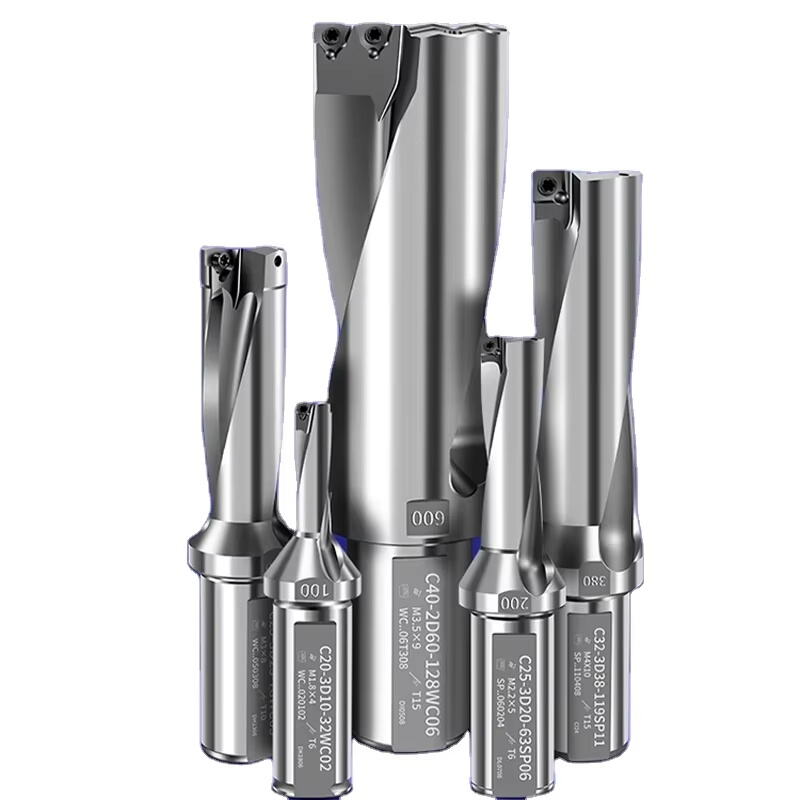
Versatile Multi-Material Drilling Capability
The exceptional versatility of hss tin drill bits enables them to perform effectively across an impressive range of materials, eliminating the need for specialized bits in many applications and simplifying tool selection for diverse projects. This multi-material capability stems from the combination of the high-speed steel's balanced properties and the titanium nitride coating's friction-reducing characteristics, creating a tool that adapts well to varying drilling conditions and workpiece properties. When working with wood, hss tin drill bits produce clean holes with minimal tear-out, their sharp cutting edges slicing fibers rather than tearing them. The coating prevents pitch and resin accumulation that would otherwise gum up the flutes and impede chip clearance, maintaining consistent performance throughout extended woodworking sessions. For softwoods like pine or cedar, these bits drill rapidly with little effort, while in hardwoods such as oak or maple, they maintain sharpness and cutting efficiency where standard bits would quickly dull. Metal drilling showcases the true capabilities of hss tin drill bits, as they handle everything from soft aluminum to tougher stainless steel with appropriate speeds and feeds. In mild steel and carbon steel applications, these bits create precise holes with excellent surface finish, the titanium nitride coating shedding chips efficiently and preventing work-hardening of the hole surface. Aluminum drilling benefits from the coating's non-stick properties, as this material tends to adhere to cutting tools and build up on cutting edges. The smooth surface prevents aluminum welding to the bit, maintaining sharp, effective cutting geometry. Stainless steel, notorious for work-hardening and generating extreme heat during machining, becomes manageable with hss tin drill bits when proper techniques are employed. The coating's heat resistance and the high-speed steel's hot hardness work together to penetrate this challenging material while maintaining tool integrity. Plastic materials, from soft polyethylene to harder polycarbonate, drill cleanly without the melting or grabbing issues that occur with inappropriate tooling. The reduced friction minimizes heat input that could soften or deform plastics, while the sharp cutting edges produce smooth hole walls. Composite materials, increasingly common in modern manufacturing and construction, respond well to hss tin drill bits, which can handle the varying properties within layered or reinforced structures. The versatility extends to drilling through multiple materials in a single operation, such as when installing fasteners through metal brackets into wood framing or penetrating fiberglass panels with metal backing. This multi-material competence makes hss tin drill bits the logical choice for general workshops, mobile service applications, and any environment where material variety is the norm rather than the exception.

 EN
EN