Contact me immediately if you encounter problems!

All Categories

hss twist drill

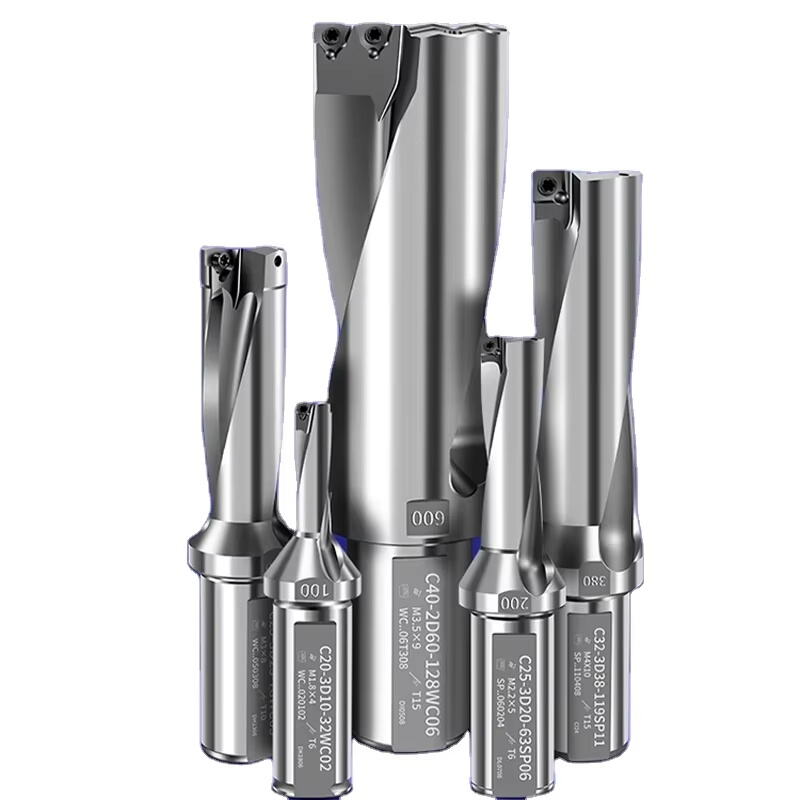
The hss twist drill represents a fundamental cutting tool utilized across manufacturing, construction, and metalworking industries for creating precise cylindrical holes in various materials. HSS stands for High-Speed Steel, a specialized alloy engineered to withstand elevated temperatures generated during high-velocity drilling operations without losing its hardness or cutting edge integrity. This twist drill features helical flutes that spiral around the drill body, designed to efficiently evacuate chips and debris from the cutting zone while simultaneously guiding the tool straight into the workpiece. The hss twist drill incorporates a pointed tip geometry, typically ground at a 118-degree or 135-degree angle, which initiates penetration and centers the drill accurately. The technological composition of high-speed steel includes tungsten, molybdenum, chromium, and vanadium, creating exceptional wear resistance and heat tolerance that surpasses conventional carbon steel tools. These drills maintain their cutting efficiency even when operating at speeds that would cause ordinary steel bits to soften and fail. The cylindrical shank allows secure clamping in drill chucks, power drills, drill presses, and CNC machinery, ensuring stable rotation during operation. The hss twist drill functions effectively on mild steel, aluminum, brass, copper, wood, plastic, and various composite materials, making it remarkably versatile for diverse applications. Manufacturing facilities employ these drills for production line operations, while construction professionals rely on them for structural metalwork and fabrication tasks. The flute design not only removes material waste but also creates channels for cutting fluid delivery, which further reduces heat buildup and extends tool longevity. Available in fractional, metric, and numbered sizing systems, the hss twist drill accommodates precision requirements ranging from delicate electronics assembly to heavy industrial machinery maintenance, establishing itself as an indispensable tool in professional and DIY workshops worldwide.


New Products

Choosing an hss twist drill delivers remarkable cost-effectiveness compared to premium carbide alternatives while maintaining excellent performance across most common drilling applications. These drills offer exceptional durability, with high-speed steel construction providing resistance to wear that allows repeated sharpening and extended service life, reducing your replacement costs significantly over time. You will notice immediate improvements in drilling speed and efficiency because the hss twist drill maintains its sharp cutting edge even under sustained operational stress and elevated temperatures. The versatility these tools provide eliminates the need for maintaining separate drill inventories for different materials, as a single hss twist drill handles steel, aluminum, wood, and plastics with equal competence. You can operate these drills at higher rotational speeds without experiencing premature dulling or heat-related failures that plague inferior drill bits, translating directly into faster project completion and increased productivity. The balanced geometry and precision manufacturing ensure straight, accurate holes with minimal wandering or deflection, reducing rework and material waste in your operations. Your maintenance requirements decrease substantially because hss twist drills tolerate occasional impacts and minor abuse that would chip or fracture more brittle cutting tools. The widespread availability of hss twist drills means you can source replacements quickly from virtually any industrial supplier or hardware retailer, preventing costly project delays. You benefit from standardized sizing that ensures compatibility with existing tooling systems and fixtures throughout your facility. The heat treatment processes applied during manufacturing create consistent hardness throughout the drill body, providing predictable performance characteristics that help you plan machining operations accurately. These drills require no special handling procedures or storage conditions, simplifying inventory management and reducing training requirements for operators. The economical price point allows you to maintain adequate spare tool quantities without excessive capital investment, ensuring production continuity. You gain flexibility in application methods, as hss twist drills perform reliably in handheld power drills, stationary drill presses, and automated CNC equipment alike. The proven track record spanning decades of industrial use provides confidence in performance reliability, while continuous manufacturing improvements deliver enhanced quality at competitive prices. Your operational safety improves because the predictable behavior of hss twist drills reduces unexpected tool failures that could create hazardous conditions or damage workpieces.

Practical Tips

How to choose the right drill bit size for your needs?

10

Feb

How to choose the right drill bit size for your needs?

Selecting the appropriate drill bit size is crucial for achieving precise holes, maintaining material integrity, and ensuring project success across various applications. Whether you're working with wood, metal, plastic, or composite materials, under...
View More
Why Do Milling Cutters Break and How to Prevent It?

10

Feb

Why Do Milling Cutters Break and How to Prevent It?

Manufacturing precision relies heavily on the performance and reliability of cutting tools, with the milling cutter serving as one of the most critical components in modern machining operations. Despite their robust design and engineering excellence,...
View More
How CNC Tools Improve Accuracy in Precision Manufacturing

28

Feb

How CNC Tools Improve Accuracy in Precision Manufacturing

Precision manufacturing has revolutionized modern industry by delivering components with unprecedented accuracy and consistency. At the heart of this technological advancement lies the sophisticated world of CNC tools, which have transformed how manu...
View More
Why Are Carbide End Mills Better for Metal Cutting?

31

Mar

Why Are Carbide End Mills Better for Metal Cutting?

When it comes to precision metal cutting operations, the choice of cutting tool directly impacts productivity, surface finish quality, and overall manufacturing costs. Carbide end mills have emerged as the preferred solution for demanding metal cutti...
View More

Get a Free Quote

Our representative will contact you soon.
Email
Mobile
Name
Company Name
Message
0/1000

hss twist drill

Superior Heat Resistance Through Advanced Metallurgy

Superior Heat Resistance Through Advanced Metallurgy

The hss twist drill achieves its exceptional performance capabilities through sophisticated metallurgical engineering that fundamentally distinguishes it from ordinary drilling tools. High-speed steel formulations incorporate carefully balanced proportions of alloying elements including tungsten, molybdenum, chromium, vanadium, and cobalt, each contributing specific properties that enhance cutting performance. Tungsten additions increase the steel's ability to maintain hardness at elevated temperatures, preventing the softening that causes conventional drills to fail during demanding operations. Molybdenum enhances toughness while reducing brittleness, allowing the hss twist drill to absorb impact forces without fracturing, which proves crucial when encountering hard spots or inclusions within workpiece materials. Chromium content improves corrosion resistance and contributes to overall wear resistance, extending tool life even in challenging environments involving cutting fluids or moisture exposure. Vanadium creates fine carbide particles distributed throughout the steel matrix, refining grain structure and increasing edge retention that keeps cutting surfaces sharper for extended periods. The heat treatment processes applied during manufacturing transform these raw materials into a cutting tool capable of withstanding temperatures exceeding 600 degrees Celsius without losing temper or hardness. This thermal stability allows machinists and fabricators to operate at optimal cutting speeds that maximize material removal rates without fear of premature tool degradation. When you compare this capability against carbon steel drills that soften at relatively modest temperatures, the performance advantage becomes immediately apparent in both productivity and tool longevity. The hss twist drill maintains dimensional stability under thermal cycling, ensuring that hole diameters remain consistent throughout extended production runs rather than gradually increasing as the tool expands from heat. This precision consistency reduces quality control issues and minimizes rejection rates in manufacturing environments where tolerance specifications demand strict adherence. The metallurgical properties also enable effective re-sharpening, as the uniform hardness throughout the drill body means grinding operations restore optimal geometry without encountering soft spots that compromise cutting edge integrity, providing remarkable economic value through multiple service cycles.
Optimized Flute Geometry for Efficient Material Removal

Optimized Flute Geometry for Efficient Material Removal

The distinctive helical flute design incorporated into every hss twist drill serves multiple critical functions that directly impact drilling performance, efficiency, and hole quality. These spiraling grooves machined along the drill body length create pathways that continuously evacuate chips and swarf from the cutting zone, preventing the accumulation of debris that would otherwise generate excessive friction, heat buildup, and ultimately tool failure. The helix angle, typically ranging between 25 and 35 degrees, represents a carefully engineered compromise balancing chip evacuation efficiency against structural strength and cutting edge support. Steeper helix angles facilitate faster chip removal, particularly beneficial when drilling deeper holes or working with materials that produce long, stringy chips, while more gradual angles provide enhanced rigidity for drilling harder materials that create smaller, more manageable chips. The flute depth and width dimensions determine chip storage capacity, with properly proportioned channels preventing chip packing that can seize the drill within the hole. Engineers designing hss twist drills calculate these parameters based on anticipated material types and drilling depths to optimize performance across intended application ranges. The polished finish applied to flute surfaces reduces friction between chips and the drill body, allowing smoother material flow that decreases power requirements and extends tool life. These channels also function as conduits delivering cutting fluid directly to the cutting edges, where coolant and lubrication prove most beneficial in controlling temperatures and reducing tool wear. The symmetrical flute arrangement around the drill axis ensures balanced cutting forces that minimize deflection and vibration, contributing to straighter holes with superior surface finish quality. As the hss twist drill rotates, the flutes create a pumping action that assists in drawing chips upward and outward from the hole, an effect that becomes increasingly important in deep hole drilling applications. The land area between flutes provides essential structural support maintaining drill rigidity, preventing the flexing and wobbling that compromises hole accuracy and concentricity. This thoughtful geometric optimization transforms the hss twist drill from a simple pointed rotating tool into a sophisticated cutting system that manages multiple simultaneous challenges inherent in material removal operations.
Versatile Point Geometry Adaptable to Diverse Materials

Versatile Point Geometry Adaptable to Diverse Materials

The point geometry ground onto the business end of an hss twist drill constitutes a critical feature determining its effectiveness across different materials and applications, with standard configurations offering broad versatility while specialized grinds address specific operational challenges. The conventional 118-degree point angle serves as the industry standard for general-purpose drilling, providing an effective compromise that performs adequately in materials ranging from soft plastics and wood through aluminum and mild steel. This angle creates a balanced relationship between cutting edge length and chisel edge width, distributing cutting forces appropriately while maintaining structural strength at the tip. When applications demand enhanced performance in harder materials like stainless steel or cast iron, the 135-degree point angle provides superior penetration characteristics by reducing thrust forces required for initial material engagement, which decreases drill walking and improves hole location accuracy. The hss twist drill point incorporates carefully controlled relief angles ground behind the cutting edges, creating clearance that prevents rubbing friction while maintaining adequate support to prevent edge collapse under cutting pressure. The chisel edge formed where the flutes intersect at the drill center represents a necessary geometric consequence of twist drill manufacturing, though it performs no actual cutting action. Advanced point grinds modify this chisel edge through web thinning operations that reduce its width, substantially decreasing the thrust force required to initiate drilling and improving the tool's self-centering characteristics. Split point grinding, a specialized modification increasingly common on quality hss twist drills, creates additional cutting edges that eliminate the chisel edge's non-cutting zone entirely, resulting in drills that penetrate materials with minimal pressure, resist walking across work surfaces, and generate less heat during initial engagement. These geometric refinements transform drilling from a brute-force material displacement process into a controlled cutting operation that produces cleaner holes with reduced burr formation. The point symmetry directly influences hole quality, with precisely ground points producing round, straight holes while asymmetric grinding causes oversize, out-of-round conditions and excessive tool wear. Manufacturers of premium hss twist drills employ CNC grinding systems ensuring point geometry consistency across production quantities, delivering predictable performance that professional users depend upon for maintaining quality standards and meeting dimensional specifications consistently across production runs.
hss twist drill-0
hss twist drill-1

Get a Free Quote

Our representative will contact you soon.
Email
Mobile
Name
Company Name
Message
0/1000