Contact me immediately if you encounter problems!

All Categories

cnc turning inserts

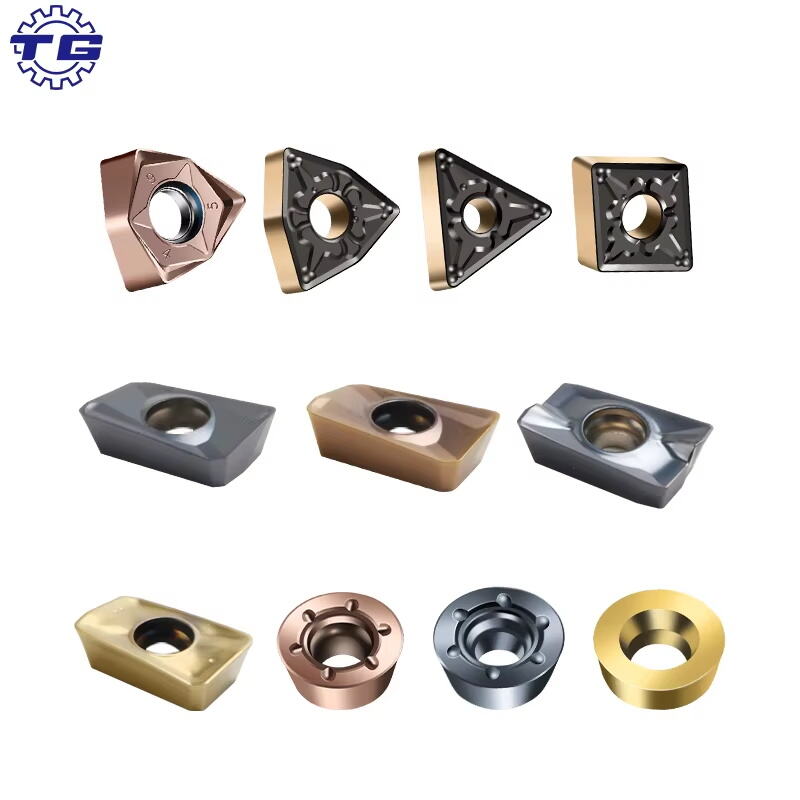
CNC turning inserts represent precision-engineered cutting tools that have revolutionized modern machining operations across manufacturing industries worldwide. These replaceable cutting edges are specifically designed to fit into tool holders mounted on CNC lathes and turning centers, enabling manufacturers to perform highly accurate material removal operations on rotating workpieces. The fundamental purpose of cnc turning inserts is to provide consistent, reliable cutting performance while offering exceptional versatility in machining various materials including steel, stainless steel, cast iron, aluminum, and exotic alloys. These indexable inserts feature multiple cutting edges, typically ranging from three to eight usable corners depending on the insert geometry, which significantly extends tool life and reduces operational costs. The technological innovation behind cnc turning inserts encompasses advanced substrate materials, sophisticated coating technologies, and precision-ground geometries that work together to optimize cutting performance. Manufactured from ultra-hard materials such as cemented carbide, ceramics, cubic boron nitride, or polycrystalline diamond, these inserts can withstand extreme cutting temperatures and forces encountered during high-speed machining operations. Modern cnc turning inserts incorporate chip breaker designs that control chip formation and evacuation, preventing chip entanglement and ensuring smooth machining processes. The standardized ISO coding system allows manufacturers to select appropriate inserts based on specific application requirements, including insert shape, clearance angle, tolerance class, and cutting edge configuration. Applications for cnc turning inserts span across automotive manufacturing, aerospace component production, oil and gas equipment fabrication, medical device manufacturing, and general engineering workshops. These versatile tools enable operations such as external turning, internal boring, facing, grooving, threading, and profiling with remarkable precision and repeatability. The quick-change capability of cnc turning inserts minimizes machine downtime, as worn cutting edges can be rapidly indexed or replaced without removing the entire tool holder from the machine, thereby maximizing production efficiency and maintaining tight dimensional tolerances throughout extended manufacturing runs.

Popular Products

The implementation of cnc turning inserts in manufacturing operations delivers substantial practical benefits that directly impact productivity, cost efficiency, and product quality. First and foremost, these inserts dramatically reduce tooling costs compared to traditional solid cutting tools because operators can simply index or replace the insert rather than purchasing entirely new tools when cutting edges become worn. This indexable design means you get multiple cutting edges from a single insert, effectively multiplying your tool investment and minimizing waste. The quick-change feature saves valuable production time, as machine operators can swap out inserts in seconds without complex tool adjustments or lengthy setup procedures, keeping your machines running and your production schedules on track. CNC turning inserts provide exceptional consistency in cutting performance, ensuring that each part you manufacture meets exact specifications with minimal variation, which is crucial for maintaining quality standards and reducing scrap rates. The advanced coating technologies applied to modern inserts create protective barriers that resist wear, reduce friction, and dissipate heat more effectively, allowing you to run your machines at higher cutting speeds and feed rates without compromising tool life. This increased productivity means you can complete jobs faster and take on more projects without investing in additional machinery. The versatility of cnc turning inserts enables you to machine a wide range of materials using the same tool holder system, simply by selecting the appropriate insert grade and geometry for your specific application, which reduces inventory complexity and storage requirements. These inserts maintain sharp cutting edges throughout their service life, producing superior surface finishes that often eliminate or reduce secondary finishing operations, saving additional time and labor costs. The predictable tool life of cnc turning inserts allows you to plan tool changes during scheduled maintenance windows rather than dealing with unexpected tool failures that halt production, improving overall equipment effectiveness and reducing unplanned downtime. Environmental benefits also factor into the advantages, as the reduced material waste and lower energy consumption associated with efficient cutting operations contribute to more sustainable manufacturing practices. The standardized design of cnc turning inserts ensures compatibility across different machine brands and models, providing flexibility in production planning and reducing the learning curve for operators who work with multiple machines. Additionally, the wide availability of technical support, application data, and troubleshooting resources from insert manufacturers helps you optimize cutting parameters and resolve any machining challenges quickly, ensuring your operations maintain peak performance levels consistently.

Practical Tips

What is high speed steel and how does it work?

30

Dec

What is high speed steel and how does it work?

High speed steel represents one of the most significant innovations in metallurgy and machining technology. This specialized alloy has revolutionized manufacturing processes across countless industries, enabling precision cutting operations at speeds...
View More
How to extend the lifespan of high-speed steel cutting tools?

20

Jan

How to extend the lifespan of high-speed steel cutting tools?

Modern manufacturing industries demand exceptional accuracy and efficiency in their machining operations, making steel precision cutting tools an indispensable component of successful production processes. These specialized instruments represent the ...
View More
Why Do Milling Cutters Break and How to Prevent It?

10

Feb

Why Do Milling Cutters Break and How to Prevent It?

Manufacturing precision relies heavily on the performance and reliability of cutting tools, with the milling cutter serving as one of the most critical components in modern machining operations. Despite their robust design and engineering excellence,...
View More
What are the main uses of tungsten carbide?

28

Feb

What are the main uses of tungsten carbide?

Tungsten carbide represents one of the most versatile and durable materials in modern industrial applications, combining exceptional hardness with remarkable wear resistance. This compound material, formed by combining tungsten and carbon atoms in eq...
View More

Get a Free Quote

Our representative will contact you soon.
Email
Mobile
Name
Company Name
Message
0/1000

cnc turning inserts

Advanced Material Composition and Coating Technology

Advanced Material Composition and Coating Technology

The superior performance of cnc turning inserts stems from their sophisticated material engineering and cutting-edge coating technologies that work synergistically to deliver exceptional cutting capabilities under demanding machining conditions. The substrate material forms the foundation of insert performance, with cemented carbide being the most widely used material due to its optimal balance of hardness, toughness, and thermal stability. This carbide composition consists of tungsten carbide particles bonded with cobalt, creating a material structure that maintains cutting edge integrity even under extreme pressures and temperatures encountered during high-speed machining operations. Different carbide grades are formulated with varying ratios of carbide particle size and binder content to match specific application requirements, from fine-grain grades offering superior wear resistance for finishing operations to tougher grades designed for interrupted cuts and rough machining. Beyond carbide, ceramic inserts provide exceptional hot hardness for high-speed machining of hardened materials, while cubic boron nitride inserts excel in machining extremely hard ferrous materials, and polycrystalline diamond inserts deliver unmatched performance in non-ferrous and abrasive materials. The coating technology applied to cnc turning inserts represents a critical advancement that extends tool life by factors of three to ten compared to uncoated inserts. Physical vapor deposition and chemical vapor deposition processes create thin, extremely hard coating layers that provide thermal barriers, reduce friction at the cutting interface, and prevent chemical reactions between the workpiece and tool material. Common coating materials include titanium nitride, titanium carbonitride, titanium aluminum nitride, and aluminum oxide, each offering specific performance characteristics. Multi-layer coating architectures combine different materials to leverage the complementary properties of each layer, with harder outer layers providing wear resistance and tougher inner layers preventing crack propagation. These advanced material technologies enable cnc turning inserts to maintain sharp cutting edges throughout extended machining cycles, deliver consistent chip control, produce superior surface finishes, and operate reliably across a broad range of cutting parameters, ultimately providing manufacturers with the performance reliability needed for competitive production operations in today's demanding manufacturing environment.
Precision Chip Breaker Geometry and Edge Preparation

Precision Chip Breaker Geometry and Edge Preparation

The geometric design of cnc turning inserts, particularly the chip breaker configuration and cutting edge preparation, plays a crucial role in determining machining performance, surface quality, and overall process reliability across diverse applications. Chip breaker geometry refers to the precisely engineered features ground or pressed into the insert rake face that control chip formation, curling, and evacuation during the cutting process. Effective chip control is essential because long, stringy chips can entangle around the workpiece or tool holder, creating safety hazards, damaging the workpiece surface, and potentially causing machine shutdowns. Modern cnc turning inserts feature application-specific chip breaker designs optimized for different material types, cutting depths, and feed rates, ensuring chips break into manageable segments that evacuate smoothly from the cutting zone. For finishing operations requiring light depths of cut and fine feeds, chip breakers incorporate narrow grooves and smaller obstruction angles that gently curl chips while maintaining minimal cutting forces. Conversely, roughing operations with heavy material removal rates require more aggressive chip breaker geometries with wider grooves and steeper angles to handle the increased chip volume and breaking force requirements. The three-dimensional complexity of modern chip breaker designs results from extensive research, computer modeling, and practical testing that optimizes chip flow patterns for specific operating windows. Cutting edge preparation represents another critical aspect of insert geometry that significantly influences performance characteristics. The intersection of the rake and flank faces creates the cutting edge, and how this edge is prepared determines its strength, sharpness, and wear resistance. Sharp edges provide low cutting forces and excellent surface finishes but may be prone to chipping in interrupted cuts or hard materials. Edge honing involves creating a small radius or chamfer along the cutting edge to strengthen it against micro-chipping while still maintaining good cutting action. Specific edge preparations are designated for different applications, from extra-sharp edges for aluminum machining to heavily reinforced edges for cast iron and hardened steel applications. The precision manufacturing processes used to create cnc turning inserts ensure that these geometric features maintain tight tolerances, providing consistent performance across all cutting edges of the insert and from insert to insert, which translates directly into predictable tool life, reliable surface finish quality, and reduced variability in manufacturing processes that depend on these critical cutting tool characteristics.
Versatile Application Range and Standardized Selection System

Versatile Application Range and Standardized Selection System

CNC turning inserts offer remarkable versatility in addressing diverse machining requirements across multiple industries, materials, and operation types, supported by an internationally standardized identification system that simplifies insert selection and ensures global compatibility. The application range for cnc turning inserts extends from general-purpose machining in job shops to highly specialized operations in aerospace, medical device manufacturing, automotive production, energy sector component fabrication, and precision instrument manufacturing. These inserts successfully machine an extensive material spectrum including low-carbon and alloy steels, stainless steel varieties, cast iron grades, non-ferrous metals like aluminum and copper alloys, exotic materials such as titanium and nickel-based superalloys, and even some composite materials with appropriate insert specifications. Different turning operations benefit from specific insert geometries and grades, with external turning inserts designed for cylindrical surface machining, boring inserts for internal diameter operations, facing inserts optimized for end-surface machining, grooving inserts for creating recesses and part-off operations, and threading inserts for producing internal and external threads. The ISO standardization system provides a logical framework for identifying and selecting appropriate cnc turning inserts based on application requirements. This coding system uses a series of letters and numbers to designate insert shape, such as triangular, square, diamond, or round configurations, each offering specific advantages in terms of strength, accessibility, and available cutting edge count. Additional code positions specify clearance angles, tolerance classes controlling dimensional accuracy, cutting edge configuration, insert size, nose radius, and cutting edge length. This standardized approach enables engineers and machinists worldwide to communicate insert specifications precisely and source compatible inserts from multiple manufacturers, reducing dependency on single suppliers and ensuring continuity of supply chains. The systematic organization of insert families according to application categories helps manufacturers maintain efficient inventory management by stocking a strategic selection of inserts that cover the majority of their machining requirements while minimizing the total number of different insert types needed. Technical resources including application guides, cutting data recommendations, and troubleshooting charts accompany the standardized insert system, empowering users to optimize cutting parameters, maximize tool life, and resolve machining challenges effectively. This combination of broad application versatility and systematic organization makes cnc turning inserts an indispensable element of modern manufacturing operations, providing the flexibility to adapt quickly to changing production requirements while maintaining the precision, efficiency, and cost-effectiveness that competitive manufacturing demands in today's global marketplace.

cnc turning inserts-0
cnc turning inserts-1

Get a Free Quote

Our representative will contact you soon.
Email
Mobile
Name
Company Name
Message
0/1000