Contact me immediately if you encounter problems!

All Categories

cnc milling cutters

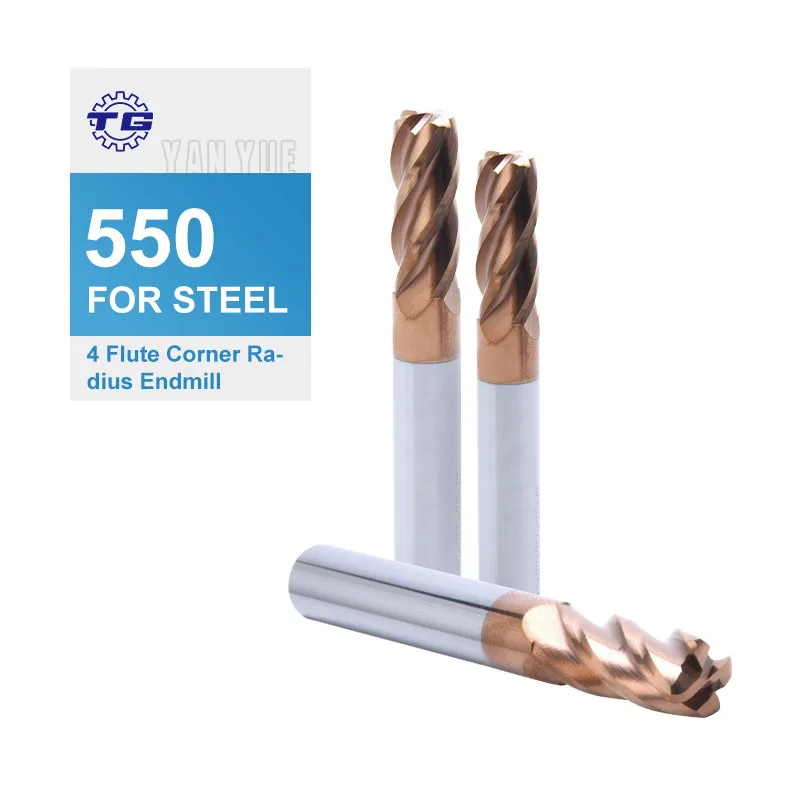
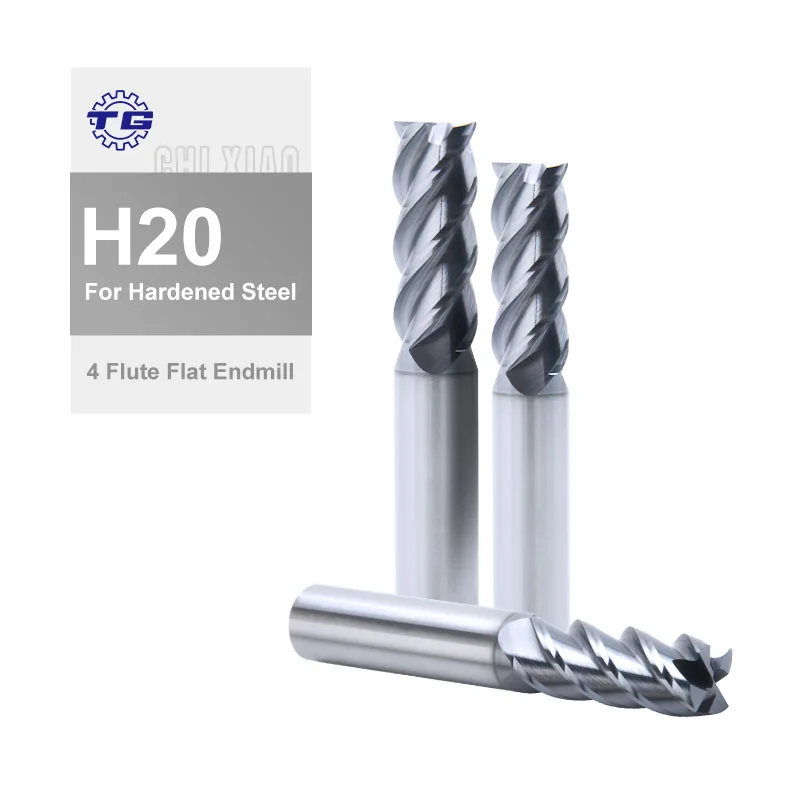
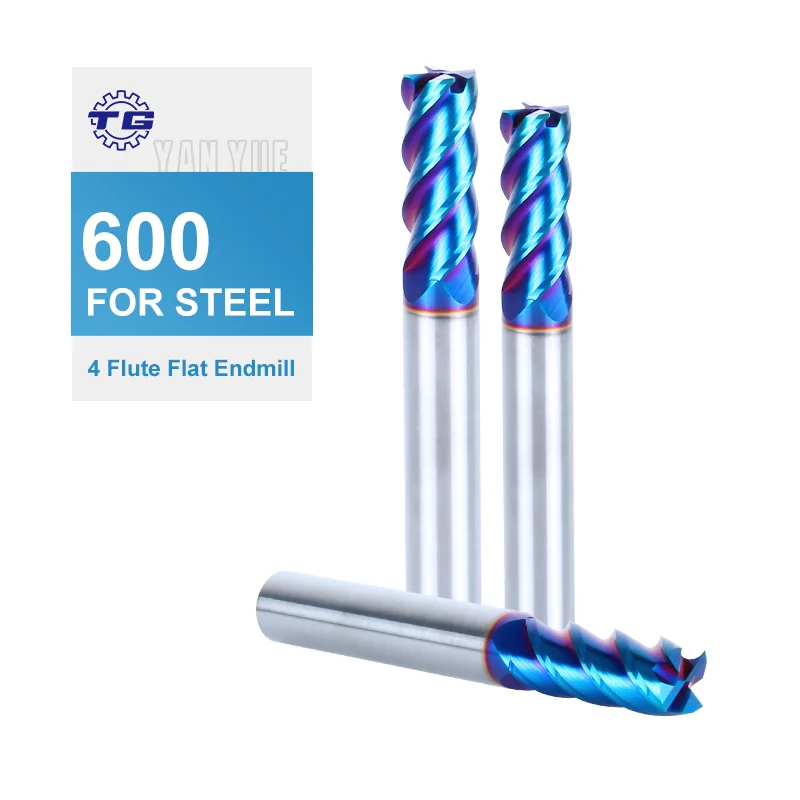
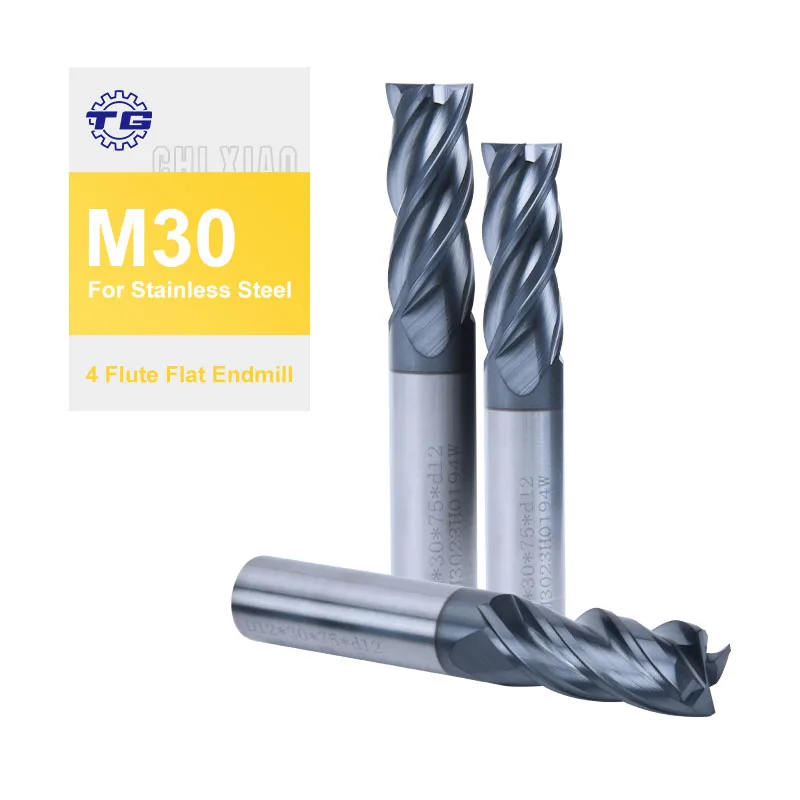
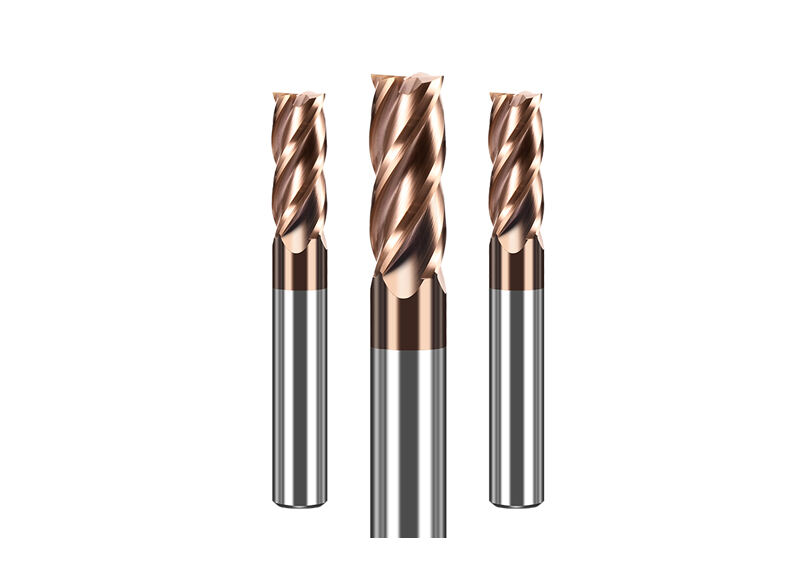
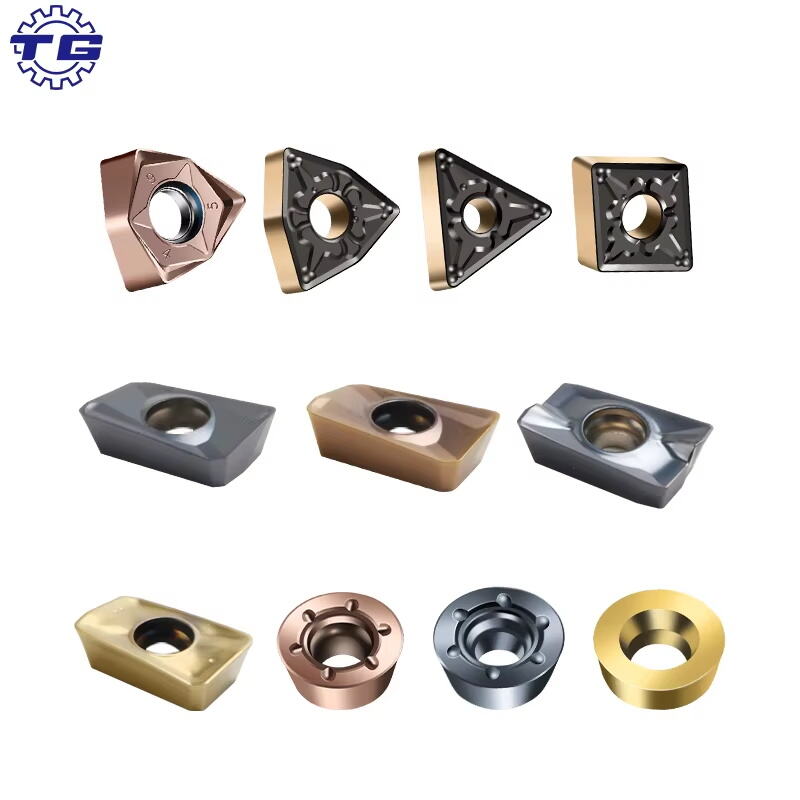
CNC milling cutters represent an essential component in modern manufacturing operations, serving as the primary cutting tools in computer numerical control machining centers. These precision-engineered instruments are designed to remove material from workpieces through rotational cutting action, enabling manufacturers to create complex geometries, smooth surfaces, and accurate dimensions across a wide range of materials. CNC milling cutters operate under automated control systems that execute pre-programmed sequences, ensuring consistent results throughout production runs. The main functions of CNC milling cutters include face milling for creating flat surfaces, peripheral milling for generating contours and profiles, slot cutting for producing grooves and keyways, drilling operations for hole creation, and contouring work for three-dimensional shapes. Technological features distinguish quality CNC milling cutters from conventional alternatives, including advanced coating technologies such as titanium nitride and diamond-like carbon that extend tool life and reduce friction during cutting operations. Modern CNC milling cutters incorporate optimized flute geometries that enhance chip evacuation, preventing material buildup and maintaining cutting efficiency throughout extended machining cycles. The applications for CNC milling cutters span numerous industrial sectors, from aerospace component manufacturing requiring tight tolerances and exotic material compatibility, to automotive production demanding high-volume repeatability and cost-effectiveness. Medical device fabrication relies on CNC milling cutters for creating surgical instruments and implantable components with biocompatible material processing capabilities. Electronics manufacturing utilizes specialized CNC milling cutters for circuit board fabrication and housing component production. Mold and die making industries depend on these cutting tools for creating intricate cavity shapes and precise parting line surfaces. The versatility of CNC milling cutters extends to materials including aluminum alloys, stainless steels, titanium compounds, plastics, composites, and hardened tool steels, making them indispensable across diverse manufacturing environments seeking precision, efficiency, and reliability in their machining operations.


New Products

The adoption of CNC milling cutters delivers substantial practical benefits that directly impact manufacturing efficiency and profitability. First, these cutting tools dramatically improve production accuracy, consistently achieving tolerances within microns across thousands of parts, eliminating the dimensional variations common with manual machining approaches. This precision translates to fewer rejected components, reduced rework costs, and enhanced product quality that strengthens customer satisfaction and brand reputation. Second, CNC milling cutters significantly accelerate production timelines by executing complex cutting patterns at optimal speeds without operator fatigue or attention lapses. A single setup can complete multiple operations that previously required several machines and manual interventions, reducing overall cycle times by forty to sixty percent in typical applications. This speed advantage enables manufacturers to fulfill orders faster, respond quickly to market demands, and improve cash flow through shortened production schedules. Third, the consistency provided by CNC milling cutters ensures every component matches specifications exactly, regardless of production volume or shift changes. This repeatability eliminates the skill variability inherent in manual operations, allowing companies to maintain quality standards even when experienced machinists are unavailable. Fourth, these cutting tools reduce material waste through precise cutting paths that maximize raw material utilization. The computer-controlled movements eliminate the excess removal common with conservative manual approaches, lowering material costs and supporting sustainability initiatives. Fifth, CNC milling cutters enhance workplace safety by enclosing cutting operations within machine guards and minimizing direct operator contact with rotating tooling and sharp edges. This protection reduces injury risks and associated costs while creating a more secure working environment. Sixth, the versatility of CNC milling cutters allows manufacturers to handle diverse projects without extensive tooling changes or lengthy setup procedures. A single machine equipped with appropriate cutters can transition between different parts rapidly, supporting flexible manufacturing strategies and small-batch production economics. Seventh, the long service life of quality CNC milling cutters, particularly those with advanced coatings and optimized geometries, reduces tooling expenses over time. Extended cutter longevity means fewer interruptions for tool changes, lower inventory carrying costs, and improved overall equipment effectiveness. Finally, CNC milling cutters generate valuable production data that helps manufacturers optimize processes, predict maintenance needs, and continuously improve operational efficiency through informed decision-making based on actual performance metrics rather than estimates or assumptions.

Practical Tips

What is high speed steel and how does it work?

30

Dec

What is high speed steel and how does it work?

High speed steel represents one of the most significant innovations in metallurgy and machining technology. This specialized alloy has revolutionized manufacturing processes across countless industries, enabling precision cutting operations at speeds...
View More
Why Do Milling Cutters Break and How to Prevent It?

10

Feb

Why Do Milling Cutters Break and How to Prevent It?

Manufacturing precision relies heavily on the performance and reliability of cutting tools, with the milling cutter serving as one of the most critical components in modern machining operations. Despite their robust design and engineering excellence,...
View More
What are the main uses of tungsten carbide?

28

Feb

What are the main uses of tungsten carbide?

Tungsten carbide represents one of the most versatile and durable materials in modern industrial applications, combining exceptional hardness with remarkable wear resistance. This compound material, formed by combining tungsten and carbon atoms in eq...
View More
What industries rely most on high-speed steel tools?

31

Mar

What industries rely most on high-speed steel tools?

High-speed steel tools have become indispensable across numerous industrial sectors due to their exceptional hardness, heat resistance, and cutting performance. These specialized cutting implements maintain their sharpness and structural integrity ev...
View More

Get a Free Quote

Our representative will contact you soon.
Email
Mobile
Name
Company Name
Message
0/1000

cnc milling cutters

Superior Material Removal Efficiency Through Advanced Geometry Design

Superior Material Removal Efficiency Through Advanced Geometry Design

CNC milling cutters incorporate sophisticated geometric designs that fundamentally transform material removal efficiency compared to traditional cutting approaches. The flute configuration, which consists of helical grooves spiraling around the cutter body, has been engineered through extensive computational modeling and practical testing to optimize chip formation and evacuation. These precisely calculated flute angles ensure that removed material exits the cutting zone rapidly, preventing chip recutting that generates excessive heat and accelerates tool wear. The number of flutes varies strategically based on application requirements, with two-flute designs offering maximum chip clearance for deep slotting in aluminum and soft materials, while four-flute and six-flute configurations provide enhanced surface finish quality and increased material removal rates in harder substrates like stainless steel and titanium alloys. The cutting edge geometry features carefully controlled rake angles that reduce cutting forces while maintaining edge strength, allowing operators to achieve higher feed rates without compromising surface quality or dimensional accuracy. Modern CNC milling cutters also incorporate variable helix angles that distribute cutting forces unevenly around the tool circumference, effectively eliminating harmonic vibrations that cause chatter marks on finished surfaces and premature tool failure. This vibration suppression technology proves particularly valuable when machining thin-walled components or working with extended tool overhangs where rigidity limitations traditionally restrict productivity. The core diameter and web thickness have been optimized to provide maximum rigidity while maintaining adequate flute volume for chip flow, striking a crucial balance that enhances both tool life and cutting performance. Relief angles behind the cutting edges prevent rubbing friction between the tool and workpiece, reducing heat generation and extending the intervals between tool changes. Premium CNC milling cutters feature corner radius designs that strengthen the most vulnerable portion of the cutting edge while generating superior surface finishes compared to sharp corner alternatives. These radius configurations distribute cutting forces over a larger area, dramatically extending tool life in interrupted cutting applications common in milling operations. The cumulative effect of these geometric optimizations enables manufacturers to achieve metal removal rates three to five times higher than conventional cutters while simultaneously improving surface finish quality and extending tool service life, delivering measurable productivity gains and cost reductions that directly enhance competitive positioning in demanding manufacturing environments.
Extended Tool Life Through Advanced Coating Technologies

Extended Tool Life Through Advanced Coating Technologies

The application of specialized surface coatings represents a breakthrough technology that dramatically extends CNC milling cutter service life while enabling higher cutting speeds and improved material compatibility. These ultra-thin coating layers, typically measuring between two and eight microns in thickness, are deposited onto cutter substrates through sophisticated physical vapor deposition or chemical vapor deposition processes that occur in controlled vacuum environments at elevated temperatures. Titanium nitride coatings, displaying a distinctive gold coloration, were among the first widely adopted coating technologies and continue providing excellent general-purpose performance across various materials. These coatings increase surface hardness to approximately 2300 Vickers, creating a barrier that resists abrasive wear while reducing friction between the cutting edge and workpiece material. Titanium carbonitride coatings, appearing as a gray-violet finish, offer enhanced hardness reaching 3000 Vickers and superior heat resistance, making them ideal for machining cast irons and harder steel alloys where elevated cutting temperatures challenge tool longevity. Titanium aluminum nitride represents an advanced coating formulation that maintains stability at temperatures exceeding 800 degrees Celsius, enabling manufacturers to increase cutting speeds by thirty to fifty percent compared to uncoated alternatives while actually extending rather than reducing tool life. This remarkable heat resistance results from a protective aluminum oxide layer that forms on the coating surface during machining, providing thermal insulation that protects the underlying tool substrate from temperature-related degradation. Diamond-like carbon coatings excel when machining non-ferrous materials like aluminum, copper, and plastics where material adhesion to cutting edges traditionally causes built-up edge formation and poor surface finishes. The extremely low friction coefficient of these coatings prevents material welding to the cutter, maintaining sharp cutting action throughout extended production runs. Multilayer coating systems combine different materials in alternating thin layers, creating interfaces that deflect crack propagation and provide redundant protection even after surface coating layers experience localized damage. These sophisticated coating architectures can triple or quadruple tool life compared to uncoated cutters in demanding applications, transforming the economics of high-volume production operations. The heat resistance provided by advanced coatings also enables dry or minimum quantity lubrication machining strategies that eliminate or dramatically reduce cutting fluid consumption, supporting environmental sustainability goals while reducing operating costs associated with coolant purchase, management, disposal, and health implications. Furthermore, the reduced friction characteristics of coated CNC milling cutters lower cutting forces and power consumption, enabling existing machines to handle more challenging materials or achieve higher productivity from installed equipment capacity without capital investment in new machinery.
Unmatched Versatility Across Materials and Manufacturing Applications

Unmatched Versatility Across Materials and Manufacturing Applications

CNC milling cutters deliver exceptional versatility that enables manufacturers to address diverse machining challenges with unified tooling strategies rather than maintaining extensive specialized inventories for narrow application ranges. This adaptability stems from careful optimization of substrate materials, geometric features, and coating selections that provide effective performance across material categories spanning soft non-ferrous alloys to hardened tool steels exceeding 60 Rockwell C hardness. Solid carbide construction provides the foundation for this versatility, offering a unique combination of hardness that maintains sharp cutting edges and sufficient toughness to withstand interrupted cutting impacts without fracturing. Carbide grades are formulated with varying cobalt binder content and grain size distributions that can be matched to specific application requirements, with fine-grain compositions offering maximum hardness for finishing operations and coarser structures providing enhanced toughness for roughing applications or interrupted cuts. High-performance CNC milling cutters effectively machine aluminum alloys used extensively in aerospace and automotive applications, where the combination of polished flute surfaces and optimized helix angles prevents the material adhesion problems that plague conventional tooling. These same cutters transition seamlessly to stainless steel components common in medical devices and food processing equipment, where the work-hardening characteristics of austenitic grades challenge tool life but are effectively addressed through coating technologies and controlled cutting geometries. Titanium machining, notoriously difficult due to the material's low thermal conductivity and chemical reactivity at elevated temperatures, becomes economically viable with CNC milling cutters featuring specialized edge preparations and heat-resistant coatings that manage thermal loads effectively. Composite materials combining carbon fiber or glass reinforcements with polymer matrices require sharp cutting edges and specific geometries that prevent delamination and fiber pullout, capabilities integrated into versatile CNC milling cutter designs. The ability to process hardened steels directly in their heat-treated condition eliminates costly and time-consuming electrical discharge machining operations for mold and die applications, with modern cutters routinely machining materials above 50 Rockwell C hardness at practical metal removal rates. This hardness capability extends to pre-hardened mold steels and through-hardened bearing components that previously required grinding operations, enabling complete part production on milling centers without secondary processes. Plastics and other non-metallic materials machine cleanly with appropriately designed CNC milling cutters that feature sharp cutting edges and polished surfaces preventing material smearing and heat buildup that causes melting or dimensional distortion. The geometric versatility extends beyond material compatibility to include operation diversity, with single CNC milling cutters effectively executing face milling, peripheral milling, slotting, ramping, and even drilling operations within a single program. This operational flexibility reduces tool change frequency, shortens cycle times, and simplifies programming while improving surface finish quality through minimized part handling and repositioning. Manufacturers benefit from reduced inventory carrying costs when versatile CNC milling cutters replace multiple specialized tools, while simplified tool management reduces the training burden on machine operators and programming staff who work with standardized rather than diverse tooling approaches across various production requirements.
cnc milling cutters-0
cnc milling cutters-1

Get a Free Quote

Our representative will contact you soon.
Email
Mobile
Name
Company Name
Message
0/1000