
 EN
EN
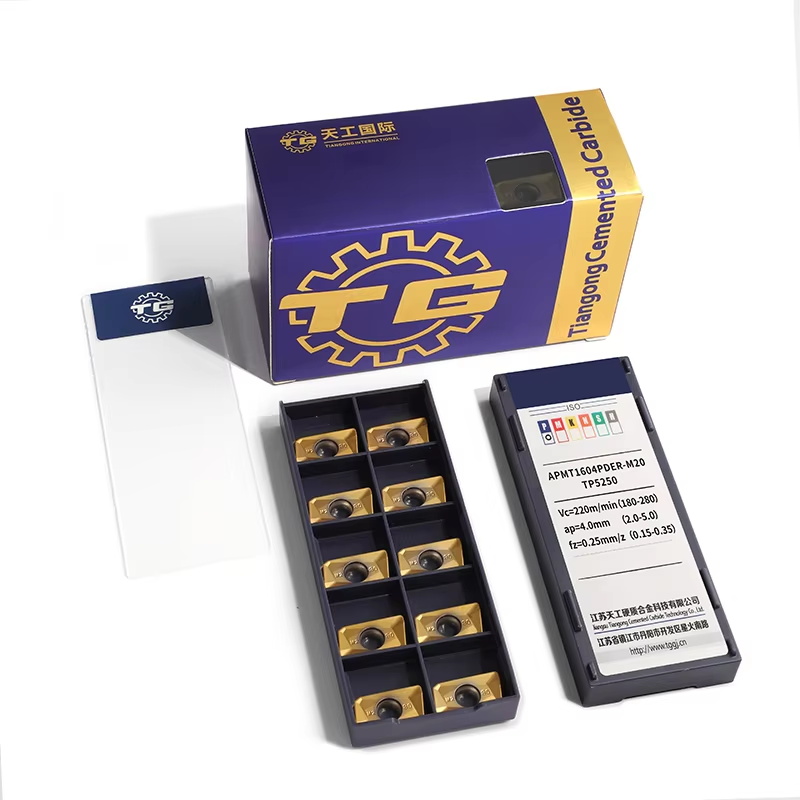
Manufacturing industries worldwide rely heavily on Computer Numerical Control (CNC) machining to produce precise, high-quality components across diverse sectors. The effectiveness of CNC machining operations depends significantly on the selection and application of appropriate CNC tools, which serve as the interface between sophisticated machinery and raw materials. Understanding the various categories and applications of these cutting instruments is essential for manufacturers seeking to optimize production efficiency, achieve superior surface finishes, and maintain competitive manufacturing costs. Modern CNC operations encompass everything from aerospace component manufacturing to automotive part production, medical device fabrication, and consumer electronics assembly.
Essential Categories of CNC Cutting Tools
End Mills and Their Industrial Applications
End mills represent one of the most versatile and frequently utilized categories of CNC tools in manufacturing operations. These cutting instruments feature cutting edges on both the end face and periphery, enabling them to perform various machining operations including profiling, slotting, keyway cutting, and complex three-dimensional contouring. Square end mills excel in creating sharp corners and flat-bottomed slots, while ball nose end mills are ideal for curved surfaces and complex geometries found in mold and die applications. Corner radius end mills provide enhanced strength and longer tool life by reducing stress concentrations at sharp corners.
The material composition of end mills varies significantly based on application requirements. High-speed steel (HSS) end mills offer excellent toughness and are cost-effective for general-purpose machining of softer materials. Carbide end mills provide superior hardness and wear resistance, making them ideal for high-speed machining of harder materials and extended production runs. Coated end mills, featuring titanium nitride (TiN), titanium aluminum nitride (TiAlN), or diamond-like carbon (DLC) coatings, further enhance performance by reducing friction, improving heat dissipation, and extending tool life in demanding applications.
Face Mills for Large Surface Machining
Face mills are specifically designed for machining large, flat surfaces and represent a critical component in heavy-duty manufacturing operations. These robust cutting tools typically feature multiple cutting inserts arranged around a circular cutter body, distributing cutting forces evenly and enabling high material removal rates. The geometry of face mills allows for excellent chip evacuation and heat dissipation, making them particularly suitable for roughing operations and large-scale surface preparation. Modern face mill designs incorporate advanced insert geometries and coating technologies to maximize productivity while maintaining surface finish quality.
Insert-based face mills offer significant advantages in terms of cost-effectiveness and versatility compared to solid carbide alternatives. When cutting edges become worn, operators can simply replace individual inserts rather than the entire tool, reducing tooling costs and minimizing machine downtime. Different insert grades and geometries can be selected based on specific material requirements, workpiece hardness, and desired surface finish characteristics. This modularity makes face mills particularly valuable in job shop environments where diverse materials and applications are common.
Specialized Drilling and Boring Tools
Twist Drills and Their Variations
Twist drills constitute the most common type of hole-making tools in CNC machining operations, featuring helical flutes that facilitate chip evacuation while providing cutting edges for material removal. Standard twist drills are available in numerous sizes, typically ranging from fractions of millimeters to several inches in diameter, accommodating diverse hole-making requirements across industries. The helix angle, point angle, and flute geometry can be optimized for specific materials, with steeper helix angles improving chip evacuation in softer materials and shallower angles providing better strength for harder materials.
Specialized drill variations have been developed to address specific manufacturing challenges. Stub drills offer enhanced rigidity for precision hole-making in hard materials, while long-series drills enable deep hole drilling applications. Step drills combine multiple diameters in a single tool, allowing for chamfering and counterboring operations in one pass. Carbide-tipped drills provide superior performance in abrasive materials, and indexable insert drills offer cost-effective solutions for large-diameter holes with the ability to replace cutting edges as needed.
Boring Tools for Precision Hole Finishing
Boring tools are essential for achieving precise hole dimensions, superior surface finishes, and accurate positioning in CNC machining operations. Unlike drilling operations that create holes from solid material, boring processes enlarge existing holes while correcting dimensional variations, improving concentricity, and achieving tight tolerances that are critical in precision manufacturing. Single-point boring tools offer maximum flexibility for custom applications and difficult-to-reach areas, while multi-point boring heads provide higher productivity for production environments.
Fine boring tools represent the pinnacle of hole-finishing technology, capable of achieving tolerances within micrometers while maintaining exceptional surface finish quality. These precision instruments often incorporate micro-adjustment mechanisms that allow operators to compensate for tool wear and achieve consistent results throughout extended production runs. The selection of appropriate CNC tools for boring operations depends on factors including hole diameter, depth, material hardness, and required surface finish specifications.
Threading and Form Tools
Taps for Internal Threading Operations
Threading operations are fundamental to manufacturing assemblies that require mechanical fastening, and taps represent the primary tools for creating internal threads in CNC machining centers. Spiral point taps, also known as gun taps, push chips forward during the threading process, making them ideal for through-hole applications where chip evacuation occurs at the exit side. Spiral flute taps pull chips backward toward the tool entry point, making them suitable for blind hole applications where forward chip evacuation is not possible. The selection between these tap types significantly impacts thread quality, tool life, and machining efficiency.
Advanced tap designs incorporate features that enhance performance in CNC applications. Form taps create threads through material displacement rather than cutting, resulting in stronger threads with improved fatigue resistance, particularly beneficial in aluminum and other ductile materials. Coated taps featuring advanced surface treatments reduce friction, improve chip evacuation, and extend tool life in demanding applications. Rigid tapping capabilities in modern CNC machines enable precise synchronization between spindle rotation and feed rate, ensuring accurate thread pitch and eliminating the need for traditional tapping attachments.
Dies and Thread Mills for External Threading
External threading operations require specialized tools capable of creating precise threads on shafts, bolts, and other cylindrical components. Traditional threading dies provide a cost-effective solution for standard thread sizes and materials, while thread mills offer superior flexibility and precision for CNC applications. Thread milling enables the creation of threads in hard materials, interrupted surfaces, and thin-walled components where traditional die threading might cause workpiece distortion or tool breakage.
Thread mills excel in applications requiring multiple thread pitches, left-hand threads, or threads in difficult-to-machine materials. Single-point thread mills can create various thread forms by programming appropriate tool paths, while multi-form thread mills incorporate multiple cutting edges designed for specific thread profiles. The interpolation capabilities of CNC machining centers allow thread mills to create threads with precise pitch control, superior surface finish, and excellent dimensional accuracy compared to conventional threading methods.
Cutting Tool Materials and Coatings
High-Speed Steel Versus Carbide Tools
The selection of cutting tool materials represents a critical decision that impacts machining performance, tool life, and overall manufacturing costs. High-speed steel (HSS) tools offer excellent toughness and shock resistance, making them suitable for interrupted cuts, variable workpiece materials, and applications where tool breakage is a concern. HSS tools can withstand higher impact loads and are more forgiving of suboptimal machining conditions, making them popular choices for general-purpose machining and manual operations. Additionally, HSS tools can be easily resharpened multiple times, providing long-term value in appropriate applications.
Carbide tools provide superior hardness, wear resistance, and high-temperature performance compared to HSS alternatives, enabling higher cutting speeds and longer tool life in continuous machining operations. The brittleness of carbide requires careful consideration of machining parameters and workpiece setup, but the productivity gains often justify the higher initial tool costs. Submicron grain carbide grades offer enhanced toughness while maintaining excellent wear resistance, bridging the performance gap between HSS and standard carbide tools for demanding applications.
Advanced Coating Technologies
Modern coating technologies have revolutionized cutting tool performance by providing enhanced surface properties that improve wear resistance, reduce friction, and enable higher machining speeds. Titanium nitride (TiN) coatings were among the first widely adopted coating systems, providing improved wear resistance and reduced friction in general machining applications. Titanium aluminum nitride (TiAlN) coatings offer superior high-temperature performance and oxidation resistance, making them ideal for high-speed machining operations and difficult-to-machine materials.
Diamond-like carbon (DLC) and crystalline diamond coatings represent the cutting edge of coating technology, providing exceptional hardness and wear resistance for specialized applications. These coatings excel in machining non-ferrous materials, composites, and abrasive materials where conventional coatings fail to provide adequate performance. Multi-layer coating systems combine different coating materials to optimize performance characteristics, with each layer contributing specific properties such as adhesion, wear resistance, or thermal barriers.
Tool Selection Criteria and Best Practices
Material-Specific Tool Recommendations
Successful CNC machining requires careful matching of cutting tools to workpiece materials, considering factors such as hardness, thermal conductivity, chemical reactivity, and chip formation characteristics. Aluminum machining typically benefits from sharp cutting edges, large rake angles, and polished flute surfaces to prevent material buildup, while steel machining requires more robust tool geometries with appropriate wear-resistant coatings. Stainless steel presents unique challenges due to its work-hardening tendency and low thermal conductivity, requiring tools with sharp cutting edges and effective chip evacuation features.
Titanium and other aerospace alloys demand specialized tool geometries and cutting parameters due to their poor thermal conductivity and chemical reactivity with cutting tool materials. These materials often require tools with specific coating systems that prevent chemical reactions at elevated temperatures. Cast iron machining benefits from tools designed to handle abrasive particles and interrupted cuts, while composite materials require tools that can cleanly cut reinforcing fibers without delamination or fraying.
Optimization Strategies for Tool Life
Maximizing tool life requires a comprehensive approach that considers cutting parameters, workholding methods, machine condition, and coolant application. Proper cutting speed and feed rate selection prevents excessive tool wear while maintaining productive material removal rates. Conservative speeds may reduce initial productivity but often result in lower overall costs through extended tool life and reduced tool change frequency. Conversely, aggressive parameters may be justified in high-volume production environments where tooling costs are offset by increased throughput.
Effective coolant application and chip evacuation play crucial roles in tool life optimization. Flood coolant systems provide excellent heat dissipation and chip evacuation for most applications, while high-pressure coolant systems can improve performance in deep hole drilling and heavy roughing operations. Minimum quantity lubrication (MQL) systems offer environmental benefits and can improve surface finish quality in finishing operations. Tool condition monitoring systems enable predictive maintenance strategies that optimize tool replacement timing and prevent catastrophic tool failure.
FAQ
What factors should be considered when selecting CNC tools for a new project?
When selecting CNC tools for a new project, consider the workpiece material properties, required tolerances and surface finish, production volume, available machine capabilities, and budget constraints. Evaluate the material hardness, chemical composition, and thermal properties to determine appropriate tool materials and coatings. Consider the geometric requirements including hole sizes, thread specifications, and surface profiles to select appropriate tool types. Production volume impacts the cost-effectiveness of premium tools versus standard options, while machine specifications determine compatible tool shanks, maximum speeds, and available toolholding systems.
How often should CNC tools be replaced or reconditioned?
Tool replacement frequency depends on various factors including tool material, workpiece material, cutting parameters, and quality requirements. Monitor tool condition through visual inspection, dimensional checking, and surface finish evaluation. Replace tools when they no longer meet dimensional tolerances, produce acceptable surface finishes, or show signs of excessive wear such as chipping or built-up edge formation. Establish tool life tracking systems to identify optimal replacement intervals based on actual performance data rather than arbitrary time or cycle count thresholds. Some tools can be reconditioned multiple times through regrinding services, while others are designed for single-use applications.
What are the advantages of using coated cutting tools?
Coated cutting tools offer numerous advantages including extended tool life, higher cutting speeds, improved surface finish quality, and enhanced performance in difficult-to-machine materials. Coatings provide additional hardness and wear resistance beyond the base tool material, enabling more aggressive cutting parameters and longer production runs between tool changes. They also reduce friction between the tool and workpiece, decreasing heat generation and improving chip evacuation. Different coating systems are optimized for specific applications, with some providing enhanced performance at high temperatures while others excel in abrasive or chemically reactive environments.
How do I determine the optimal cutting parameters for different CNC tools?
Optimal cutting parameters depend on tool type, material combination, machine capabilities, and quality requirements. Start with manufacturer recommendations as baseline parameters, then adjust based on specific application conditions and performance observations. Consider surface speed, feed per tooth, axial and radial depth of cut, and coolant application methods. Monitor tool performance through surface finish evaluation, dimensional accuracy checking, and tool wear assessment. Gradually optimize parameters to balance productivity with tool life, always staying within machine power and rigidity limitations. Document successful parameter combinations for future reference and consistency across similar applications.