
 EN
EN
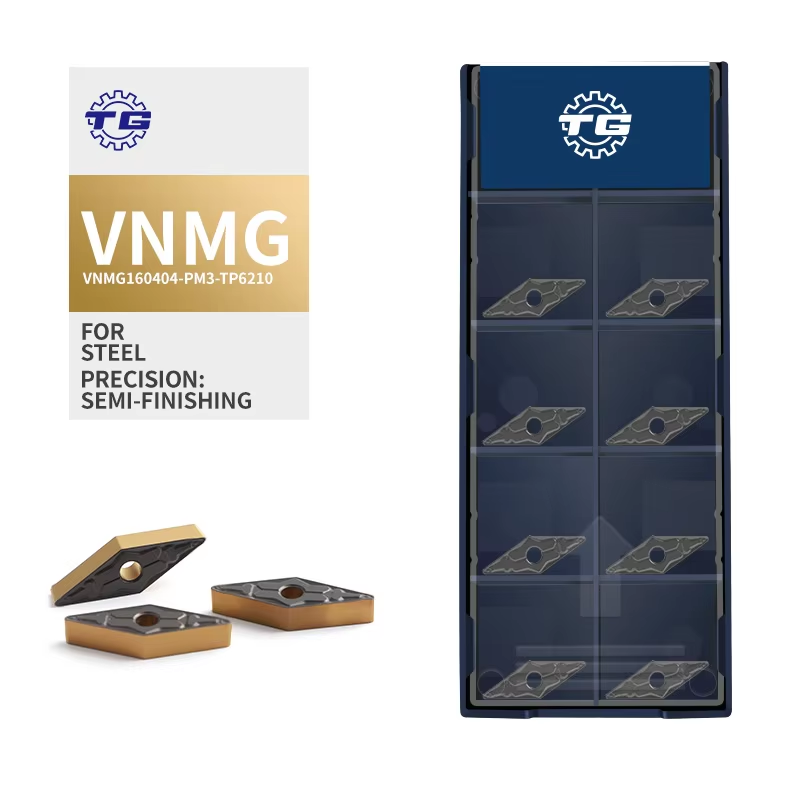
Modern manufacturing industries rely heavily on precision machining to produce high-quality components that meet stringent tolerances and performance standards. Among the various cutting tools available, carbide inserts have emerged as the gold standard for CNC machining operations. These replaceable cutting edges offer superior performance characteristics that make them indispensable in today's competitive manufacturing landscape. The preference for carbide inserts stems from their exceptional hardness, wear resistance, and ability to maintain sharp cutting edges under extreme machining conditions.
Material Properties and Composition
Tungsten Carbide Foundation
The foundation of carbide inserts lies in tungsten carbide, a compound that exhibits remarkable hardness properties second only to diamond. This material composition provides carbide inserts with a hardness rating between 87-93 HRA, significantly exceeding that of high-speed steel cutting tools. The tungsten carbide grains are held together by a cobalt binder, creating a cemented carbide structure that combines hardness with toughness. This unique combination allows carbide inserts to maintain their cutting edge geometry even when subjected to high temperatures and pressures during machining operations.
The grain size of tungsten carbide particles directly influences the performance characteristics of the insert. Fine-grain carbide offers superior hardness and wear resistance, making it ideal for finishing operations on hard materials. Coarse-grain varieties provide enhanced toughness and impact resistance, suitable for roughing operations and interrupted cuts. Manufacturers carefully control the carbide composition to optimize performance for specific machining applications, ensuring that each insert grade delivers maximum efficiency for its intended use.
Advanced Coating Technologies
Modern carbide inserts feature sophisticated coating systems that further enhance their performance capabilities. These coatings, applied through Physical Vapor Deposition (PVD) or Chemical Vapor Deposition (CVD) processes, create protective layers that reduce friction, prevent adhesion, and extend tool life. Titanium nitride (TiN) coatings provide excellent wear resistance and reduce cutting forces, while aluminum oxide (Al2O3) layers offer superior high-temperature stability and chemical inertness.
Multi-layer coating systems combine different materials to create synergistic effects that optimize cutting performance. These advanced coatings enable carbide inserts to operate at higher cutting speeds and feeds while maintaining dimensional accuracy. The coating selection depends on the workpiece material and machining conditions, with specialized formulations available for specific applications such as stainless steel, titanium alloys, and hardened steels.
Performance Advantages in CNC Operations
Superior Cutting Speeds and Feeds
One of the primary reasons for the widespread adoption of carbide inserts in CNC machining is their ability to operate at significantly higher cutting speeds compared to traditional cutting tools. The exceptional hardness and heat resistance of carbide allow for surface speeds that can be three to five times higher than those achievable with high-speed steel tools. This capability directly translates to reduced cycle times and increased productivity in manufacturing operations.
The enhanced cutting performance enables manufacturers to achieve higher material removal rates while maintaining surface quality standards. Carbide inserts can sustain the elevated temperatures generated during high-speed machining without losing their cutting edge integrity. This thermal stability ensures consistent performance throughout extended machining cycles, reducing the need for frequent tool changes and maintaining production efficiency.
Exceptional Wear Resistance
The wear resistance characteristics of carbide inserts far exceed those of conventional cutting tools, resulting in significantly extended tool life. This superior wear resistance stems from the inherent hardness of tungsten carbide and the protective properties of advanced coating systems. Under normal machining conditions, carbide inserts can perform hundreds or even thousands of parts before requiring replacement, depending on the application and workpiece material.
Extended tool life directly impacts manufacturing economics by reducing tooling costs per part produced. The predictable wear patterns of carbide inserts enable precise tool life calculations, allowing for optimized tool change schedules that minimize unplanned downtime. This reliability is particularly valuable in unmanned or lights-out manufacturing operations where consistent tool performance is critical for maintaining production schedules.
Economic Benefits and Cost Efficiency
Reduced Tooling Costs Per Part
While carbide inserts have a higher initial purchase cost compared to high-speed steel tools, their economic advantages become apparent when considering the total cost per part produced. The extended tool life and superior performance capabilities of carbide inserts result in lower tooling costs per component manufactured. This cost efficiency is particularly pronounced in high-volume production environments where tooling expenses represent a significant portion of manufacturing costs.
The indexable design of carbide inserts provides additional cost benefits by allowing multiple cutting edges to be utilized from a single insert. When one cutting edge becomes worn, the insert can be indexed to present a fresh cutting edge, effectively multiplying the tool life. This feature eliminates the need for tool resharpening and reduces inventory requirements, further contributing to overall cost savings in manufacturing operations.
Minimized Machine Downtime
The reliability and predictable performance of carbide inserts significantly reduce unplanned machine downtime associated with tool failures. Unlike brazed or solid carbide tools that require complete tool replacement when worn, indexable carbide inserts can be quickly changed or indexed without removing the tool holder from the machine. This design feature minimizes setup time and allows for rapid tool changes during production runs.
The consistent performance characteristics of carbide inserts enable manufacturers to establish reliable machining parameters that remain stable throughout the tool life. This predictability reduces the need for constant process adjustments and minimizes the risk of scrapped parts due to tool-related issues. The resulting production stability enhances overall equipment effectiveness and improves manufacturing profitability.
Application Versatility Across Materials
Ferrous Material Machining
Carbide inserts demonstrate exceptional performance when machining ferrous materials including carbon steels, alloy steels, and cast irons. The high hardness and wear resistance of carbide enable efficient material removal while maintaining dimensional accuracy and surface finish requirements. Different carbide grades are formulated specifically for various ferrous materials, with optimized compositions that address the unique challenges presented by each material type.
For machining hardened steels and tool steels, specialized carbide grades with enhanced toughness and thermal shock resistance are available. These inserts can maintain their cutting performance even when machining materials with hardness levels exceeding 45 HRC. The ability to machine hardened materials eliminates the need for additional heat treatment operations in many applications, streamlining manufacturing processes and reducing production costs.
Non-Ferrous and Exotic Alloy Processing
The versatility of carbide inserts extends to non-ferrous materials including aluminum alloys, copper alloys, and exotic materials such as titanium and nickel-based superalloys. Specialized carbide grades and coating systems are designed to address the unique machining challenges presented by these materials, such as work hardening tendencies, adhesion issues, and thermal conductivity variations.
For aluminum machining, carbide inserts with specialized geometries and PVD coatings prevent material adhesion while maintaining sharp cutting edges that produce excellent surface finishes. When processing aerospace alloys like Inconel or Hastelloy, carbide inserts with enhanced heat resistance and chemical stability enable successful machining of these traditionally difficult-to-machine materials at productive cutting parameters.
Technological Innovations and Future Developments
Advanced Insert Geometries
Continuous research and development in carbide insert technology have led to innovative geometries that optimize cutting performance for specific applications. These advanced geometries incorporate features such as chip breakers, rake angle variations, and edge preparations that enhance cutting efficiency and extend tool life. Computer-aided design and finite element analysis enable precise optimization of insert geometries to minimize cutting forces and improve chip evacuation.
Specialized geometries for high-feed machining applications allow for increased productivity while maintaining surface quality standards. These inserts feature optimized chip breaker designs that control chip formation and evacuation, enabling higher feed rates without compromising surface finish. The development of application-specific geometries continues to expand the capabilities of carbide inserts in modern manufacturing environments.
Smart Manufacturing Integration
The integration of carbide inserts into smart manufacturing systems represents the future direction of cutting tool technology. Sensor-enabled inserts can monitor cutting conditions in real-time, providing data on temperature, vibration, and wear progression. This information enables predictive maintenance strategies that optimize tool changes and prevent unexpected failures that could compromise production schedules.
Digital twin technology and machine learning algorithms are being employed to optimize carbide insert selection and cutting parameters for specific applications. These systems analyze historical performance data to recommend optimal insert grades, geometries, and machining parameters that maximize productivity while ensuring quality requirements. The continued evolution of smart manufacturing technologies will further enhance the value proposition of carbide inserts in modern production environments.
FAQ
What factors determine the selection of carbide insert grades for specific applications?
The selection of carbide insert grades depends on several key factors including the workpiece material properties, machining operation type, cutting conditions, and required surface finish. Harder workpiece materials typically require tougher carbide grades with enhanced impact resistance, while softer materials benefit from harder, more wear-resistant grades. The machining operation, whether roughing or finishing, influences the choice between tougher grades for heavy cuts or harder grades for precision work. Cutting speed and feed rate requirements also affect grade selection, with higher speeds favoring grades with superior hot hardness and thermal stability.
How do coating technologies improve carbide insert performance?
Advanced coating technologies significantly enhance carbide insert performance through multiple mechanisms including reduced friction, improved wear resistance, and enhanced thermal stability. PVD and CVD coatings create protective barriers that prevent workpiece material adhesion and reduce cutting forces, enabling higher cutting speeds and extended tool life. Multi-layer coating systems combine different materials to optimize performance for specific applications, with each layer serving a distinct function such as adhesion promotion, wear resistance, or thermal protection. The selection of appropriate coatings can increase tool life by 300-500% compared to uncoated carbide inserts.
What maintenance practices maximize carbide insert tool life?
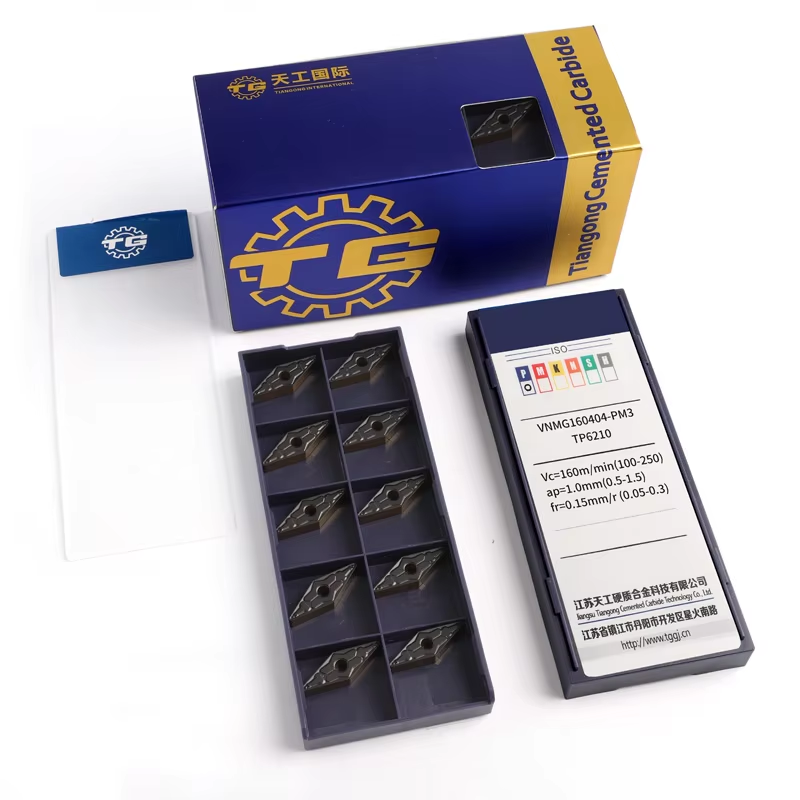
Maximizing carbide insert tool life requires proper handling, storage, and machining practices that prevent premature wear and damage. Inserts should be stored in protective packaging to prevent edge chipping and contamination. During installation, proper torque specifications must be followed to ensure secure clamping without over-stressing the insert. Consistent cutting parameters within recommended ranges prevent thermal shock and excessive wear, while adequate coolant application helps manage cutting temperatures. Regular inspection of insert condition allows for timely indexing or replacement before catastrophic failure occurs, preventing damage to the workpiece or machine tool.
Can carbide inserts be recycled after use?
Used carbide inserts can be effectively recycled through specialized processes that recover the valuable tungsten content for reuse in new carbide production. The recycling process typically involves crushing the used inserts, separating the tungsten carbide from coating materials, and processing the recovered material into powder form suitable for manufacturing new carbide products. This recycling capability provides both environmental and economic benefits, reducing the demand for virgin tungsten while providing a cost-effective source of raw material. Many carbide manufacturers offer recycling programs that provide credits toward future purchases, making carbide insert recycling an attractive option for high-volume users.