
 EN
EN
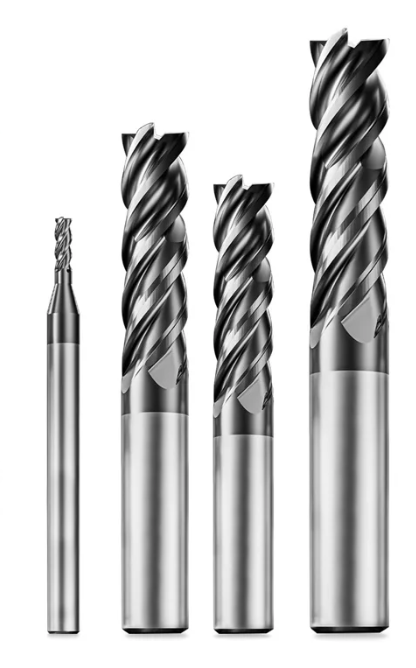
Aerospace manufacturing demands uncompromising precision and surface quality. When components require flawless finishes that meet strict regulatory standards, the choice of cutting tool becomes critical to success. A high-precision CNC end mill represents a fundamental investment in achieving the exact dimensional accuracy and surface integrity that aerospace applications demand. The difference between an ordinary cutting tool and a high-precision CNC end mill lies in its ability to maintain consistent cutting geometry, reduce vibration, and produce surfaces that require minimal post-processing.
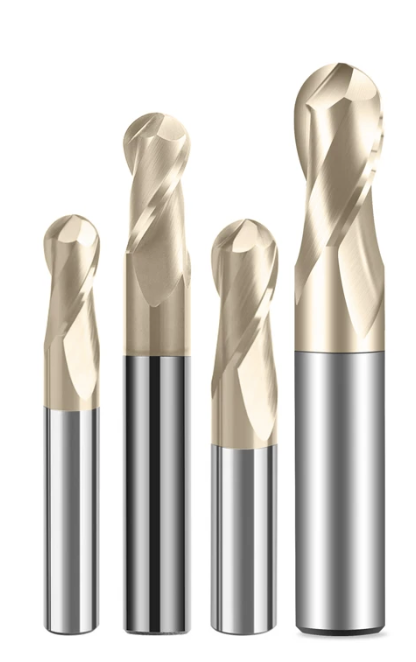
Aerospace component finish quality directly impacts flight safety, durability, and operational performance. When a high-precision CNC end mill executes cutting operations, it generates superior surface finishes that reduce aerodynamic drag, enhance component lifespan, and minimize the risk of stress concentration points. This article explores why high-precision CNC end mill technology has become essential in aerospace manufacturing and how it transforms component quality and production efficiency.
Superior Surface Quality Through Precision Geometry
How High-Precision CNC End Mill Design Eliminates Surface Defects
A high-precision CNC end mill achieves exceptional finish quality through advanced flute geometry and cutting edge preparation. Each flute on a high-precision CNC end mill is engineered to specific rake angles, clearance angles, and edge radii that enable smooth, controlled chip removal. When aerospace components undergo machining with a high-precision CNC end mill, the cutting edges maintain their sharpness longer, preventing the micro-vibrations that create surface irregularities. The result is a finish quality that meets aerospace specifications with reduced tooling marks and minimal surface waviness.
Reduced Vibration and Chatter in Aerospace Machining
Vibration control is essential for achieving flawless aerospace finishes. A high-precision CNC end mill reduces chatter through rigorous geometric tolerances and balanced flute spacing that distributes cutting forces evenly. When a high-precision CNC end mill operates at optimal speeds, it generates consistent cutting forces that prevent deflection and tool resonance. Aerospace manufacturers recognize that tool vibration directly correlates with surface roughness and dimensional accuracy, making vibration-resistant high-precision CNC end mill designs a non-negotiable requirement for critical components.
Dimensional Accuracy and Tolerance Achievement
Holding Tight Tolerances with Precision Cutting Tools
Aerospace specifications often demand tolerances measured in thousandths or ten-thousandths of an inch. A high-precision CNC end mill maintains cutting geometry within extremely tight parameters, ensuring that each pass delivers consistent material removal. When aerospace manufacturers use a high-precision CNC end mill, the tool's inherent geometric stability allows CNC machines to achieve and hold tolerances that would be impossible with conventional tooling. The high-precision CNC end mill's superior edge retention means that components machined late in a production run match those machined early, eliminating dimensional drift.
Extended Tool Life Reduces Production Interruptions
Production efficiency in aerospace manufacturing depends on tool reliability and extended cutting performance. A high-precision CNC end mill typically outlasts conventional tools because advanced coating materials, carbide grades, and heat-resistant geometries extend edge life significantly. When aerospace facilities deploy a high-precision CNC end mill, they experience fewer tool changes, reduced downtime, and more consistent component quality throughout each production run. This extended performance means that a high-precision CNC end mill justifies its higher initial cost through improved productivity and fewer scrap parts caused by worn tooling.
Aerospace-Specific Applications and Material Compatibility
Machining Challenging Aerospace Alloys Effectively
Aerospace components often require machining of titanium, nickel-based superalloys, and aluminum composites that challenge conventional cutting tools. A high-precision CNC end mill designed for aerospace applications incorporates specialized coatings and geometries that handle these difficult materials without degradation. When manufacturers use a high-precision CNC end mill engineered for titanium or superalloy machining, the tool resists the extreme heat and work-hardening these materials produce. Aerospace material requirements necessitate a high-precision CNC end mill that maintains cutting performance under conditions that would damage lesser tools, ensuring consistent component quality regardless of material complexity.
Surface Finish Requirements for Aerospace Functionality
Aerospace components with superior surface finishes exhibit improved fatigue resistance and longer service life. A high-precision CNC end mill produces surface finishes that often require no additional honing or polishing, eliminating secondary operations that consume time and cost. When critical aerospace components are machined with a high-precision CNC end mill, the resulting finish reduces stress concentration and crack initiation risk. Many aerospace applications specify surface roughness values (Ra) that only precision-grade tooling can achieve consistently, making a high-precision CNC end mill the practical standard rather than an optional premium choice.
FAQ
What defines a high-precision CNC end mill compared to standard cutting tools?
A high-precision CNC end mill meets tighter geometric tolerances, incorporates advanced coatings, and uses superior carbide materials compared to standard tools. The difference lies in flute geometry precision, edge preparation consistency, and vibration-damping characteristics that allow the high-precision CNC end mill to maintain cutting performance across extended tool life. Standard tools tolerate greater geometric variation and typically cannot achieve the surface finish quality or dimensional consistency that aerospace applications require.
How much does tool quality impact aerospace component finish outcomes?
Tool quality directly influences surface finish, dimensional accuracy, and production efficiency in aerospace manufacturing. A high-precision CNC end mill can reduce surface roughness by 30–50% compared to conventional tooling while maintaining tighter tolerances and extending tool life significantly. Poor tool quality leads to increased scrap rates, more secondary finishing operations, and higher overall production costs, making high-precision CNC end mill investment essential for aerospace manufacturers focused on quality and efficiency.
Can a high-precision CNC end mill reduce post-processing requirements?
Yes, a high-precision CNC end mill often produces finishes that meet aerospace specifications without additional honing or polishing. When aerospace components are machined with a high-precision CNC end mill, the superior surface quality reduces or eliminates secondary finishing steps, saving labor costs and production time. Many manufacturers report that premium high-precision CNC end mill tooling pays for itself through reduced post-processing requirements and lower scrap rates in aerospace production environments.