
 EN
EN
When machinists push cutting tools through complex, simultaneous five-axis toolpaths, stability is everything. A multi-axis CNC end mill must withstand constantly shifting cutting angles, variable chip loads, and aggressive material resistance — all while maintaining dimensional accuracy. Understanding what geometric features enable that stability helps engineers and procurement teams select the right tool for the job.
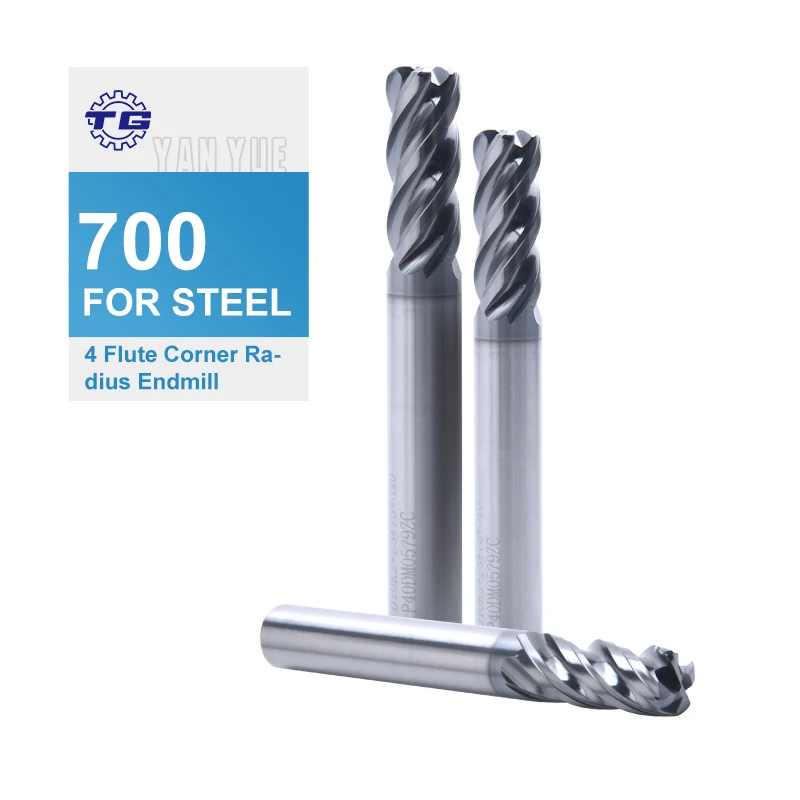
The geometry of a multi-axis CNC end mill is not a single design choice — it is a carefully engineered combination of helix angle, flute count, corner radius, core diameter, and relief angles. Each of these elements interacts with the others to either amplify or reduce vibration, chatter, and deflection during multi-axis cutting. This article breaks down the unique geometric advantages that make a multi-axis CNC end mill perform with exceptional stability across demanding machining environments.
Helix Angle and Flute Design in a Multi-Axis CNC End Mill
How Helix Angle Controls Cutting Forces
The helix angle of a multi-axis CNC end mill plays a central role in how cutting forces are distributed along the tool's length. A higher helix angle — typically between 35 and 45 degrees — allows the flute to engage material more gradually rather than all at once. This progressive engagement reduces the instantaneous cutting force spike that causes vibration. For a multi-axis CNC end mill operating at complex tilt angles, this smooth force transition is critical because the effective cutting angle changes continuously throughout the toolpath.
When a multi-axis CNC end mill uses a variable helix design — where each flute carries a slightly different helix angle — the result is an unequal pitch spacing between flutes. This intentional asymmetry disrupts the harmonic resonance that causes chatter. Rather than all flutes exciting the workpiece at the same frequency, the variable helix multi-axis CNC end mill breaks up the vibration cycle, keeping the tool stable even at high spindle speeds and aggressive feeds.
Flute Count and Core Diameter Considerations
A multi-axis CNC end mill with four flutes strikes a strong balance between chip clearance and tool rigidity. More flutes increase the core diameter of the tool, which directly raises the second moment of area — the geometric property that resists bending. A higher core diameter means a stiffer multi-axis CNC end mill, which is especially important during long-reach or angled engagement where deflection is a persistent risk. At the same time, each flute on the multi-axis CNC end mill must still have sufficient gullet depth to evacuate chips efficiently without packing.
Corner Radius Geometry and Its Stability Role
Why a Corner Radius Strengthens the Multi-Axis CNC End Mill
A corner radius is one of the most impactful geometric features on a multi-axis CNC end mill designed for stable cutting. A sharp corner is a stress concentration point — under heavy cutting loads, it is the first location where micro-chipping occurs. When a multi-axis CNC end mill incorporates a corner radius, the cutting load is distributed across a larger arc of the cutting edge rather than focused at a single point. This distributes stress evenly and significantly extends tool life in hard and abrasive materials.
In multi-axis machining, the tool frequently contacts the workpiece at varying angles, meaning the corner region bears different load vectors during the same pass. A multi-axis CNC end mill with a well-proportioned corner radius handles these shifting load directions without sudden edge fracture. The result is a more consistent cutting force profile, which reduces vibration feedback into the spindle and workholding system. For high-hardness steels and alloys at HRC 60 to 70, this geometric detail on the multi-axis CNC end mill is not optional — it is essential.
Relief Angles and Clearance Geometry
The primary and secondary relief angles on a multi-axis CNC end mill determine how much of the tool body clears the freshly machined surface behind each cutting edge. Insufficient relief causes rubbing, generates heat, and produces unstable cutting forces. A multi-axis CNC end mill optimized for five-axis use incorporates tighter relief angle tolerances to ensure consistent clearance across the full range of tool tilt angles. Even as the effective rake and relief change with tool orientation, a well-ground multi-axis CNC end mill maintains a positive or neutral cutting geometry that keeps forces predictable and stable.
Coating and Substrate Geometry Integration
How Coating Thickness Affects Geometric Precision
Coating is not purely a surface property — it has a direct geometric consequence on a multi-axis CNC end mill. An overly thick or unevenly applied coating can alter the precise edge geometry that was ground into the carbide substrate. For a multi-axis CNC end mill, coatings such as AlTiN or advanced nitride-based variants must be applied with tight thickness control to preserve the original edge sharpness and corner radius accuracy. When coating integrity is maintained, the multi-axis CNC end mill retains its designed cutting geometry throughout its service life.
The substrate itself — typically ultra-fine grain tungsten carbide — must provide sufficient hardness and toughness to support the geometric stability of a multi-axis CNC end mill under thermal and mechanical cycling. A harder substrate prevents the micro-deformation of cutting edges that gradually shifts the effective geometry away from its ground specification. When substrate hardness, coating chemistry, and surface geometry are all aligned, the multi-axis CNC end mill achieves a level of dimensional consistency that directly translates into stable, repeatable machining performance.
Runout Tolerance as a Geometric Stability Factor
Runout — the deviation of the cutting edge from the true rotational axis — is a geometric accuracy parameter that has an outsized impact on multi-axis CNC end mill stability. Even small amounts of runout cause one or two flutes to carry a disproportionate share of the cutting load, accelerating wear unevenly and generating vibration. A high-precision multi-axis CNC end mill is ground to tight runout tolerances, ensuring that every flute participates equally in material removal. This balanced load sharing is especially valuable in multi-axis machining, where programmed chip loads are already optimized for ideal cutting conditions.
FAQ
What helix angle is best for a multi-axis CNC end mill used in hard materials?
For hard materials above HRC 60, a multi-axis CNC end mill with a helix angle between 35 and 45 degrees is generally preferred. This range provides a good balance of gradual cutting engagement, reduced axial force, and sufficient flute strength to resist edge fracture in difficult-to-cut alloys.
How does a corner radius improve multi-axis CNC end mill performance?
A corner radius distributes cutting stress across a broader arc of the edge, preventing stress concentration at a single sharp point. For a multi-axis CNC end mill, this is critical because the corner region contacts the workpiece at shifting angles during five-axis passes, and a radius helps the edge handle those variable load vectors without chipping or premature wear.
Why does variable helix matter for multi-axis CNC end mill stability?
Variable helix spacing on a multi-axis CNC end mill disrupts the regular vibration frequency that causes chatter. By ensuring each flute engages the workpiece at a slightly different phase interval, the tool prevents harmonic resonance from building up. This geometric feature is particularly effective when the multi-axis CNC end mill operates at high cutting speeds in deep-cavity or complex-surface machining scenarios.