
 EN
EN
Modern automotive manufacturing demands exceptional surface finish quality, tight dimensional tolerances, and high throughput — all at the same time. To meet these demands during the finishing stage, production engineers increasingly turn to cermet turning inserts as their preferred cutting tool solution. Unlike standard carbide grades, cermet turning inserts offer a unique combination of hardness and chemical inertness that makes them particularly well-suited for fine finishing operations on steel and cast iron components. As vehicle production volumes rise and quality standards tighten, understanding how these inserts are applied in real plant environments becomes essential for process engineers and tooling managers alike.
Cermet turning inserts are composite cutting tools made from ceramic and metallic binder phases — typically titanium carbonitride bonded with nickel or cobalt. This composition gives cermet turning inserts their defining characteristics: low affinity for steel workpiece materials, excellent wear resistance at moderate cutting speeds, and an ability to maintain a sharp cutting edge far longer than conventional carbide inserts. In automotive finishing applications, where the goal is to achieve mirror-like surfaces on transmission shafts, camshafts, crankshafts, and bearing seats, cermet turning inserts deliver a level of consistency that is difficult to replicate with other insert types. The following sections explore exactly how modern automotive plants integrate cermet turning inserts into their finishing workflows.
The Role of Cermet Turning Inserts in Automotive Finishing Lines
Why Automotive Plants Prefer Cermet for Final Pass Operations
During a finishing pass, the primary objective is surface integrity rather than material removal rate. Cermet turning inserts excel in this context because their smooth, dense cutting faces generate minimal built-up edge, which is the primary cause of surface defects during fine turning. Automotive plants processing steel transmission components at cutting speeds between 200 and 400 meters per minute find that cermet turning inserts consistently deliver Ra values below 0.8 micrometers, meeting the finish requirements for mating surfaces without the need for additional grinding. This ability to replace a grinding step entirely — a practice known as hard turning substitution — is one of the most significant productivity gains cermet turning inserts bring to automotive finishing lines. Plants reduce cycle time, eliminate coolant-heavy grinding processes, and simplify the production flow, all while maintaining dimensional control within just a few micrometers.
Workpiece Compatibility in Automotive Contexts
Cermet turning inserts perform best on hardened and semi-hardened steels commonly found in automotive drivetrain components. Materials such as case-hardened gear blanks, induction-hardened shaft journals, and nitrided valve seat rings represent typical workpieces where cermet turning inserts are applied. Cast iron brake rotors and cylinder liners are also finished using cermet turning inserts in some plant configurations, although carbide grades may be preferred for heavily interrupted cuts. Automotive engineers select cermet turning inserts when the workpiece material is clean, the cut is continuous or semi-continuous, and the target surface finish is stringent. In these conditions, the low chemical reactivity of cermet turning inserts prevents workpiece material from adhering to the cutting edge, a critical advantage when finishing bearing-grade steel components.
Process Parameters When Using Cermet Turning Inserts
Cutting Speed, Feed Rate, and Depth of Cut Guidelines
Applying cermet turning inserts correctly requires understanding their optimal operating window. These inserts perform best at higher cutting speeds than carbide, typically between 250 and 500 meters per minute for steel finishing. At these speeds, cermet turning inserts generate heat that actually improves cutting conditions by softening the thin workpiece layer at the contact zone, reducing cutting forces and improving surface finish. Feed rates for cermet turning inserts in automotive finishing are intentionally low — usually between 0.05 and 0.15 millimeters per revolution — to maintain the fine surface texture required. Depth of cut with cermet turning inserts is equally shallow, generally 0.1 to 0.5 millimeters, reinforcing their role as finishing rather than roughing tools. Automotive process engineers program CNC turning centers to operate within this window consistently, enabling cermet turning inserts to deliver reliable, repeatable results across thousands of parts per shift.
Coolant Strategies and Thermal Management
One practical consideration when deploying cermet turning inserts in automotive plants is coolant management. Cermet turning inserts are somewhat sensitive to thermal shock caused by intermittent coolant application. Many automotive facilities choose to run cermet turning inserts either completely dry or with a continuous, high-pressure coolant supply to avoid rapid temperature cycling. Dry finishing with cermet turning inserts is feasible on CNC lathes with good chip evacuation, and it reduces overhead related to coolant handling and disposal. When coolant is used, cermet turning inserts benefit from targeted delivery directly at the cutting zone, which controls chip temperature and further improves surface finish quality. Automotive plants that have standardized their coolant delivery systems report longer tool life from cermet turning inserts and fewer unexpected edge failures mid-run.
Integrating Cermet Turning Inserts into CNC Turning Centers
Toolholder Selection and Insert Geometry Considerations
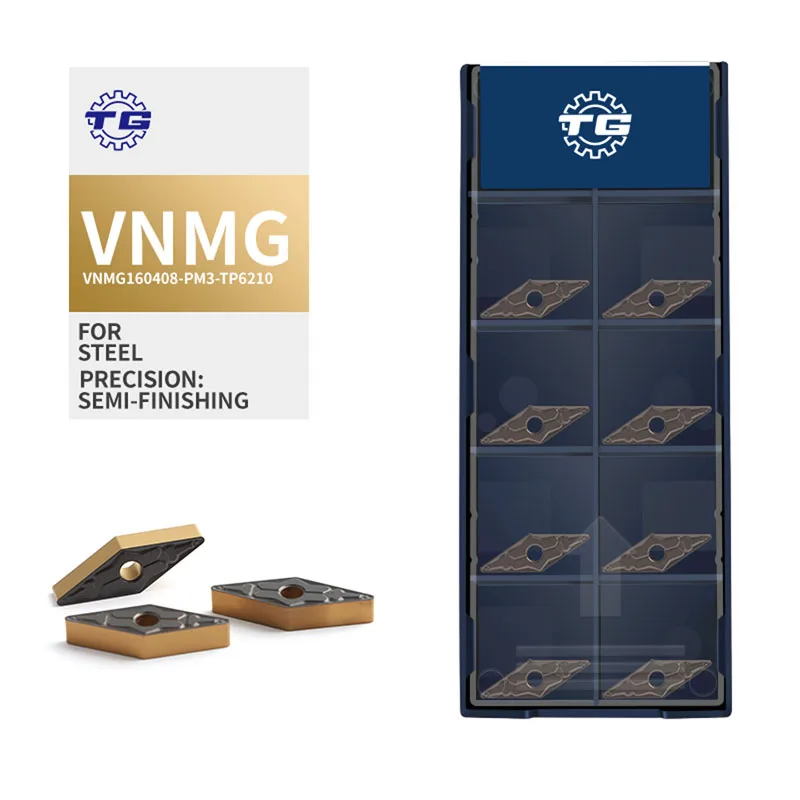
Cermet turning inserts are available in standard ISO geometries compatible with most CNC toolholding systems used in automotive plants. VNMG, WNMG, and CNMG insert shapes are commonly used formats for cermet turning inserts in finishing applications. The VNMG geometry, in particular, is widely favored for shaft and bore finishing with cermet turning inserts because its 35-degree point angle allows excellent access to narrow shoulders and undercut features typical of automotive drivetrain parts. Positive rake angle chip breaker geometries on cermet turning inserts reduce cutting forces and improve surface quality during light finishing passes. Automotive tooling engineers specify insert grades with PVD-coated cermet turning inserts for applications requiring the best possible edge sharpness and lowest friction at the cutting interface. Matching the correct geometry to the specific automotive component geometry is essential to extract full performance from cermet turning inserts.
Tool Change Protocols and Consistency in High-Volume Production
In high-volume automotive plants, consistent tool life management for cermet turning inserts is critical to maintaining part quality. Most plants implement fixed tool change intervals for cermet turning inserts based on empirical data gathered during process validation — for example, replacing cermet turning inserts after every 300 to 500 parts regardless of visible wear. This proactive approach prevents edge deterioration from degrading surface finish on late-cycle components. Automated tool monitoring systems on modern CNC turning centers can detect the small changes in spindle load that indicate cermet turning inserts are approaching end of life, enabling just-in-time replacement without halting the production line. This integration of cermet turning inserts into a broader digital manufacturing ecosystem reflects how deeply these tools are embedded in modern automotive production strategy.
FAQ
What materials are cermet turning inserts best suited for in automotive applications?
Cermet turning inserts perform best on hardened steels, case-hardened alloy steels, and some cast irons used in automotive drivetrain and engine components. They are ideal when continuous, fine finishing cuts are required on materials where chemical adhesion between the chip and cutting tool must be minimized.
Can cermet turning inserts fully replace grinding in automotive finishing?
In many cases, yes. Cermet turning inserts can substitute for cylindrical grinding on hardened steel shaft journals and bearing seats when the required surface finish is Ra 0.4 to 0.8 micrometers and dimensional tolerances are in the range of IT5 to IT6. This hard turning approach using cermet turning inserts reduces cycle time and eliminates the need for dedicated grinding equipment.
How do automotive plants control tool life for cermet turning inserts?
Automotive plants typically manage cermet turning inserts through fixed interval replacement strategies based on validated part counts, combined with spindle load monitoring on CNC turning centers. This ensures cermet turning inserts are replaced before edge wear affects part quality, maintaining consistent surface finish and dimensional accuracy across large production batches.