
 EN
EN
When machine vibration disrupts a cutting operation, the consequences reach far beyond surface finish quality. Tool deflection, premature wear, dimensional inaccuracy, and scrapped workpieces all trace back to instability during the cut. A carbide end mill offers a structural solution to this problem, and understanding its rigidity advantages explains precisely why machinists prefer it in vibration-sensitive applications. The material properties and geometric design of a carbide end mill work together to suppress chatter and hold dimensional tolerances even under aggressive cutting conditions.
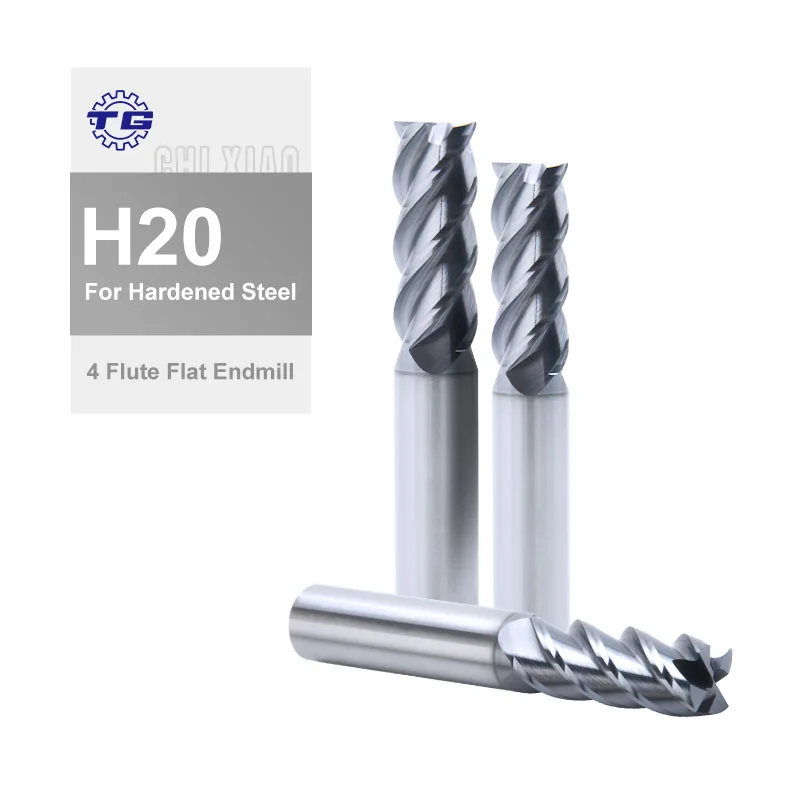
A carbide end mill is not simply a harder version of a high-speed steel tool. It represents a fundamentally different approach to stiffness, vibration damping, and cutting force management. The rigidity of a carbide end mill comes from its modulus of elasticity, its geometry, its flute design, and the way it transfers cutting forces to the spindle. Each of these factors reduces the amplitude and frequency of vibration during milling, making a carbide end mill the preferred choice when stability is critical.
Material Stiffness of a Carbide End Mill
High Modulus of Elasticity
Tungsten carbide, the base material of every carbide end mill, has a modulus of elasticity roughly three times higher than high-speed steel. This means that when cutting forces push against the tool, a carbide end mill deflects far less than softer alternatives. Reduced deflection directly translates to reduced vibration, because tool flex is one of the primary triggers of chatter in milling operations. A carbide end mill maintains its centerline position under lateral load, keeping the cutting edge on its intended path throughout the operation.
Density and Vibration Damping
The high density of the carbide end mill body plays a secondary but important role. A denser tool resists the rapid directional changes that generate chatter. When a carbide end mill engages a workpiece, its mass absorbs micro-impulses rather than amplifying them. This passive damping effect is especially useful in long-reach applications where a carbide end mill operates with a higher length-to-diameter ratio, a condition that normally increases vibration risk significantly.
Geometric Design That Controls Cutting Forces
Flute Count and Helix Angle
The geometry of a carbide end mill is engineered to distribute cutting forces evenly and reduce the instantaneous load on each cutting edge. A four-flute carbide end mill, for example, engages more cutting edges simultaneously than a two-flute design, spreading the total cutting force across a larger area. This reduces the peak force per edge and lowers the vibration amplitude at any given moment. The helix angle of a carbide end mill also contributes by gradually introducing the cutting edge into the material rather than impacting it abruptly, which smooths force variation and suppresses chatter.
Core Diameter and Wall Thickness
A carbide end mill with a larger core diameter has greater cross-sectional area to resist bending. Manufacturers optimize the core-to-flute ratio in a carbide end mill to balance chip evacuation with structural stiffness. A thin-core carbide end mill may allow more chip flow but sacrifices rigidity. For vibration-sensitive applications, a carbide end mill with a reinforced core provides better stability, ensuring that the cutting edges maintain their programmed position regardless of the forces acting on the tool during side milling or slotting operations.
Surface Coating and Its Contribution to Stability
AlCrSiN Coating and Thermal Stability
A carbide end mill with an advanced coating such as AlCrSiN gains additional advantages that indirectly support rigidity. Heat is one of the primary causes of tool deflection during prolonged milling. When a carbide end mill retains its hardness at elevated temperatures, its cutting edge geometry stays consistent throughout the operation. A carbide end mill without adequate coating may soften at the edge, allowing micro-deformation that increases runout and amplifies vibration. The AlCrSiN-coated carbide end mill maintains its dimensional stability under thermal stress, which keeps vibration within acceptable limits.
Reduced Friction and Cutting Force
The low friction coefficient of a well-coated carbide end mill reduces the tangential cutting force required to shear material. Lower cutting force means lower dynamic load on the spindle, which directly reduces the excitation energy available to generate vibration. A carbide end mill with smooth, coated flute surfaces also evacuates chips more efficiently, preventing chip re-cutting, which is another common source of vibration in milling operations. The combination of rigidity and coating performance makes a carbide end mill the most complete solution for stable high-precision cutting.
FAQ
Why does a carbide end mill vibrate less than a high-speed steel end mill?
A carbide end mill vibrates less because its modulus of elasticity is approximately three times higher than high-speed steel, meaning it deflects significantly less under the same cutting force. This structural stiffness prevents the tool flex that initiates chatter. Additionally, the higher density of a carbide end mill provides passive damping, absorbing cutting impulses before they can amplify into sustained vibration cycles.
How does flute count in a carbide end mill affect machine vibration?
Flute count in a carbide end mill determines how many cutting edges are in contact with the workpiece at any given moment. A carbide end mill with more flutes distributes the total cutting force across more edges simultaneously, reducing the peak load per edge and the resulting vibration amplitude. However, a carbide end mill with too many flutes in a soft material may restrict chip flow, so the optimal flute count for a carbide end mill depends on both the material and the stability requirements of the application.
Can tool length affect how well a carbide end mill resists vibration?
Yes, the length-to-diameter ratio of a carbide end mill has a direct impact on vibration resistance. A longer carbide end mill has a greater moment arm, which amplifies bending forces and makes the tool more susceptible to deflection and chatter. Using the shortest carbide end mill that allows the required reach minimizes this risk. When a long carbide end mill is unavoidable, operators should reduce cutting depth and feed rate to compensate for the reduced rigidity inherent in the longer tool geometry.