 EN
EN
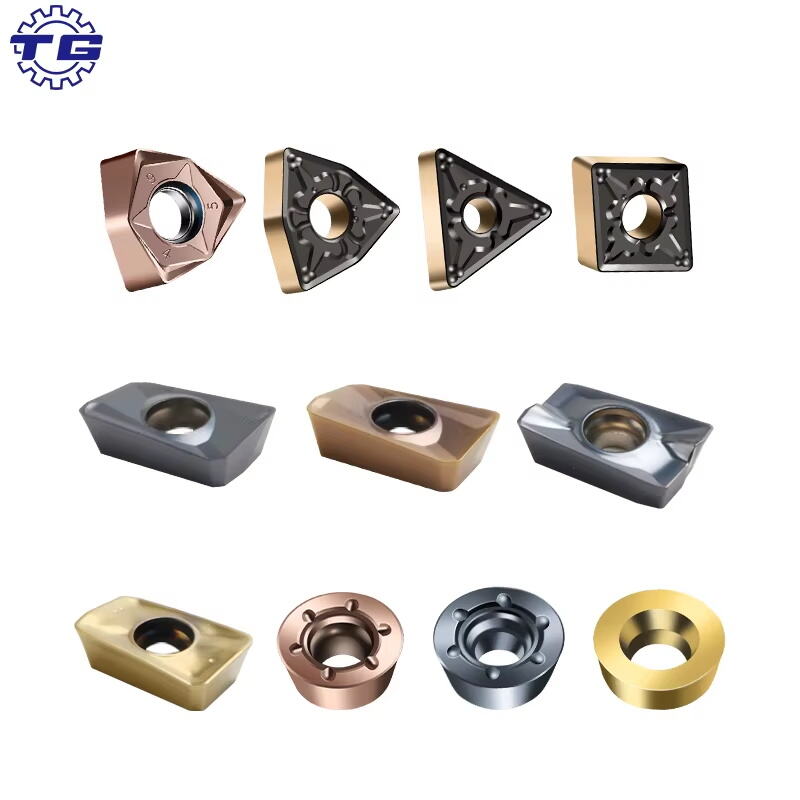
Modern manufacturing demands precision, efficiency, and reliability in every machining operation. The selection of appropriate cutting tools directly impacts production quality, operational costs, and overall manufacturing success. High-quality milling cutter tools represent a critical investment that distinguishes competitive manufacturers from those struggling with inconsistent results and elevated production expenses.
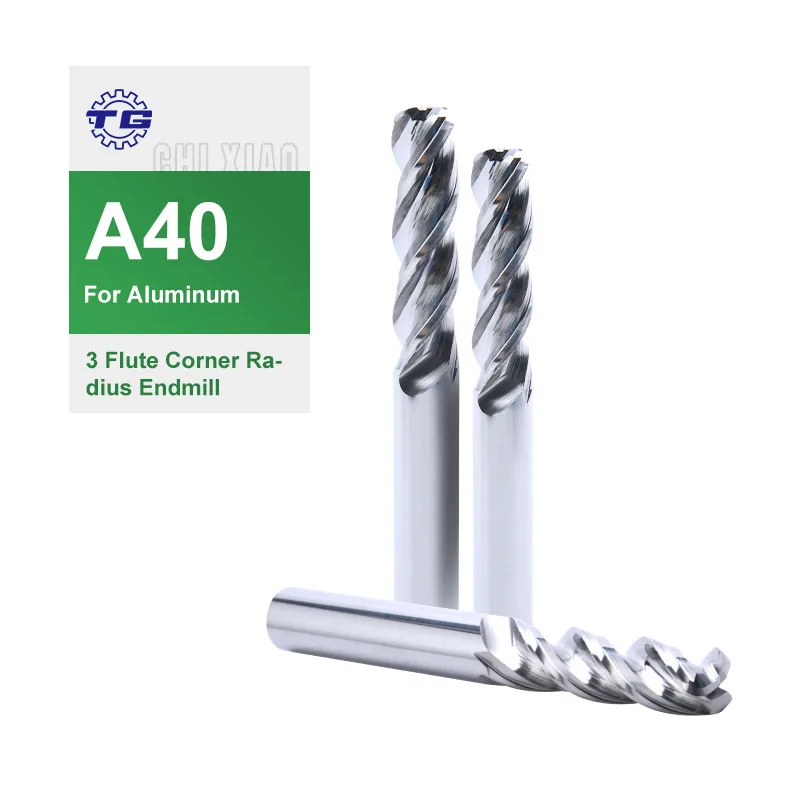
The machining industry has witnessed remarkable advancements in cutting tool technology, with manufacturers continuously developing innovative solutions to meet evolving production requirements. These developments have resulted in cutting tools that deliver superior performance across various materials and applications. Understanding the advantages of premium cutting solutions enables manufacturers to make informed decisions that enhance their competitive position and operational efficiency.
Investment in quality cutting tools extends beyond immediate performance benefits, encompassing long-term cost savings, improved product quality, and enhanced manufacturing capabilities. Professional machinists and production managers recognize that tool selection significantly influences every aspect of the manufacturing process, from initial setup through final inspection.
Enhanced Precision and Surface Finish Quality
Superior Dimensional Accuracy
Premium milling cutter tools deliver exceptional dimensional accuracy through advanced manufacturing processes and stringent quality control measures. These tools maintain tight tolerances throughout extended production runs, ensuring consistent part dimensions that meet or exceed specification requirements. The precision grinding and coating processes employed in manufacturing high-quality tools result in cutting edges that maintain their geometry under demanding machining conditions.
Advanced carbide substrates and specialized coatings contribute significantly to dimensional stability during machining operations. The thermal stability of premium tool materials prevents dimensional drift caused by temperature fluctuations, maintaining accuracy across varying cutting conditions. This consistency eliminates the need for frequent tool adjustments and reduces the likelihood of producing out-of-specification parts.
Improved Surface Finish Characteristics
The superior surface finish achieved with high-quality cutting tools directly impacts subsequent manufacturing processes and final product performance. Precision-ground cutting edges create smooth, consistent surface textures that often eliminate or reduce secondary finishing operations. This improvement in surface quality contributes to better part functionality, enhanced aesthetic appeal, and improved customer satisfaction.
Advanced tool geometries and cutting edge preparations optimize chip formation and evacuation, reducing surface imperfections caused by built-up edge formation or poor chip control. The result is consistently superior surface finishes that meet demanding quality standards across various materials and applications.
Extended Tool Life and Durability
Advanced Material Compositions
Modern milling cutter tools utilize sophisticated carbide substrates engineered for specific applications and materials. These advanced compositions provide optimal hardness, toughness, and wear resistance characteristics tailored to particular machining challenges. The careful balance of material properties ensures maximum tool life while maintaining cutting performance throughout the tool's operational period.
Specialized grain structures within premium carbide substrates resist crack propagation and thermal shock, contributing to extended tool life under demanding conditions. The controlled porosity and uniform microstructure of high-quality substrates provide consistent performance characteristics that remain stable throughout the tool's service life.
Protective Coating Technologies
State-of-the-art coating technologies significantly enhance tool durability and performance across diverse machining applications. These protective layers reduce friction, resist wear, and provide thermal barriers that protect the underlying substrate from extreme cutting conditions. Advanced coating systems often incorporate multiple layers, each engineered to address specific performance requirements.
The application of premium coatings through physical vapor deposition and chemical vapor deposition processes ensures uniform coverage and optimal adhesion to the substrate. These coatings maintain their protective properties throughout extended machining operations, providing consistent performance benefits that justify the initial investment in quality tooling.
Increased Productivity and Operational Efficiency
Higher Cutting Speeds and Feed Rates
Quality milling cutter tools enable significantly higher cutting parameters compared to standard alternatives, directly translating to increased production throughput. The superior heat resistance and wear characteristics of premium tools allow for aggressive machining parameters that would quickly destroy inferior cutting tools. This capability enables manufacturers to reduce cycle times while maintaining or improving part quality.
The ability to operate at elevated cutting speeds and feed rates provides substantial competitive advantages in high-volume production environments. Reduced machining times increase equipment utilization rates and enable manufacturers to meet demanding delivery schedules while maintaining profitability. The improved productivity often justifies the higher initial investment in premium tooling through enhanced production capacity.
Reduced Setup and Changeover Times
Consistent performance characteristics of high-quality cutting tools minimize the need for frequent tool changes and setup adjustments. The predictable wear patterns and extended tool life enable longer production runs between tool changes, reducing machine downtime and increasing overall equipment effectiveness. This reliability allows production planners to schedule operations more efficiently and reduce inventory requirements.
Premium tools often feature standardized interfaces and mounting systems that facilitate quick and accurate tool changes. The dimensional consistency of quality tooling reduces setup complexity and enables faster transitions between different machining operations, contributing to overall production efficiency.
Cost-Effectiveness and Economic Benefits
Total Cost of Ownership Analysis
While premium milling cutter tools require higher initial investment, comprehensive cost analysis reveals significant long-term savings through reduced tooling costs per part produced. The extended tool life and consistent performance characteristics of quality tools distribute the initial cost over many more parts, resulting in lower per-unit tooling expenses. This economic advantage becomes increasingly significant in high-volume production applications.
Additional cost benefits include reduced machine downtime, decreased scrap rates, and eliminated secondary operations. These factors contribute to improved overall production economics that far exceed the incremental cost of premium tooling. Professional manufacturers recognize that focusing solely on initial tool cost often overlooks the substantial hidden costs associated with inferior tooling performance.
Reduced Maintenance and Replacement Frequency
The durability and reliability of high-quality cutting tools significantly reduce maintenance requirements and replacement frequency compared to standard alternatives. This reduction in tool management overhead allows maintenance personnel to focus on other critical equipment needs while ensuring consistent production capability. The predictable performance characteristics also enable more accurate maintenance planning and inventory management.
Extended tool life reduces the environmental impact associated with tool disposal and replacement, supporting sustainability initiatives while providing economic benefits. The reduced frequency of tool changes also minimizes the risk of setup errors and associated quality issues, contributing to overall production stability.
Material Compatibility and Versatility
Broad Application Range
Premium milling cutter tools often feature versatile designs that accommodate multiple materials and applications, reducing inventory requirements and simplifying tool management. These multi-purpose tools eliminate the need for specialized tooling in many applications, streamlining procurement processes and reducing storage costs. The ability to machine various materials with a single tool type provides significant operational flexibility.
Advanced tool geometries and coatings enable effective machining of challenging materials including hardened steels, exotic alloys, and composite materials. This versatility allows manufacturers to accept diverse projects without significant tooling investments, expanding business opportunities and improving competitiveness in specialized markets.
Specialized Performance Characteristics
High-quality cutting tools often incorporate specialized features designed for specific applications or materials, providing optimized performance that standard tools cannot match. These features may include variable helix angles, specialized chip breakers, or application-specific coatings that address particular machining challenges. The availability of specialized tooling enables manufacturers to optimize their processes for maximum efficiency and quality.
The continuous development of specialized tool features reflects ongoing collaboration between tool manufacturers and end users, ensuring that new products address real-world manufacturing challenges. This innovation cycle provides manufacturers with access to cutting-edge technology that maintains their competitive advantage in demanding markets.
FAQ
How do I determine if investing in premium milling cutter tools is justified for my operation?
Evaluate your total cost of ownership including initial tool cost, tool life, productivity gains, and quality improvements. Consider factors such as production volume, part complexity, material requirements, and quality standards. Calculate the cost per part produced with both standard and premium tools, including all associated costs such as machine time, setup costs, and scrap rates. Most manufacturers find that premium tools provide significant cost savings in medium to high-volume applications.
What maintenance practices maximize the performance and life of high-quality cutting tools?
Proper tool maintenance includes regular inspection for wear indicators, appropriate storage in protective cases, and adherence to recommended cutting parameters. Ensure adequate coolant flow and filtration, maintain spindle accuracy and rigidity, and avoid excessive tool overhang. Regular monitoring of cutting forces and vibration levels helps identify potential issues before tool failure occurs. Proper handling and storage prevent damage to cutting edges and coatings.
How do advanced coatings on milling cutter tools improve performance compared to uncoated alternatives?
Advanced coatings provide multiple performance benefits including reduced friction, improved heat resistance, enhanced wear resistance, and chemical stability. These coatings act as thermal barriers, allowing higher cutting speeds while protecting the substrate from extreme temperatures. The reduced friction characteristics improve surface finish quality and reduce power consumption. Specialized coatings also provide corrosion resistance and reduce built-up edge formation on difficult-to-machine materials.
What factors should be considered when selecting milling cutter tools for specific applications?
Key selection factors include workpiece material properties, required surface finish, dimensional tolerances, production volume, and machine tool capabilities. Consider the application requirements such as roughing versus finishing operations, available coolant systems, and fixturing rigidity. Evaluate tool geometry options including number of flutes, helix angle, and cutting edge preparation. Consult with tool manufacturers to ensure optimal tool selection for your specific requirements and operating conditions.
Table of Contents
- Enhanced Precision and Surface Finish Quality
- Extended Tool Life and Durability
- Increased Productivity and Operational Efficiency
- Cost-Effectiveness and Economic Benefits
- Material Compatibility and Versatility
-
FAQ
- How do I determine if investing in premium milling cutter tools is justified for my operation?
- What maintenance practices maximize the performance and life of high-quality cutting tools?
- How do advanced coatings on milling cutter tools improve performance compared to uncoated alternatives?
- What factors should be considered when selecting milling cutter tools for specific applications?