
 EN
EN

Automobile factories operate under strict dimensional tolerances, demanding that every mold component meet exacting standards. Choosing the right CNC end mill for molds is therefore one of the most critical decisions a tooling engineer can make. When applied correctly, a CNC end mill for molds directly improves surface finish, extends tool life, and reduces costly rework on high-value mold cavities.
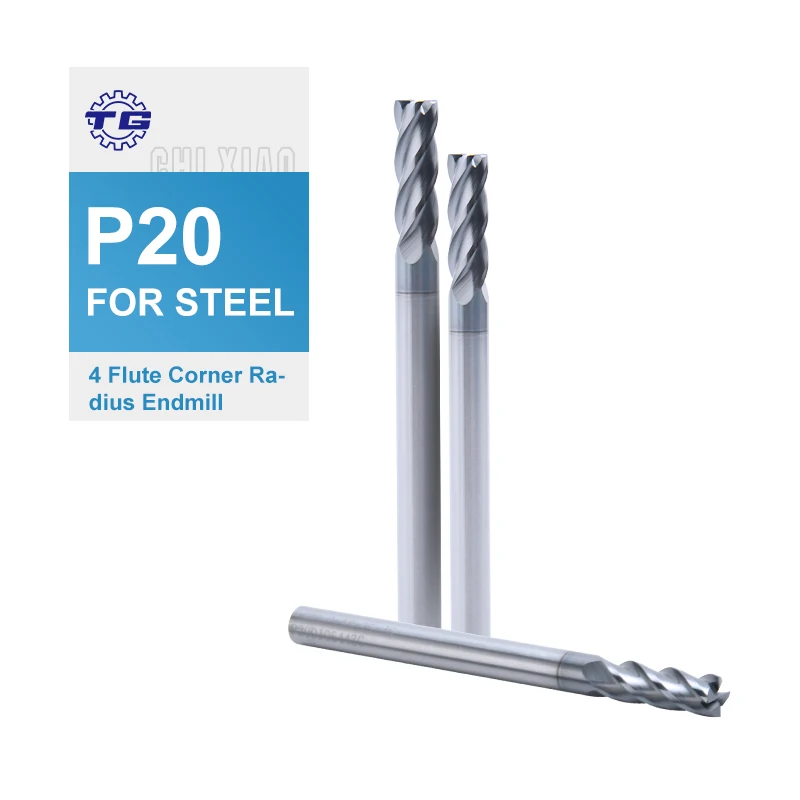
Automobile production relies heavily on injection molds, die-cast molds, and stamping dies to produce bumpers, dashboards, door panels, and structural brackets. Each of these components requires a CNC end mill for molds that can handle hardened steel, maintain tight radius accuracy, and deliver consistent cutting performance across long production runs. Understanding how to apply a CNC end mill for molds within an automotive manufacturing context is essential for any factory seeking to remain competitive and cost-efficient.
Mold Machining Demands in Automotive Production
Hardened Steel and Complex Cavity Geometries
Automotive molds are typically manufactured from hardened tool steels such as H13 or P20, which can reach hardness levels of 50 HRC and beyond. Machining these materials without a purpose-designed CNC end mill for molds leads to premature tool wear, vibration, and surface defects. A CNC end mill for molds engineered for hardened steel features a reinforced core, tight geometry tolerances, and a specialized coating that resists heat buildup during high-speed cutting passes. Without these properties, the mold cavity finish degrades quickly, forcing additional polishing operations that consume both time and labor.
Automotive mold cavities often incorporate deep pockets, steep walls, and fine corner radii that replicate the organic contours of vehicle body parts. A CNC end mill for molds designed with a corner radius geometry helps distribute cutting forces evenly, preventing chipping at the tip and maintaining profile accuracy throughout the entire mold surface. This corner radius feature is especially important when machining automotive lens molds or interior trim molds where surface continuity is visible in the final product.
Thermal and Mechanical Stability During High-Speed Passes
High-speed machining centers are standard in automotive toolrooms, and spindle speeds can exceed 20,000 RPM during semi-finish and finish passes. At these speeds, a CNC end mill for molds must maintain runout accuracy within microns to prevent chatter marks on the mold surface. A high-quality CNC end mill for molds achieves this through precision-ground flutes, balanced geometry, and a rigid shank that minimizes deflection. Factories that neglect these specifications often encounter inconsistent cavity dimensions that force expensive re-machining or cavity welding repairs.
Selecting and Applying a CNC End Mill for Molds Correctly
Matching Flute Count and Geometry to the Application
A four-flute configuration is the most common choice when applying a CNC end mill for molds in automotive tooling, because it balances chip evacuation with surface finish quality. In semi-finish operations where material removal rates are still relatively high, a four-flute CNC end mill for molds provides the rigidity needed to maintain dimensional accuracy while still clearing chips effectively from the cutting zone. During finish passes on mold profiles, the flat face geometry of a CNC end mill for molds allows the factory to achieve smooth, consistent surfaces that minimize hand-polishing time.
Coating selection is equally important when applying a CNC end mill for molds to automotive steels. TiAlN and AlTiN coatings are widely used because they maintain hardness at elevated temperatures and reduce friction between the cutting edge and the workpiece. A properly coated CNC end mill for molds allows the factory to run higher feed rates without sacrificing surface quality, which directly shortens the overall mold manufacturing cycle. Every hour saved in the machining process translates into measurable cost reduction when multiplied across dozens of mold programs per year.
Toolpath Strategy and Feed Rate Optimization
Even the best CNC end mill for molds will underperform if the toolpath strategy is not carefully planned. Automobile factories typically use CAM software to generate trochoidal or contour-parallel toolpaths that keep the radial engagement of a CNC end mill for molds consistent throughout the cutting cycle. Consistent engagement prevents sudden load spikes that cause tool deflection and surface marks. Programming teams should also apply a light finishing allowance of 0.05 to 0.1 mm before the final pass, ensuring the CNC end mill for molds removes only a thin, uniform layer that produces the cleanest possible cavity finish.
Feed rate and spindle speed must be calibrated to the specific diameter and flute geometry of the CNC end mill for molds in use. Running a CNC end mill for molds at incorrect parameters accelerates wear on the cutting edges and introduces micro-vibrations that compromise dimensional accuracy. Automotive toolrooms benefit greatly from maintaining a documented parameter library for each CNC end mill for molds variant they stock, enabling repeatable results across different machine operators and shifts.
Quality Control and Tool Life Management
Monitoring Tool Wear to Protect Mold Surfaces
Managing the service life of a CNC end mill for molds is a critical quality control task in any automobile factory. As cutting edges wear, the forces transmitted to the mold surface increase, leading to burr formation, radius deviation, and loss of profile accuracy. Factories should establish clear replacement intervals for each CNC end mill for molds based on actual cutting time, number of passes, and material hardness rather than relying on visual inspection alone. Proactive tool change protocols prevent a worn CNC end mill for molds from damaging a nearly finished mold cavity and triggering expensive rework.
Documentation and Process Standardization
Automobile factories that apply a CNC end mill for molds most effectively are those that treat tooling as a managed process rather than a consumable afterthought. Standardizing on verified CNC end mill for molds specifications across all mold machining programs ensures that operators, programmers, and quality inspectors share a common reference. This standardization reduces variability between mold sets, shortens setup times, and makes it easier to trace dimensional deviations back to specific tooling events. A well-documented CNC end mill for molds selection process ultimately supports faster mold approval cycles and more reliable production launch timelines.
FAQ
What material grades are best suited for a CNC end mill for molds in automotive applications?
Carbide is the dominant substrate used in a CNC end mill for molds for automotive tooling because it offers superior hardness, wear resistance, and thermal stability compared to HSS. However, certain roughing operations on softer mold steels may use HSS-coated variants of a CNC end mill for molds, particularly when flexibility and impact resistance are prioritized over cutting speed.
How does corner radius geometry on a CNC end mill for molds benefit automotive mold quality?
A corner radius on a CNC end mill for molds distributes cutting forces over a larger area at the tool tip, reducing the risk of chipping and extending tool life significantly. In automotive mold machining, this geometry also helps produce smooth transitions between flat and curved surfaces, reducing the amount of manual polishing required to achieve the final cosmetic standard.
How often should an automobile factory replace a CNC end mill for molds during active production?
Replacement frequency depends on the material hardness, cutting parameters, and surface finish requirements, but a CNC end mill for molds used in hardened tool steel machining is typically replaced after a defined number of linear cutting meters or hours of spindle time. Automobile factories are advised to track tool wear data and establish preventive replacement schedules rather than waiting for visible tool failure, which risks damaging high-value mold components.